GAME JOBS
Latest Jobs
spacer View All     Post a Job     RSS spacer
 
June 18, 2013
 
Airtight Games
Senior Software Engineeer
 
Subatomic Studios
Art Director
 
Edge of Reality
LEVEL ARTIST
 
Sojo Studios
Generalist Game Engineer
 
ROBLOX Corporation
Senior Network Engineer - C++
 
Sunstorm Games
Game Designer
spacer
Blogs

  Suffering and Altruism -- A Ramble on the Added Value of Character States
by Nick Halme on 03/31/10 03:28:00 am   Expert Blogs   Featured Blogs
8 comments Share on Twitter Share on Facebook RSS
 
 
The following blog was, unless otherwise noted, independently written by a member of Gamasutra's game development community. The thoughts and opinions expressed here are not necessarily those of Gamasutra or its parent company.

Want to write your own blog post on Gamasutra? It's easy! Click here to get started. Your post could be featured on Gamasutra's home page, right alongside our award-winning articles and news stories.
 
What is an enemy
Playing through Borderlands I have no pity for anything I kill.  Like most games, its human enemies are charicatures.  I'm concerned only with maintaining a good average of headshots (which is admittedly quite satisfying, resulting in a gratutitous melon explosion and a blood fountain).  
Like most games, these enemies are one dimensional.  They are transparent hitboxes that gauge my skill at aiming.  Behaviour-wise they will zig zag, asking the player to learn to lead targets or to save the killing blow for when they come to a stop.  They serve the core gameplay requirements of the game, which is to challenge shooting ability and to fit into the crazy Mad Max style of tweaked-out road warriors.
Most enemies in games are very abstract, and as we enter into more "realistic" settings, this becomes strange.  The modern analogue of the Mario Goomba is the animal enemy.  The four-legged monsters, the overgrown maggots; the lower animals we crush because they are monstrous.  This can be fun -- fighting giant rat monsters who circle you and exhibit cold pack intelligence in Metro 2033 was a blast.  But the challenge is thinking about what it means to kill videogame humans.
Introducing suffering and empathy
I had a games criticism teacher in school who related to me two things: his cathartic dispatching of enemies in Unreal Tournament, and his stomach-churning experience executing downed enemies in Wolfenstein 3D.
Like the above Borderlands example, Wolfenstein enemies catered to the core gameplay requirements -- acting their part out as the receiving end of your shooting.  But they had a different state as well -- deliver a gutshot and they would fall to the ground and enter a bleed-out state.
The teacher admitted that after some time he realized that it was more ammo efficient to simply go for the gutshot (an easy shot to make) and then use a second bullet to finish them off.  Over and over, he would deliver a gut wound and stand over an enemy to deliver a second shot, the killing blow.
The man he was, this made him very uncomfortable.  I think it has something to do with players investing themselves in their avatar -- this is them killing Nazis, not some G.I.  It is out of character for most people to wound and execute people, yet the game in this case presents it as a dominant strategy.  As players, the dominant strategy is hard to resist.
In multiplayer games this is different.  Something a bit more primal comes into play when we execute human opponents.  We empathise with helpless AI clones to some extent -- however a Gears of War player shows no mercy when curb-stomping a downed human enemy.  In fact it feels very good, conquering that person.  They had it coming, by being on the other team.  They tried to kill you, and now they're beholden to your mercy.  Of course you swiftly deliver boot-to-face-to-pavement.
This comes across as putting down the resilient when it appears in Modern Warfare.  Players who use the Last Stand perk and enter bleed-out mode upon death are executed with panache.  "And stay dead!"
Now, I know some developers who are reticent about suffering in videogames -- an effect that seems available only to AI enemies.  The idea that a player would be off-put by a mechanic is "not fun, and we don't want to represent suffering."
But I think this is a great area to explore, and something that AAA games can do so much better than indie games, who don't usually have access to this sort of genre -- the large single-player epic filled with bad guys.
Playing as a jerk
God of War 3 is a really interesting example of making the player feel bad.  More so than previous games, the character must play as and represent a total asshole in a videogame.  The player does not agree with the brutal intentions of their avatar, but they are forced to carry out these acts anyways.
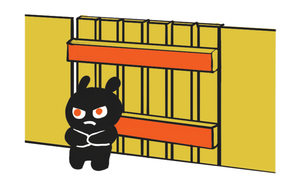
There is a scene reminiscent of a mission in one of the previous God of War games where the player must burn a man alive, for no good reason other than it is required to progress.  In the older mission the player was required to drag a man in a cage, helpless, onto a switch to open a gate.  After being pulled kicking and screaming for you to spare him, you place him on the switch and he is burned alive.
I think most player feel a bit disgusted -- strangely not at themselves, but at Kratos.  "Why did I have to do that?" they might ask, rather than "Why did I just do that?"
In Adam Roberts' excellent science fiction novel Stone, the reader is invested in an unusual protagonist.  In a universe of humans, stretched out into space and advanced technologically to a state of near-immortal hedonism thanks to nanotechnology integrated into everyone's bloodstream, the protagonist is the first murderer humanity has seen for centuries.
The reader ends up understanding why this asexual person, schizophrenic and lacking the capacity for empathy from birth, is the way they are.  Even when the character is in the middle of murdering someone, or engaging in acts of cannibalism, the reader is rooting for this person.
I'm not trying to say that this novel was better at helping you understand character motives; what I'm trying to say is that God of War approaches the same space in making the player do things he doesn't want to do.
So often in school I was told to develop enemies that were not purely evil -- enemies that had a reason you could empathise with for doing their evil acts.  But it seems like the same should start being applied to protagonists in order to create more emotional weight.
Players need to be forced into "evil".  In games with moral choices (Bioware games), players do the good things -- because they are the right things.  They might play as an evil character to unlock cool weaponry (KotoR, inFamous), or just to revel in being a dick.  In  Mass Effect I'm slanting my character towards Renegade for the sole purpose of having rough videogame sex with Jack.  That's hardly a genuine choice -- we're not really being evil.  We are being evil with a big smirk.
Forcing players to make themselves uncomfortable seems counter-intuitive to selling games, but the survival horror genre (if you can call it a genre) revels in this.  They do it in a different way (RE5 and it's clunky controls, Silent Hill...and it's clunky controls and unnerving environment), but it's proof that some players are open to getting on that rollercoaster ride.
Rethinking protagonists
So I'll bring it back to what this has to do with something simple, like game enemies.  Make them suffer.  When a player shoots a virtual mujahadeen in the head and they crumple to the ground, so what.  They just killed a terrorist and they went into ragdoll.  Cool.  However when they fall to the ground nursing a gut wound, and their compadres fight to evacuate him, you feel much different.  It feels more like you have just injured a human being.
Perhaps it's as simple as evolving enemy behaviour; adding in more states between the usually binary alive and dead.
This also opens up the avenue of different sorts of protagonists in shooters -- the concept of suffereing allows for both cruelty and altruism to manifest.
In Medal of Honor: Pacific Assault the player could be saved by a corpsman medic.  This AI character would kneel by the player, inject adrenaline and tell you everything's going to be fine.
Now imagine the roles that open up to a player character -- you could be that medic, rather than the super soldier.  The whole battlefield becomes different.
Battlefield: Bad Company 2, like previous Battlefield games, allows players to act as medics in multiplayer.  It's quite a different experience, but it's a bit detached because you're playing for points.  However it does induce moments of nonviolent heroism.  Often you will see medics running out from the frontline into no-mans land, under heavy gunfire, and help their teammates up.  I would be overreacting to say this brings a single, dramatic tear to my eye, but it's not far off.
This sort of added investment into character states and player interaction with those states opens up a lot of doors in character development as well.  It opens the door for moment-to-moment life and death situations that are contained within the "magic circle" of the game.
Game death always sucks.  GAME OVER.  TRY AGAIN.  It's much better if you get shot in the leg and your sidekick drags you back behind cover and tries to help you up.  Respawning is old news if there are ways to keep the player in the game upon "failure" which are actually more conducive to letting a wider skill-range of players experience shooters.
Tripwire's Red Orchestra, a game I used to play fanatically, did some interesting things here.  Again it was a multiplayer game, but in being an "ultra-realistic" game players would enter different states depending on damage amounts to body parts.
I experienced some instances where a grenade detonated close to my feet, but I survived.  However both my legs were in the red -- crippled -- and I was unable to move at more than a snail's pace.  It put me in a different mode of thought, from scanning for targets and gunning to panic and survival.
More variation
If you need a way to add variation and avoid shooting fatigue, it's probably the easier thing to do to develop and focus on these sort of player state changes.
If you have the mechanic in place of bleed-out and revival, the player enters a different state of mind when they wade through gunfire to search for and save a downed character.  There is more up-down intensity within individual encounters -- especially if you go further and add a timer-to-death on downed players, making the player sweat as they engage in an impromptu rescue mission.  
There's a lot of creative freedom here that mission specific gimmicks can exploit.  Assaulting a machinegun position resulting in lots of downed AI screaming, medics trying to survive while helping downed characters up.  Rescuing a group of soldiers cut off in a downed helicopter, rushing to save them before all the characters run through all their states and finally die.
Maybe this is also a call for less individual scripted moments.  A lot of special, impactful moments in AAA games are apart from core moment to moment gameplay, and so eliminate the chance for players to discover individual moments within encounters. 
In Call of Duty you're limited to the experience of being surprised by enemies and killing them, almost dying and killing the enemies, or being a crack shot and killing the enemies.  The dramatic moral moments, or the brutal moments, happen in cutscenes or specially scripted moments.  Examples are the scene in (they blend together) what I think was Call of Duty 2 -- the player experiences shellshock moving up to a farmhouse, hit by a mortar, ears ringing, but still able to proceed in wobbly half-steps.
The advancement I'm advocating is developing these sort of moments into core gameplay mechanics that are repeatable anywhere.  I've at many different times asked friends or readers to relate game stories to me, and it's always telling of what the particular game has to offer.  The experiences players remember as their own are ones in which they interacted with core gameplay mechanics -- these experiences cannot be predicted, but you're giving players the tools to end up in their own sticky situations.  That's nice for player ownership and for somewhat procedural moment creation that feel genuine.
 
 
Comments

Chad Wagner
profile image
In playing Fable, I experienced a moment of disgust that completely altered my gameplay. I had completed the game as a "good guy," and was looking forward to playing again for all the "bad guy" exclusive puzzles and items...


The first action I had to carry out was to beat a peasant to death (that I had saved in my previous game life). This was performed complete with screaming and begging for mercy as each successive blow was delivered.


I realized, in order to play the game through with these choices, I would need to emotionally distance myself from these characters -- and somehow enjoy the violence as a cartoony sort of giggle-fest. My choice was to put the game away and move on to other games.


Peter Molyneux would likely have considered that a triumph, but to me it appeared more like poor film making -- in that it required me to pull myself out of the experience to enjoy it more. As a result, I was even less excited as he described how I could look forward to a complaining wife, and neglected children in Fable 2...

Nick Halme
profile image
Agency in gameplay is a problem -- why should players act out the evil actions of a character; the player is not making the actions, but being shown a blueprint and pushed to carry them out. Then they're told to sort out how it felt, killing that peasant.


I think maybe the work to be done in that case is in characterization -- it's no surprise that in a game like Fable (or, most games with good/evil paths) the evil path is sort of the tacked on path. While the good character needs no explanation, the evil character really needs extra content -- different missions -- in order to "get the player in the mood", I think.


High Moon's Transformers game (upcoming) has separate good and evil campaigns -- obviously Autobot and Decepitcon. The neat thing is, it sounds like they're building the Decepticon campaign around Megatron being a cruel uniter (this sort of character always reminds me of the King of Qin in Hero) rather than just a cackling overlord. He starts out with noble intentions I assume, and becomes more despicable in his actions as time goes on thanks to his confused principles.


So the whole evil path good path rewrite thing games are doing doesn't really work -- because the evil side needs a lot more work applied to get a player feeling like they're not being evil, but acting from a different set of principles. Of course then you can hit them with an "enemy" who stands for justice and declares you a tyrant.


When you rip that guy's head off after a fight, maybe you still feel like an asshole, but you don't feel like you were pushed into doing it. There's still a lot to think about though -- maybe players would still have to distance themselves from these sort of acts, even with the added buildup, and they just wouldn't want to play it.


I have an inkling that people expose the fundamental character of their own ego when playing a game, and I think that means most people not only "want" to be good, but are just "good" by default. Most people will always have to be forced to be evil, and that's where the work is -- to make the forcing invisible. Because I still think it's important to experience what it is like to be cruel, or heartless, or involved in a morally ambiguous act first-hand (Grand Theft Auto 4 does this well, actually).


The idea being not to reinforce that "evil is good", but rather to reiterate how cruel we can be -- like making a teenager smoke a pack of cigarettes to convince him he shouldn't be smoking.


The airport mission in Modern Warfare 2 showed us that most people will either refuse to pull the trigger, or smile and mow down everyone in sight. That's a failure, in my opinion, but that's a start.

Stephen Chin
profile image
In short, I suppose, create the sort of 'evil' as seen in the likes of Serenity. Where the truly 'evil' characters aren't so much mindless evil as much as people with conviction - heroes (or not) that oppose other heroes. This sort of moral ambiguity then allow for that slippery slope that people will argue over. Where the game doesn't try to beat the player over the head with cruelty or Evil Laughter (TM) but instead tries to convince the player that it might be valid, might be for the best... if they just bend a little here and understand the 'evil' justification.

Samuel Wissler
profile image
Very interesting article!


I've tried several times to play an evil character in a video game, but I just can't do it - especially in bioware games. The evil choices are so mind bogglingly over the top and often very unrealistic based on the context of the situation that I can't think of anyone, even an evil person, who would choose them. NWN 2 is a great example. There's a harvest festival competition where you have a brawl against some local bullies. That night the town is attacked and some of the bullies you fought before are wounded. The evil choice is to just cut their throats, basically without provocation and to no advantageous result. Too often the evil choice is also an illogical choice.


In contrast, in a Pen and Paper game, I almost always end up playing an evil character. It's a joke among people I've played with how all of my characters end up either turning on the party or trying to manipulate the party to take an easy, but corrupt path to power.


I think the difference is, in video games the conflict even as a good character is delivered to you. The villains come after you, try to trap you, take the character's loved ones hostage, etc etc. A good character is in a passive stance and mostly reacts to evil. The problem games have is that they try to fit an evil character into that passive role and the only way to left to make a character evil is to just to increase their brutality out of any rational proportion.


In a Pen and Paper where the games are usually more player driven, it's up the players to find trouble. I always find it easy to play an evil character in that context because evil attacks, desires, and consumes - evil has lots of ambition and seeks power. In a realistic setting you don't gain power by killing random people; you get caught and killed by either the authorities or by some force for good. However in many games evil is reduced to that level of mindlessness.


In order for a game based on an evil protagonist to really work, you'd have to obscure and justify the characters motives until the end of the game - and then play what they did back to them. To an evil person anything is justifiable given the right circumstance. At this point most games just haven't been comfortable lying to the player about what type of person/character they are for an entire game in order to set up a context where evil makes sense.


I think art not only serves as entertainment, but also as a way to gain insight into humanity and I think video games really have an edge in that department because of their interactivity. It has just been really shy about using it so far.

Michael Mucci
profile image
Why do characters have to even be defined as either "good or evil". I think back to my recent play through on ME2, originally a Paragon, now a Renegade. Too often I would make decisions in either game play experience in order to better align with whatever alignment I was trending towards. In reality I might not make the same choice, a cop-out on my part because I'm not trying to best project my moral decision onto my character. Why can't a multitude of decision be presented, with no clear alignment, but simply be that. Life is vague, difficult and morally objective. Why force an alignment onto an avatar? Could you structure the flow of events so well that they tell the story, whilst being vague enough to not force an alignment, but provide a plethora of choices at critical points to allow for full player engagement?

Nick Halme
profile image
@Bob dillan


To preface this, the article is labelled as a ramble because it digresses; it touches on protagonists and player states, really. Borderlands is an example of enemy states, not story.


But GTA4 does such a thing, it's not a film and it's fairly cartoony. Shadow of the Colossus does this. There are many examples out there. Writing the dialogue is not the problem, it's putting systems in place that aren't just dialogue trees. Borderlands was a generic example of popular, basic enemy types.


Developing combat in most games is rather straightfoward; not to say easy, but there are lots of completed systems to look at. Building character states that add more depth to characters is also fairly straightforward to develop (this is the system, not to speak of how effective its tuning might be). There doesn't have to be any sacrifice of established core gameplay in order to expand on this sort of feature. In fact you should hope more games do so rather than remake the same combat core over and over with different art.


FF13 is perhaps the opposite of what I'm describing (also a poor example because it is, quite literally, an unfinished game). Injecting character into entities with character states works toward the same goal as AI, good sound, or good environment art -- it makes the player feel like they're in a world. Cutscenes are useful vessels for communicating things, but story is better communicated through the world -- while gameplay is happening. You're arguing that telling more of the story while the player is engaged in core gameplay mechanics in some way slows the game down, when it would do no such thing -- and would speed things up when compared to story cutscene-laden games like MGS4 and FF13.


@Michael Mucci


Good point. My thinking leads me to believe that making a player pick the inhumane, greedy, or cruel path needs to be forced -- the player needs to be invisibly directed towards that, so that they feel like they made the choice, but really they've been led to the choice so that they can experience being hated or feared by the game world. Like I said, given the choice, I think most players will always pick the good thing to do.


In my Fallout 3 playthrough I stayed in the sort of middleground. I would kill friendly vendors for their loot, but I would also help people as long as it brought no large inconvenience to me. I think that game did a wonderful job of allowing players to be an ambiguous mix of good and evil.


It's also important to remember that we're not engaging in philosophy, but we're really modelling worlds. Shoot a man in the head for his money and the townspeople are frightened; they call the sheriff. Whether there is really such a thing as good or evil branding, the society we live in (and therefore the societies we model or hint at modeling) has been thinking in terms of black and white since Abrahamic religions were on the rise. It's based on how characters perceive you, really.


In the Transformers example, Megatron is evil because the Autobots think what he is doing is evil. In Hero, the King of Qin is evil because he is conquering the disparate Chinese kingdoms -- but he is doing so to unite them into a nation. He is ordering soldiers to rape and pillage and murder, but he is doing so for the well-being of an entire society and culture.


Life may be vague, but people are constantly branding other people. That lets you shift perspective -- as someone had mentioned, you can have a player think he's making rational, good decisions, and then turn the tide by having another character declare them evil.


What I'm suggesting is just the idea of a game that goes the extra mile to support and develop a so-called evil story. God of War has the structure of a good, normal protagonist, but Kratos is a grade-A jerk. Preferably you would have a different campaign and story structure for this sort of protagonist, to get players on that side of the fence.


Strangely, I think the beginning of the Death Knight quest in Wrath of the Lich King does an excellent job of this. Especially in the fluff provided in tomes scattered in the quest areas, they sell the undead -- the UNDEAD -- as a justifiable faction. Kel'Thuzad writes about how the forces of light must fight themselves to resist evil, but the release of unlife is a logical step in not resisting the force of your own soul. They seek to assimilate everyone into their unliving organism until the world can, essentially, be at peace.


Of course, to the citizens of Azeroth, the undead horde, flesh hanging low as they shamble and consume everything in sight, these things are the evil denizens of Hell. And they are. But they just don't think of themselves as such.

Adam Bishop
profile image
I agree Michael, and that's one of the areas where I think Dragon Age was ahead of Mass Effect. In Dragon Age, the dialogue options weren't clearly ordered as good/neutral/evil, and the choices themselves allowed for a far greater expression of character.


To get back to the original article a bit, I think the Metal Gear Solid games (not including the first one) have done a good job of making me feel at least some empathy for the enemiess, especially since, unlike most games, you don't have to kill anyone. Virtually every enemy could be snuck past, and those that couldn't could be tranquilised or even taken out silently with a physical attack. If you shoot someone in the head in Metal Gear Solid, it's not because you were playing an action game and it made you do it to progress, it's because you *wanted* to shoot them in the head. That makes outright violence a conscious decision and imparts some meaning to it.


I also think that the enemy AI in the MGS games has typically been much better than in most other games, and that creates some empathy as well. Enemies become frightened in reasonably realistic ways, and are presented essentially as regular people just doing a job rather than as an "ultimate evil that must be vanquished".


So I'd say there are two keys to making the player feel some empathy for their enemies - make *not* killing them a plausible, even recommended alternate approach; and make the enemies react in ways that humanise them.

Francois Stelluti
profile image
Interesting read.


I agree with Samuel, in that certain games only offer the extreme ends of moral choices. A good example is Fallout 3. I am currently trying to play a somewhat evil character, but I am finding it very difficult to do so. Most of the time the pure evil choices are either completely illogical, or just plain ridiculous. Why should I kill a whole family instead of helping them out, where they can give me money in return? I could kill them without provocation, but in terms of gaming that would be boring. If I just told everyone to screw off and/or kill them and take their money, where would the fun be in that?


In contrast I last played as a neutral character, but that was even harder because, as previously explained, the choices are all at the extremes (typically at least).


I think developers should make moral 'choices' more ambiguous and less black and white. Technically speaking, the choices you make could be leading you to a 'evil' alignment, but maybe it would be best not knowing (much like in real life).


none
 
Comment:


UBM Tech