Our Properties: Gamasutra GameCareerGuide IndieGames Indie Royale GDC IGF Game Developer Magazine GAO
My Message close
Latest News
spacer View All spacer
 
February 9, 2012
 
Analyst questions validity of unusual January NPD results [1]
 
Activision Blizzard reports better than expected 2011 thanks to MW3, Skylanders
 
DICE 2012: Insomniac's Price on Quality Of Life, ditching the 'Loser' badge
spacer
Latest Features
spacer View All spacer
 
February 9, 2012
 
arrow Principles of an Indie Game Bottom Feeder [14]
 
arrow Postmortem: CyberConnect 2's Solatorobo: Red the Hunter [1]
 
arrow Jerked Around by the Magic Circle - Clearing the Air Ten Years Later [37]
spacer
Latest Jobs
spacer View All     Post a Job     RSS spacer
 
February 9, 2012
 
NetherRealm Studios
Senior Software Engineer, Network - WB Games/NetherRealm Studios - 126710BR
 
Warner Bros Games
Staff Software Engineer, Game Systems - WB Games/Monolith Productions - 125467
 
TimeGate Studios
Recruitment Coordinator
 
Adult Swim
Sr. Social Game Developer
 
TimeGate Studios
Server Programmer
 
Blizzard Entertainment
Language Tester, Traditional Chinese
spacer
Blogs

  Art Games
by Tyler Glaiel on 06/15/09 12:53:00 pm   Expert Blogs   Featured Blogs
11 comments Share on Twitter Share on Facebook RSS
 
 
  Posted 06/15/09 12:53:00 pm
 

"Art Games", I was introduced to these when I first played Braid, or rather, when I first started reading discussions online about Braid. It's amazing how people could analyze that game as much as English teachers analyze literature, but damn, no book has ever made me care as much about symbolism and meaning as Braid did.

It was an interesting experience and it made me realize that games can be more than what they appear on the surface, that they can have deeper meaning to them, but also, more importantly, that so few games have done this, and most of the ones that have never really get any sort of mainstream press. I realized that if I want to make a splash in the gaming industry, then exploring more original storytelling mechanics could be the way to do so, in addition to a fun core game, and I was itching to test the waters on this.

Coincidentally, Edmund McMillen asked me about 2 weeks later if I wanted to work on Aether with him. I was currently working on a project that I was slowly losing interest in, partially due to Braid raising my standards for everything, so I decided to go for it, and abandon that old project which was turing out much worse than I originally thought.

Edmund described what he wanted for gameplay and I mocked up something quick, then expanded on that. He never told me what the game's meaning was until near the end of development when we were polishing up the whole thing. It worked out well for this because it felt like I could add my touches all over the game's world and design the game's mechanics how I thought they would go, and Edmund could work on his vision of the game, and then combined them and touch up the seams, and it worked, and became my favorite project (until Closure).

It was a fun experience, and came at just the right time for me, but at the same time I was still looking around at these other art games people had come out with and were still coming out with, and I was still in an "arty" mindset. Development on Closure began with me in this mindset, but I shifted out of it because I wanted to focus on the puzzles. But the art was still on my mind. I played through some small art games I could find, Passage, I wish I were the Moon, The Majesty of Colors, Gravitation, and others.

They all seemed to have low-res pixel art in them. It was kinda cool at first but it seemed to be a trend, cause others that came out recently, (Don't Look Back, Fathom, Jumpman, Gray) also had low res art. I was getting involved in the independent game dev community too, and a lot of people seemed preoccupied with low res art.

I am very partial to flash-like vector art myself after so many years of staring at it, but I appreciate the occasional tribute to our past. I was curious as to why pixel art was so popular amongst this group of people, as it was a stark change from the flash-based communities I was used to. I basically got these reasons:

1. Low res is easier to make look good than high res

2. Nostalgia

3. It lets the player "fill in the details" of the artwork, therefore growing a stronger connection with the characters.
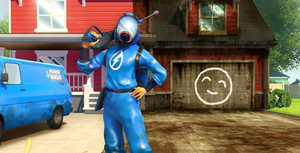
1 and 2 are valid, but it was 3 that intrigued me the most. Was it just a way of justifying "laziness"? Or did it have value to it that I didn't originally see at first. Could the same concept be applied to other aspects of game development or other fields entirely? Thinking about this too much made me enjoy art games less, cause rather than see meaning in them, I began to see holes. "The creator just left this blank and wants ME to fill in the meaning for him!" I'll admit, people do generate more of an emotional connection to things if they (inadvertently) inject a bit of themselves into interpreting someone else's work. But, there's a balance to be struck.
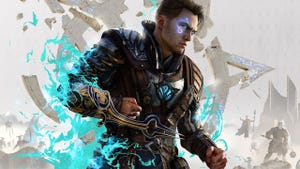
To compare it to painting, look at Picasso and Dali. Look at how incredibly detailed and surreal their works are. They were great painters and knew how to convert what was in their minds to pigment on canvas. Yet, their work was surreal enough to let other people determine multiple meanings for it. They all had a specific mood though, which helps guide people into interpreting the works in a similar way, with some room for deviation.

But at their core, the paintings were amazing. Dali especially. Some of his stuff is photorealistic but with a surreal twist. This certainly wasn't laziness. Now look at some of the more "abstract" artists, Mondrian and Pollock. Where does the meaning in their work come from? Do people only enjoy their work because they're told to enjoy it? Whatever theme for their works comes out of what someone says it is, rather than any specific element in the work itself. It's abstraction. Cave paintings are more interesting to look at than a Mondrian piece. Simplicity is one thing but some of these abstract works just go way too far with it.

I realize there is meaning intended with these pieces, but if you can't communicate that meaning or message through the work itself, and rely on a piece of paper stating your intent, then the work is about as useful as the wall it's hung on.

Back to games now. It's a trend to do "art games" now. Games are art because "art" is a term that can be expanded to fit anything you want into it. Are they on the same level of art as books, paintings, or other "fine art" yet? I don't think so. We're making strides there.

Problem is, "art games" are currently caught up in the same trend that a lot of modern art is: the more abstract your work is, the easier it is for someone to accept it as "good art" because they don't understand it. Bonus points if you're already famous, or have someone famous backing you. If Leonardo da Vinci came back from the dead, spat on a napkin, pointed at it, and said "This is art", people would stare in awe and try to "understand it", but there's nothing to understand. If Joe Blow did the same thing, people would laugh and walk away.

I still think Braid is the best we've got for showing how a game can be art right now. It's not perfect, but it embodies what I like most about artists like Picasso and Dali: It is GOOD at its core, but at the same time leaves a little bit of itself open for interpretation. People can enjoy it without thinking too much about the artistic aspect, but they they can go back and dig deeper if they want. But there is a definite mood to it which helps guide people's interpretations. It's not perfect though, and many complain about how the books sorta separate the story out of the game. Oh well, it's still better than other attempts at "games as art" (distinctly different from "interactive art" mind you).

Now, I may sound cynical at these other art games out there (passage, fathom, gray, etc), but I don't mean any offense to the creators of these games. I think that this type of experimentation is extremely important to evolving the medium, and a necessary step in getting people to value games at the same level as other forms of art. But we aren't there yet.

I did a game called "Pilgrimage" recently which was meant as a satire of this recent "art game" trend. What was interesting was the responses too it. They varied widely, but all proved my point in one way or another (except the people who thought that the pixilation was a "glitch" or "laziness", those were just comical. If anything, the mario gameplay was laziness, not the bitcrush effect).

People liked the game when it was roughly an 8-bit graphic style, then complained when it went to large blockiness. Well hey, there you go. Too much abstraction is bad, but a little abstraction is good. Good luck finding the right balance though, its different for everybody. And that's the point of the game, but have fun digging for symbols and filling in the blanks as to what it means and what happens near the end, it only proves my point further.

Also, the "artist statement" was 100% randomly-generated nonsense, scrolling a bit too fast for people to pause and try to understand what it was saying, so they thought they were reading something intelligent. The game is satire, and it's interesting to see people get angry at for being too much like what it's trying to poke fun at. Hey, that's the POINT of satire!

Anyway, those are my thoughts on the state of games as art. I have a love-hate relationship with them. I love the idea, but recent experiments have been pretty "meh" to me. It's good to see people trying though.

Also, I learned you can't question art. If you do you get flamed because everything is art, and who am I to decide it isn't? That's not the point. Just because something is "art" doesn't mean it implicitly has value to it.


Comments

C M Williams
profile image
"... but damn, no book has ever made me care as much about symbolism and meaning as Braid did. "

Read more books!

Tyler Glaiel
profile image
My point was, I know the books I read had symbolism and meaning, but I just didn't care that much about it; I cared more about the story itself.

Braid, however, made me care.

Reid Kimball
profile image
Tyler, I enjoy the games, nice work.

"3. It lets the player "fill in the details" of the artwork, therefore growing a stronger connection with the characters."
-- Yes, read Scott McCloud's Understanding Comics. It's why adults can also enjoy Pixar movies. While the stories are good, the characters are empathetic because we project ourselves into their experiences.

"Thinking about this too much made me enjoy art games less, cause rather than see meaning in them, I began to see holes. "The creator just left this blank and wants ME to fill in the meaning for him!""
-- Braid does the same thing. I struggled to figure out what it meant, thought I did, then found out online that it wasn't even close, which was frustrating. I still like my own interpretation best because it relates best to my own life.

"I realize there is meaning intended with these pieces, but if you can't communicate that meaning or message through the work itself, and rely on a piece of paper stating your intent, then the work is about as useful as the wall it's hung on."
-- Exactly what Leo Tolstoy says in "What is Art?". I keep mentioning this book, but I do feel it's important for anyone who wants to understand art better.

Tyler Glaiel
profile image
Actually, I have read "Understanding Comics". I found it very good (and it helped me get the name "Closure" for that game). I haven't read "What is Art?" though.

Thanks though, I'll keep it all in mind.

C M Williams
profile image
@Tyler
Understood.

I enjoyed your games btw.

I apologize for not having much to say on this, I am somewhat tired(perhaps you are too) of the Art debate. I'm currently just taking a "Make your games" stance, and if it's art, it will show.

James Hofmann
profile image
I think there are underlying influences to the "indie pixelly art games" meme that work at the subconscious level. One of the big ones is postmodern thought - the tendency of postmodernism to be deconstructive and minimal matches with the nature of these games. As well, having tons of abstraction, clean forms, and absurd gameplay is in maximal contrast to the extremely straightforward/representative nature of commercial gaming: think of all the box art depicting various explosions and swordfights in hyper-detailed settings containing bald space marines and voluptuous women, and how game players stereotypically focus singlemindedly on "beating" the game and earning achievements. It just follows naturally that someone trying to find an answer against these messages would turn to a low-tech, heavily stylized approach.

The nostalgia and retro influences, to me, seem more coincidental than anything else. Art games usually don't borrow more than surface elements of the 8-bit era. They contain much more level design and story content, they are almost never skill-oriented, the mechanics tend to be far less obtuse than many "classic" games(I am thinking of a large portion of 2600 games), and they regularly break realistic technical limitations of old platforms.

Compare the art games mentioned in the OP vs. games like Cave Story, IWBTG, or Dwarf Fortress, which are very much "modern games acknowledging older aesthetics." Even though you can lump those games into the "indie" category, the intent is obviously way different.

Adam Bishop
profile image
I recently released my own "art game" (though I prefer to call it an experimental game) through XBox Live Community Games, called "Time Flows, But Does Not Return", and I also went for a low-res, pixelated style, but I did it for an entirely different reason - the game was deliberately abstract because the entire purpose was to try to communicate something entirely through the hard-coded rule structure, rather than through visuals, sound, or written narrative. I was curious how much information (especially emotional information) I could impart to the player without providing them visual cues. Am I able to get an idea across to the player based entirely on the way the game is structured? Rod Humble's "The Marriage" fits the model as well, I think.

Point #3 that you raise, about players being able to fill in the details, is something I've been thinking about a lot lately, and I think it's one of the reasons I like PS1 era RPGs much more than PS2 era RPGs. It's not just an issue for "art games". The characters in, say, Final Fantasy 7 or 8 are a combination of the characterisation found in the game and the details I've filled in myself. Without detailed polygon models or voice acting, large parts of the character are created by me, which is something I find very interesting. It makes them more like characters from books than movies.

Michael Rivera
profile image
Just out of curiosity, is the "Jason" in Pilgrimage supposed to be who I think it is? It looks an awful lot like him... =)

Anyway, I really think that the recent trend in "pixellated art games" is due to the fact that these creators want you to focus on the game mechanics, not the graphics. If Passage were rendered in high resolution 3D graphics it really wouldn't add any new meaning to the game. Sure, I would be able to see my character aging in greater detail, but I already get that basic impression from the pixellated sprites, so why bother?

Tyler Glaiel
profile image
@michael:

It's not literally him, but they represent the same things, so I thought I'd do that to hopefully draw a connection between them.

Dylan Baker
profile image
Tale of Tales seems to have been saying a lot of this about The Path - that the whole point of it is for the player to inject meaning and interpret the situations that arise in the game themselves. Interesting that this same "abstraction" aesthetic can apply to things beyond the aesthetic of the game, but rather to the narrative or to the gameplay itself... which I think is also what made Braid such a hit with the art analysis community, since it provides something new to analyze - the gameplay mechanics, and their relation to the story.

raigan burns
profile image
I think the assumption that there must be some message or meaning encoded in everything is what's preventing you from enjoying abstract art.

Most people don't get hung up on understanding the "meaning" of electronic music (which is quite abstract), they just enjoy and experience the sounds; for some reason we have a harder time relaxing our need to parse everything when the stimulus is visual.


none
 
Comment:


UBM Techweb
Game Network
Game Developers Conference | GDC Europe | GDC Online | GDC China | Gamasutra | Game Developer Magazine | Game Advertising Online
Game Career Guide | Independent Games Festival | Indie Royale | IndieGames

Other UBM TechWeb Networks
Business Technology | Business Technology Events | Telecommunications & Communications Providers

Privacy Policy | Terms of Service | Contact Us | Copyright © UBM TechWeb, All Rights Reserved.