Keeping
the Pirates at Bay: Implementing Crack Protection for Spyro: Year of the Dragon
By
Gavin
Dodd
Gamasutra
October
17 , 2001
URL: http://www.gamasutra.com/features/20011017/dodd_01.htm
So you've worked
10- to 12-hour days for the past two years, trying to make your latest game
the best ever. You even added copy protection to try to stop the pirates, but
within a few days of release there are already crack patches flying around the
Internet. Now anyone can help themselves to your hard work, without so much
as a "please" or "thank you."
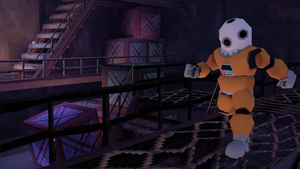
This is what happened to Insomniac's 1999 Playstation release, Spyro 2: Ripto's Rage. Even though it had good copy protection, it was cracked in a little over a week. So when we moved on to Spyro: Year of the Dragon (YOTD), we decided that something more had to be done to try to reduce piracy. The effort was largely successful. Though a cracked version of YOTD has become available, it took over two months for the working patch to appear, after numerous false starts on the part of the pirates (the patch for the European version took another month on top of that). The release of patches that didn't work caused a great deal of confusion among casual pirates and plenty of wasted time and disks among the commercial ones.
![]() |
|
Though
a cracked version of YOTD has become available,
it took over two months for the working patch to appear, after numerous false starts on the part of the pirates. |
Two months may
not seem like a long time, but between 30 and 50 percent of most games' total
sales occur in that time. Approximately 50 percent of the total sales of Spyro
2, up to December 2000, were in the first two months. Even games released
in the middle of the year rather than the holiday season, such as Eidetic's
Syphon Filter, make 30 percent of their total sales in the first two months.
If YOTD follows the same trend, as it almost certainly will, those two
to three months when pirated versions were unavailable must have reduced the
overall level and impact of piracy. On top of this, since YOTD was released
in Europe one month after the U.S., those two months protected early European
sales from pirated copies of the U.S. version.
So why did it
take so long to crack YOTD when a patch was available for Spyro 2
so quickly? The difference was that Spyro 2 only had copy protection,
while YOTD added crack protection. The crack protection complemented
the copy protection by checking for alterations to the game, rather than just
making sure the game was run from an original disk. This extra layer of protection
slowed down the crackers significantly, because removing the copy protection
had to be done without triggering the crack protection. Basically, YOTD
is booby-trapped - one wrong bit and it will blow up in your face. This article
will explain the techniques that we used in YOTD, what we learned from
using them, and some ideas about how to take our techniques even farther. However,
I will not go into explicit detail, as most of the coding involved is relatively
simple. Crack protection is more about out-thinking the crackers than out-coding
them. A great advantage of any method of protection is novelty. Even a new implementation
will give an advantage over simply reusing code, regardless of whether it was
successful in previously delaying a crack.
Defining the Problem
From the very
beginning we recognized that nothing is uncrackable. Many different software
and hardware techniques have been used in an attempt to stop piracy; as far
as I know every one of them has been bypassed or cracked. Our goal was to try
to slow the pirates down for as long as possible.
First we looked
at the copy protection: was there any way to reduce its vulnerability to cracking?
We could call the copy protection multiple times throughout the game, making
it harder to bypass. Unfortunately, the copy protection requires exclusive access
to the CD for about 10 seconds, which is an eternity when you are waiting for
a level to load. So that was out of the question.
Then we looked
at how a typical crack is made. Most cracks for Playstation games replace the
boot executable with an "intro" that proclaims the prowess of the
crackers and allows cheats to be activated. This intro is concatenated with
a copy of the patched executable and compressed so that the total file size
is no larger than the original file. The new file bears little resemblance to
the original boot program. This difference gives us the opportunity to reload
the boot executable sometime after startup, causing severe corruption if it
has been altered in this way. As with the previous option, this solution suffers
from the problem of adding to the load time. It is also vulnerable to the pirates
finding some other space on the disk to hide their crack, leaving the original
boot file untouched. While this solution might have slowed the pirates down
for a few more days, it didn't seem like it was the answer we were looking for.
We decided that
we needed a thorough way of detecting at run time that the game had been cracked.
When we could reliably determine whether the game had been modified, we could
stop the game anytime we found a discrepancy. We also needed a method that didn't
require access to the disk. It should just check the code in memory, unlike
the standard copy protection or our option of reloading the boot program. This
would allow us to place the check anywhere in the game, making it much harder
to remove.
So now we had
a definite goal, an approach that should significantly improve the protection
for YOTD.
Checksumming
Finding out if
a block of data has changed in any way is actually pretty easy. Techniques have
been used for error detection for years and are well documented. Just search
for "checksum" on the Internet. For YOTD, we decided to use
a CRC checksum: it's robust, simple, and fast.
The checksum was
calculated bitwise rather than using tables, as tables would be an easy point
for a cracker to attack. We took care to hide and protect the checksum values
as well. If these could be found and altered easily, a cracker would simply
replace the checksum with a new value that matched the cracked data, which is
far easier than removing the code. For the same reason we didn't use functions
to calculate checksums, we inlined the code as much as possible. If the code
was in a function, it would only have to be removed once. The inline code would
have to be removed as often as it was used.
We used a few
slightly different implementations to stop simple pattern searches from being
used to find the checksum code. To what degree this survived compiler optimization
we don't know. To make our lives easier we made macros. These could be sprinkled
around the code and mixed in with other tasks, which would make it much more
difficult to spot where the checksum was being calculated.
Unfortunately,
because checksums are designed to detect errors and not modification, they cannot
offer full protection against modification. The checksum value for any block
of data can be made to add up to any value by modifying the same number of bits
that are used for the checksum. In other words, if the checksum is 16 bits,
altering 16 bits in the data can make the checksum match any value.
To deal with this,
multiple checksums were applied to the same data. Each checksum used a different
start offset into the data, and stepped through the data by different amounts.
This meant that overlapping and interleaved sections of data were checksummed
at different points, making it almost impossible to alter anything and still
have all the checksums add up. I could have used different checksum algorithms
for the same effect, but in this case I didn't have time to implement more than
one method.
We used the fact
that altering a small number of bits can give you any checksum value to our
advantage. By inserting the correct value into the middle of the data, the checksum
could be made to equal any predetermined value. This meant the checksum value
could be hard-coded and therefore become part of the data being checksummed.
This is bewildering to even think about, let alone try to crack.
Since the game
used multiple code overlays (or DLLs), they cross-checked each other as much
as possible. This further reduced the chance that any section could be altered
without being spotted. If any overlay noticed a discrepancy, it altered data
in the core such that no subsequent checksum would be valid. This meant that
if an alteration was detected in one overlay, then other overlays loaded later
would know about it. This made it difficult for the cracker to spot what actually
triggered the protection, as I'll explain later.
Obfuscation
Now that the meat
of YOTD's crack protection had been implemented, it was time to move
on to the second stage slowing down the crackers as much as possible.
We had already tried to make the protection as difficult as possible to understand,
mixing in the checksum code with regular game code, and using different implementations
so that it would be hard to understand. We thought that if the crackers couldn't
understand what we had done, it would be a lot harder for them to crack the
game. We wanted to make it hard enough to reduce the pool of people capable
of cracking it. If there are only a couple of pirates with enough skill to crack
a game's protection, it might take them a week or two to get around to it. Unfortunately,
with YOTD being such a high-profile game, this was probably wishful thinking.
Thus we wanted
to make the job of cracking YOTD time-consuming and tedious. If we could
just keep the crackers busy at finding the protection, that's time taken away
from them working out how to remove it. Again, we were trying to reduce the
pool of people available who could crack the game. Not every cracker would have
enough time available to make the crack; it probably isn't anyone's day job.
On this note, it's worth pointing out that for most crackers this is a hobby.
If they get bored, they may well give up. We tried to make the crackers have
to wade through plenty of chaff before finding the protection. There were a
couple of techniques we tried to achieve this.
First of all,
if the crackers know what they are looking for, they often don't even have to
boot up the game to find the protection. They can simply search the disk and
sometimes even edit the protection right there and then. Simply doing an XOR
of as much of YOTD's code as possible before burning it to the CD means
that this technique will not work. It also makes it difficult to match up data
in memory with its source on the disk. We worked under the assumption that code
can't be modified if it can't be found.
Second, we made
it as difficult as possible to debug. If you've ever had to debug code that
behaves differently when you trace through it, you know how much of a pain debugging
can be. We used trace traps to make the code behave differently if breakpoints
had been placed. The checksum helped with this, as any software breakpoints
used would alter the checksum. Rebooting the debugger and the game takes time,
and the more often we could force the cracker to do this, the more of their
time we were wasting.
Perversely, though,
the harder a crack is to make, the more fun it is for the cracker to make it.
It's a challenge, and therefore fun. Paradox, the cracking group who produced
the working patch for YOTD, even thanked the "Sony coders"
who added such interesting protection to the game. The more difficult the crack,
the more effort they will put into making it.
It's the same
with the length of time it takes to produce. The longer that the game has been
out without a crack, the more prestige there is in being the first to produce
one. Again, this means more effort will be put into producing it.
Taking Action
Of
course, all of this effort is worth nothing if the game doesn't do anything
once a crack is detected, but this needs to be handled carefully. If the game
just halts as soon as any modification is detected, the cracker would soon find
and remove all the protection. However, if we wait too long to react, too much
of the game would be playable even if an incomplete crack was used. To balance
this, we used as many layers of protection as possible, which occurred at different
points during the game. In YOTD we had four layers, including the copy
protection.
The copy protection
stopped the game very early. When this was removed, the game appeared to work
for some time. We assumed that the crackers generally don't play the games they
crack very much, they just play until the point where the protection they know
about kicks in. Then they release a crack, believing it to be complete.
To play on this,
we designed the game to break in ways that weren't immediately obvious. Most
of the protection is "off-camera," affecting levels other than the
one currently being played. In YOTD the object of the game is to collect
eggs and gems, which are then used to open later parts of the game. The protection
removed eggs and gems, so that the player could not make progress. We tried
to make the game unplayable for any length of time, while at the same time making
it difficult to determine exactly where things had gone wrong. If errors accumulated
slowly until the game broke, the cracker would not notice such behavior so easily.
Other, more obvious
protection was done less frequently. Callbacks were corrupted, which made the
game crash in odd ways. The European version changed languages randomly. Some
of these actions break the game and others are just an annoyance to the player,
but if the game is difficult or frustrating to play because of the failed crack,
this can be more effective than breaking completely.
By making the
game behave in as many odd ways as possible, we hoped to cause a lot of confusion.
The pirates wouldn't know if the crack didn't work, whether they had just failed
to apply the crack correctly, or if the disk had failed to burn correctly. The
people who didn't play a lot of the game wouldn't notice that anything was wrong
and claim that the crack worked. This happens more than you would think. A lot
of people pirate more out of habit than anything else, booting up the game to
have a look before moving on quickly. All of this would help to delay a complete
crack from being made, because no one would be sure that it was required.
The Costs
Implementing all
of this protection takes time and resources away from actually developing the
game. For YOTD those costs were as follows:
Programmer
time. One programmer was required for three to four weeks. The programmer
spent this time adding the copy protection, integrating the anticrack protection
into the game, and writing tools to mask the data and generate checksums. For
about six months prior to actually writing any code, some time was spent thinking
of methods for protecting the game and what to do when a crack was detected.
This was slightly less than two percent of the total programmer time budgeted
for the game.
Game data preparation.
The game data needed additional preparation before a disk could be burned. The
game's WAD file had to be run through tools to generate checksums and mask data.
This added about an hour to the burn cycle, making it about three hours long.
The extra steps involved also made this process more prone to error, though
this diminished over time as we became used to it and automated what we could.
Debugging.
Any version of the game with protection included was very difficult to debug,
as any software breakpoints would trigger the protection. Beyond a certain point,
hardware breakpoints were turned off by the copy protection. This effectively
meant that any debugging had to be done by the programmer who implemented the
protection (me) on production versions of the game.
Testing.
The protection was designed to produce effects almost indistinguishable from
bugs, so testing was also affected. If any false positives occurred in the protection,
they could be reported incorrectly. For this reason a very thorough debugging
plan was produced just for the protection. Every location that could trigger
protection was listed, along with how long it would take to trigger, what the
exact effect would be, and where you had to look to see the effect. Testers
had to visit the locations, wait the required amount of time, and then look
to see if the protection had been triggered. Having any of the protection give
a false positive was obviously our biggest worry. Therefore all the protection
was set up on a compile-time switch so that it could be turned off at any time
if we weren't absolutely sure that the protection was reliable (and believe
me, there were a few moments when it didn't seem to be).
After the Crack
In the end, rather
than trying to remove all the checksum code, the crackers simply found a way
to bypass it. I'm not exactly sure how, but I know YOTD was vulnerable
because the copy protection was only run once, at boot time. I assume the crack
bypassed the copy protection and then restored the data to its original state.
Any checksums performed after this point would not find any alterations (and
any checksums before this were removed by the crackers).
While the protection
on YOTD was reasonably effective, there were definitely things that we
could have done better. If we had been able to check the data on the disk and
run multiple copy protection checks, then it would have been a lot more difficult
for the crackers. As I mentioned at the beginning of this article, there were
practical reasons why these approaches could not be applied to YOTD.
Maybe if the protection had been integrated into the game earlier, these difficulties
could have been overcome.
Also, too much
of the game could be played with a partial crack. This was a balancing act,
though. If the protection had kicked in faster, perhaps the crackers would have
realized sooner that they hadn't been successful with the first crack. But in
the end, we were perhaps a little too cautious. We could have reduced the amount
of the game that could be played with an incomplete crack.
What We Learned
Were all our efforts
worth it? Yes. While the effects of crack protection against piracy are extremely
difficult to measure, we certainly caused a great deal of confusion. Until the
crack came out, YOTD was the most talked about game on the copying forums.
People wasted disks, blamed the cracking teams, and claimed that the cracks
that didn't work were O.K., just because they hadn't seen anything go wrong.
People were saying nasty things about Insomniac and Sony because they couldn't
"back up" the game. Some people even thought it was funny when the
fairy character, who normally offers players helpful advice, instead told them
they were playing a modified game. There is also an effect on future piracy
to consider: at the very least we made a few people think twice about buying
a cheap copy of a game.
We've gained valuable
knowledge about what works and what doesn't. Layering protection that doesn't
kick in immediately is definitely a very effective protection. If nobody thinks
a crack is required, they won't be working on one. Even when they do work on
the crack, it takes them longer. The crackers apparently spent quite some time
play-testing YOTD before they released the final crack, just to make
sure they didn't get burned twice.
Unfortunately,
the crack protection is weaker once the copy protection has been run. The cracker
only needs to remove the code that runs the copy protection. Once it has been
run, the original code can be restored, and the checksum will be correct. If
this is only in one place, it is easier to attack. To combat this, the copy
protection needs to be run as often as practical from independent copies of
the code.
If there is space,
put multiple copies of the game data on the disk. The cracker will have to find
out which one is used or alter them all. Either way, you've slowed them down.
An extension to this would be to actually use multiple copies of the data, either
loading a random selection or loading using a pattern based on when the data
is being loaded. If some of the copies are masked differently and some are never
used, the cracker will have to find and alter them all to ensure that the crack
is complete.
Even better than
masking the data is compressing it, which offers many advantages over simple
masking. The relationship between compressed and uncompressed data is much less
obvious, the file sizes are different, and any cracked data has to be compressed
or else it won't fit back on the disk. This means the cracker has to find out
what compression was used, and if you customize the algorithm for your data,
they may have to write a compression program just to be able to make the crack.
Looking back at
the choices we made, we could have implemented multiple copy-protection checks
throughout the course of the game. Unfortunately, this isn't always possible
or practical, depending on the method of protection used (especially if minimizing
load times is a primary concern). An alternative is to check the source data
on the disk. Of course you can't check the entire disk, but all the executables
can be checked, along with the table of contents and boot information. This
is something YOTD failed to do and is probably how it was cracked.
Reality Check
We may not be
able to stop the pirates, but we can have enough of an impact to make pirating
a much less attractive option. Given the choice of buying a game or waiting
two to three months for a pirated version, a lot of pirates are going to start
buying games. Or at least they'll buy their favorite ones.
There is also
an advantage in numbers; the more games that add effective protection, the greater
the benefit is for all games. Crackers have limited resources, and the longer
that they're tied up on each game, even if it's only for a few weeks, the fewer
cracks they can produce.
Games that implement just a standard copy protection scheme can be cracked in less than a day. Sometimes a tool is even available which does it in seconds. Any game that takes longer than this because of added protection will be put in line until the cracker has time to deal with it. The longer that line is, the longer it will take for any given game to be cracked. The trick is to keep your game from reaching the front of that line for as long as possible.
For More Information
If you are interested
in learning more about how the copying community works and how cracks are made,
try looking at the cracking groups and forums. Here are a few starting points.
www.paradogs.com
www.cdrom-guide.com
www.gamecopyworld.com
www.megagames.com
The following
links are not to crackers but to "homebrew" programmers who make console
demos. Still, techniques and tools made for the hobby scene always end up migrating
to the crackers.
www.uic-spippolatori.com/psx/tute/faq.html
www.hitmen-console.org
http://napalm.intelinet.com
http://www.gamasutra.com/features/20011017/dodd_01.htm
Copyright © 2000-2001 CMP Media Inc. All rights reserved.