Game
Design: Secrets of the Sages
Creating Characters, Storyboarding, and Design Documents
By
Marc
Saltzman
Gamasutra
March
15, 2002
URL: http://www.gamasutra.com/features/20020308/saltzman_01.htm
Mario. Pikachu. Lara Croft. Sonic. Pac-Man. Crash Bandicoot. Duke Nukem. Earthworm Jim. Pajama Sam.
What do these words have in common? The answer is simpleall of them are household names, but they're not famous actors from a Hollywood movie or some hit TV show. They're not Saturday morning cartoon characters (okay, some of them went on to that) and they're not the latest doll craze for kids. These are the video game heroes, the stars of the interactive screen whose marketing potential has kept them in the limelight for many years, and lined the pockets of their creators with green.
Many developers and publishers have tried desperately to create the next billion-dollar game icon, but a catchy name or cute look often isn't enough. So what's the secret? This chapter contains words of wisdom from many of those aforementioned creators. But that's not all we're going to explore here.
If there was a common theme running through this chapter, it would be "how to get your ideas down on paper." Some game designers prefer to sketch out rough characters or backgrounds on paper (or work with artists to do so); others draw sequential storyboards to help shape the vision and flow of the game or a cinematic cut-scene sequence; and in other cases, designers write fiction or game screenplays (usually for adventure games or RPGs where there's a lot of dialogue).
Design documents are often lengthy paper reports used to communicate the entire blueprint of the game, covering all its features, story elements, characters, locations, dialogue, puzzles, artwork, sound effects, music, and much more. These documents are usually designed in a modular fashion so they can be updated and modified if the design of the game takes a new form.
This chapter highlights how some of the more famous characters in the gaming industry were born, plus we talk with game designers and artists about storyboarding, script writing, design documents, and other ways to flesh out your hit game before you type your first line of code.
As a special addition to this lengthy chapter, veteran freelance game designer Daniel Greenberg (http://www.danielgreenberg.com) has written an educational and enlightening essay on interactive script writing. But waitthere's moredesigner American McGee has provided us with the complete narrative to the beginning of American McGee's Alice.
Shigeru Miyamoto, Nintendo
A man who needs little introduction, the humble Mr. Miyamoto is a living legend
in the interactive entertainment industry. He has conceived some of our most
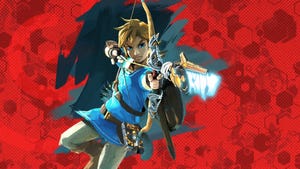
beloved electronic characters, such as Mario, Luigi, Donkey Kong, and Link from
the Legend of Zelda series.
When asked how to create such internationally recognizable and deeply loved characters, Miyamoto said it all boils down to the fun factor:
Making games "fun" is our only objective, and we're always
making an effort to accomplish this goal. I believe that the creation of game
characters is simply one of the processes to achieve this goal. If Mario games
hadn't been fun to play, the character wouldn't be popular at all.
Exactly what makes a character fun? Is it solely appearance? A cute voice? Ease of control? Why do many game developers fail when trying to create the next Mario?
I'm not sure why some fail to create a memorable character. A player
can emotionally relate to the video game character as his/her other self, which
is the decisive difference from the characters in other media. Mario, for instance,
can be a character with completely different meaning when he's driving a car
and when he's jumping. The other design elements will affect the look and feel
of the character.
Miyamoto recognizes that his characters are quite cute and family friendly, and therefore won't appeal to all kinds of gamers: "I think a number of game players feel, 'If Miyamoto's characters had cooler appearances, I could love them.' All I can say to them is, "I am sorry."
Where does
Miyamoto find inspiration for his beloved games and characters? How exactly
did Mario come to life?
The inspirations come from all over: my childhood adventures, the
stories I heard growing up, the legends in Japan. After all, we can get inspiration
from the ordinary things that everyone is experiencing in our daily lives, by
looking at them from a different angle. In the case of Mario, back in or around
1980, when we couldn't reproduce sophisticated designs on TV game machines due
to the technological limitations, I had to make his nose bigger and put on a
mustache so that players could notice he had the nose. I had to let him wear
overalls so that his arm movements became noticeable. Mario was the result of
these rational ideas, plus the Italian design touch that I loved.
One last note: Miyamoto warns that designers may not be able to objectively comprehend how players will feel when playing the game for the first time, because the designer is so close to the project.
Lorne Lanning, Oddworld
Inhabitants
In Chapter 2, Lorne Lanning, responsible in part for the memorable characters
found in the various Oddworld games, talks about game design theory and production.
Here, he discusses the "secret" to creating protagonists such as Abe
or Munch.
First you have to know what you're after when designing lead characters.
Is it a heroic character? An outlaw? A spy? What are they all about and what
do they represent? You have to know exactly how you want them to communicate
to the viewer. You need to know as much about them as you can conjure up. What
they like and dislike, what their dilemmas are, what makes them tick. These
are the things that give characters depth. The depth of the character is something
that you should understand before you even start to design how it looks visually.
What's the first step, then? Lanning references Oddworld's lovable aliens:
Before we hit the drawing table, our focus was to create hero characters
who were true underdogs. They're unlikely heroes who couldn't believe what had
happened to them, their species, their cultures, etc. These characters would
be considered the garbage of society. They come from the native aboriginal class,
the working class, or from the wild. They're looked upon as pure commodity in
their world, but not as living, sensitive beings. They're not the muscle-bound
superheroes that you wish you could be; they're the poor schmucks that we already
are. We wanted characters that embrace the notion of finding their inner strength
and purpose.
You then have to be willing to go through a ton of design iterations.
When Farzad Varahramyan [a production designer on the Oddworld games] started
to design Munch, we went through literally hundreds of designs. We already knew
that Munch was an amphibious creature who hopped on one leg like a bird on land,
yet swam like a dolphin in the water. We knew he had only one leg, two little
arms, a big mouth, and a big head. We knew he had a remote zap port implanted
in his skull. We knew that he was young and the last of his kind. We knew that
he was in denial regarding the condition of his species. We knew that he was
lonely and searching out others of his kind. He was uneducated. He was really
just a child in the scheme of things. We knew all of these things when Farzad
began to create many, many cool designs...but still we weren't hitting the emotional
mark of our goal.
Next, Lanning says they passed different iterations past Sherry McKenna, executive producer/CEO of Oddworld Inhabitants.
Her read is predictably non-biasedas she puts it, "completely
pedestrian." She looks at things and just registers how it makes her feel.
She's a great litmus test for us in this respect. We wanted to make sure that
Munch held a place in the hearts of males and females. It was a very difficult
character to design and we spent a lot of time finalizing him. Farzad stuck
to it and didn't get discouraged. In the end, he came through and we were able
to create a new hero who hooked those who saw him. He had to look like he came
from Oddworld; he had to look as though he could have evolved there, and he
had to capture our hearts.
Interestingly, Lanning says their various publishers were skeptical at first that this critter could win people's hearts.
However, we believed we had hit the mark on our final iteration, and
after much debate the final Munch design prevailed. Since then, it has gone
over extremely well with all the audiences who have seen him. Had the publishing
forces had their way, Munch could have been watered down into something less
strange-looking, and thus less edgy. You need to believe when you have something
that communicates to an audience, and you need to be prepared to defend and
substantiate what you believe works and why it works. You also need to listen
to feedback in case you're wrong. It's one thing to believe you have a solid
design; it's another to be able to convince others.
When you're on the creative front, the people who are paying for the
product want assurances that the "creative" will work for the target
audience. Of course, to have assurances usually means that it's proven historically.
Unfortunately, history doesn't reveal what will creatively work for today's
and tomorrow's audience. So the dance of selling something new and different
is almost as important as the ability to create it.
This chapter also discusses the importances of design documents and storyboarding. Lanning contributes his thoughts on these topics:
Design documents are critical. They are the equivalent of a movie
script or a business plan; without one, you don't have a roadmap that will keep
you on course throughout the storm that is productionlet alone getting
you financing in the first place.
In addition, today games take large teams of people and have multimillion-dollar
budgets. This means that everyone needs to have clear communication or else
a lot of money can be wasted very quickly. The team, the publisher, the managementeveryone
needs to know what you're getting into if you're to pull it off and have production
go smoothly. It also becomes the basis of your schedule at the beginning of
the project.
Storyboarding is critical to us in the video sequences. We used to
do storyboards for gameplay, but this became more of a burden than an asset.
Then we started doing actual visualizations, which helped to communicate ideas
much more clearly. For these we used 3D data to illustrate the moves, lighting,
effects, animations, etc. that the game engine would eventually run. There's
nothing like seeing something do exactly what you want it to dobefore
it has been codedto help communicate new ideas to a team of people.
The third game in the Oddworld series, dubbed Oddworld: Munch's Oddysee, is a Microsoft Xbox launch title, slated for a November 2001 release. It's the first 3D game in the popular series.
Be sure to visit Chapter 8, which contains some stellar advice from Lorne Lanning on how to create good puzzles in your games.
Tsunekazu Ishihara, Pokémon
Co.
It's hard to argue that Pokémon has become one of the world's biggest
phenomena over the past few years. It first started out as a Game Boy title
in Japan and then became a popular kid's TV show, collectible card game, successful
toy line, movie franchise, and more.
Here to speak about creating successful video game characters is Tsunekazu Ishihara, the producer on all Pokémon and Pokémon-related products for Nintendo.
Naturally, the first question is whether there's a formula, secret, or technique to creating characters such as Pikachu and other mega-popular Pokémon icons. Ishihara responds:
When talking about Pokémon games, its success is because the
characters are described in thorough detail, I believe. More specifically, for
each Pokémon, there's weight, height, effective offense/defense, and
other attributes. These details help make Pokémon video games very well
balanced; on the other hand, they help make such imaginary Pokémon characters
as Pikachu have more of a realistic existence. With this information, children
form their images of each Pokémon in their minds, empathizing with each
of the characters and feeling as if they were actually traveling with Pokémon.
Such well-detailed characteristics may be the secret of why Pokémon characters
such as Pikachu are well received by children around the world.
On its international success, Ishihara says "It was not something we had originally intended." Instead, Pokémon was designed originally for the Japanese people, says Ishihara. Honestly, he later admits, it was designed for his nephews and nieces!
After the success in Japan, when we were to bring them to the U.S.,
our U.S. people demanded a variety of modifications in order to Americanize
them. For example, they said that Pokémon are too cute and that they
wanted to add muscular nature and such themes as fighting against evil. In the
end, however, we haven't complied with their requests. If we were to do so,
Pokémon would not be Pokémon. As a result, children around the
world fell in love with Pokémon.
One final, funny note. "It has turned out that my nephew and niece are happy they sort of brought Pokémon to the rest of the children in the world!" jokes Ishihara.
David Perry, Shiny
Entertainmen
President of Shiny Entertainment and game designer extraordinaire David Perry
has brought to life a number of hit characters over the years. This includes
protagonists from the Earthworm Jim games, MDK, Wild 9, Messiah, Sacrifice,
and soon The Matrix.
Perry was asked to provide three (in)valuable pieces of advice on creating a successful game character, and all three of his answers are thought-provoking:
Somebody once said that a great character has a unique silhouetteif you can identify a character just by its outline, you know you've made something that will stand out in a crowd.
Perry says he hates to advertise this, but...
I have to say that the best way to learn how to make a great character
is to take this class: http://www.beyondstructure.com.
I highly recommend it. If you're new to the business, you're not going to get
away with Pac-Man anymore; you have to make real, intelligent, interesting
characters. This seminar will tell you exactly how to do just that.
Many times throughout this book you may see conflicting advice on certain topics. Case in point: Asked about the importance of design documents, Perry directly contradicts Lorne Lanning and others:
I used to think they were a waste of time. I still do, to be honest.
I prefer different documents that matter to certain people that they will bother
to read:
Does Perry storyboard his games?
Over the years, I've worked with all sorts of business people. Some
"get it," but some are completely flatline when it comes to any ability
to think creatively. I found that the saying is indeed true, "A picture
paints a thousand words." We extensively draw storyboards now, so that
anyone that needs to understand the vision can just look at the pictures like
a comic book. It saves a lot of discussion.
I've found that taking 3D sculptures of your characters to meetings
is great because it's an instant conversation piece, and the people you're pitching
become mesmerized by the sculpture as you describe the design. How do you get
a good sculpture? There are several ways, but these are the best two I know:
Perry's words of wisdom can be found in other places throughout this bookbe sure to read his thoughts on general game design theory and implementation (Chapter 2) and on breaking into the industry (Chapter 21).
George Broussard, 3D
Realms
Ever since the third game in 3D Realms' popular Duke Nukem series came
out in 1996, countless others have tried to create a successful lead character
by mimicking its overly macho, mouthy, badass hero, Duke Nukem. (Heck, his name
says it alone!)
3D Realms president George Broussard offers some advice to those looking to create character-driven action games:
First off, your game has to be great. Without that, nothing you do
with a character matters. We try to create catchy character nameslike
Duke Nukem or Max Paynethat instantly get a reaction from people, or create
an image in someone's mind. That's the "hook." Once you have a hook
that people find interesting, you just flesh out the character with personality
traits, mannerisms, and catchphrases.
Broussard explains why Max Payne is more than just a cool name:
Remedy Entertainment did a great job with Max Payne. His name has
a unique hook and people usually get the punthat he delivers "maximum
pain." Then you give Max a compelling reason to act and be motivated. He's
an undercover cop, with his back against the wall, out for revenge after the
death of his wife and daughter. Finally, you give Max his "personality"
through the way he speaks. Max narrates his journey metaphorically, in the style
of detective films of the1940s and 1950s. What you end up with is an interesting
character who's fairly unique to games, and hopefully people respond to that.
Our gaming audience is getting more sophisticated every day and won't settle
for less.
Broussard adds that this advice really depends on the types of characters you want to make. He explains:
We typically create over-the-top characters that lean more toward
what you might find in comic books or high-action movies. Characters that are
larger than life, and for those types of characters there's a pretty basic starting
point.
To reiterate and summarize his points made above, Broussard says you can break down any character into the following characteristics:
To further illustrate his point on the "parts" of a distinguishable character, Broussard provides these examples:
See if you can guess the character before the name is given, simply from the basic elements:Personality trait: Egotistical
Appearance: Sunglasses, red muscle shirt, bandoliers, blond flat top
Motivation: Kick alien ass/score with babes
Catchphrase: "Come get some"
Name: Duke Nukem
Personality traits: Determined, inquisitive, loner
Appearance: Black suit, white shirt, tie, cell phone
Motivation: FBI agent/uncover conspiracies
Catchphrase: "The Truth Is Out There"
Name: Fox Mulder, from The X-Files
Says Broussard, "The above is merely a starting point for developing your own characters, and you can make them more or less complex, depending on your needs. But in the end, these characteristics are needed for a really memorable character."
How do you translate sketches to real characters in the game? Is it necessary for a series such as Duke Nukem?
As video games have gotten more and more complex, we've started to
adopt the ways that movies do things. A lot of games today have scripts much
like a movie, where all the action, cut-scenes, and dialogue are carefully laid
out in every detail. Another thing that has been adopted is the idea of concept
sketches. These sketches serve to solidify the look and feel of elements in
the game, such as characters, locations, and action sequences.
But what about design documents? Are they necessary for all types of games?
Let me tell you about design docs. Duke Nukem 3D didn't even have
one. We did stuff as we went, adding bits that were cool and discarding ideas
that didn't work. Look how the game turned out. All we had was a vague notion
that the game would be based in a future, seedy L.A. The rest came from a dynamic
development process.
Duke Nukem Forever has substantially more on paper from the start
because it's a much more cohesive and large game. But people who write 300-page
design docs beforehand are wasting their time. The game design process (for
most) is an evolutionary process. You refine and redesign as you go, learning
and making things better. It's insane to write a 300-page doc, then just make
the game. There's no way you can think of every cool idea before you make the
game, and you have to be flexible enough to roll with the punches and add and
refine ideas as you go, all according to the timeline.
Speaking from our experience, design docs are merely a general guideline
that gets more and more polished as you go. You just try to stay three to four
months ahead of things as you go. The design doc isn't done until the game is.
Also bear in mind that 3D action games are not that complex. They
have bad guys, guns, items, and level locations. Not exactly rocket science,
or something needing 300 pages.
Be sure to read all about the exciting Duke Nukem happenings at 3D Realms' official web site.
Scott Miller, 3D Realms
We just heard from George Broussard, president of 3D Realms, about creating
such hit characters as Duke Nukembut we'll also turn to 3D Realms CEO
Scott Miller to reveal the "secret" to creating successful characters,
while so many others have failed.
Positioning and differentiation. Duke is the first white male action
hero. No other character will ever have a chance knocking Duke off his particular
pedestal, because it's better to be first than it is to be better (a key concept
of positioning). Likewise, Max Payne is the first character of his typea
true antihero vigilante copand no other developer will ever have a chance
making a better character with this description. Thanks to the well-known psychology
of the human mind, better doesn't win; being first is what really matters.
George [Broussard] and I have studied and discussed characters for
almost a decade, and finally in the last 56 years we think we've put together
the key pieces of the puzzle better than anyone else in this industry. A bold
statement, maybe, but consider that we planned Max to be the next great male
action character and franchise from day one of the games design, and guided
Remedy (the developers) in the key ways to make it happen. And we're going to
do it again with two more coming game characters, Bombshell (appearing first
in Duke Nukem Forever before starring in her own games), and another game I
can't announce yet (wait for E3 2002).
Miller acknowledges that this is a tough topic to cover in brief, because, as he puts it, "It's worthy of its own book."
But there are specific guidelines to naming a character properly,
so that the name is better remembered and has a catchy hook. A character-based
game should be named with the character's name (much like most comic books dowhich
was our inspiration for this particular idea years ago). One commonality of
catchy, memorable names is that one of the names is only one syllable long.
For example: Johnny Quest, James Bond, Darth Vadar, Luke Skywalker, Duke Nukem,
Commander Keen, Indiana Jones, Max Payne, Han Solo, Lara Croft, on and on. There
are several important rules like this that should be followed to create a great
character name.
Another piece of advice, something that was also touched on by Broussard, is that a character's name should reflect something about the character. Explains Miller:
Duke Nukem and Max Payne do this very well. Other game character names
like Lara Croft, Kate Archer, John Mullins, John Blade are just generic, valueless
names that say nothing about the personality of the character they represent.
In other areas of this book, Miller shares a lot of great advice on general game design, building a franchise (in Chapter 2) and on breaking into the industry (Chapter 21).
Jason Rubin, Naughty
Dog
As a wholly owned subsidiary of Sony Computer Entertainment, Inc., Naughty Dog
has won worldwide acclaim for its Crash Bandicoot games (1996 to 1999).
Jason Rubin, co-founder and lead designer, is hard at work on Jak & Daxter:
The Precursor Legacy, a 3D platformer for the Playstation 2.
Is there a formula for creating a successful game character?
Ah, the impossible question to answer. Certainly, there are many things
that contribute. Good design, which means making sure that the right people
are involved, and the right opinions are sought. Good integration, which involves
making sure that the character fits the game, and the game is worth playing.
Good marketing, to make sure that the character is positioned correctly, and
the public wants to know more about it. And good follow-through, including derivative
products like toys and shirts to reinforce the connection, as well as properly
timed sequels, and continued placement of the character in the public eye. Certainly,
no successful character that I can think of has failed in any of these categories.
The best, like Pokémon and Mario, have not only done well in each, but
have always excelled.
So, how important is a cute/cool character in a video game today, such as Crash Bandicoot or Jak & Daxter?
The farther into the broader marketplace gaming goes, the more important
"characters" become. That might mean a lead character, or a license
like Tony Hawk, or the official NBA teams and logos. The reason that video games
are interesting to more people today than they were in the '80s is that people
who couldn't identify with a Pong paddle or Pac-Man are interested in playing
Lara Croft. As the gap between reality or fantasy and the visuals in games narrows,
more people are drawn to the medium. And as story and plot become more involving
in games, even the non-competitive have a reason to play. A look across recent
bestsellers yields (besides the venerable I) a list of games that focus on characters
broadly defined, and the trend should continue.
Without a doubt, many readers of this chapter would be interested in how Rubin and company came up with the Crash Bandicoot character. He answers with the following anecdote:
Crash was designed by multiple Naughty Dogs and two Hollywood cartoon
designers named Charles Zembillas and Joe Pearson. We did dozens of paper sketches,
and then we bred them together, picking the best features from each, and adding
new mutations along the way. After dozens of generations, we had a 2D Crash.
Then we modeled him in a 3D package, and further refined his attributes to work
with the added dimension. Finally, we put him on the PlayStation, and refined
him yet again to make sure that features stood out, and that he worked at the
resolution and with the number of polygons that we were using. The whole process
took about four months.
Speaking of Crash, if Rubin had to summarize it into a paragraph, what would he say is the key to Crash's success? He ponders the question, then answers:
Crash Bandicoot, the character, appeals to the broadest variety of
people: young and old, male and female, Japanese, North American, or European.
Most first-time Crash purchasers, regardless of nationality, are buying from
advertising, promotional material, or the box cover. If the character fails,
then the game fails. Crash excelled in this department thanks to both a good
original design and Sony Computer Entertainment's amazing worldwide marketing
campaign.
With this in mind, was Jak & Daxter any easier, more difficult, or about the same?
Jak and Daxter's design process was similar to Crash's but it took
twice as long. We asked more opinions and had more experience as a group. We
also designed Jak and Daxter in conjunction with our producers and marketing
teams from Sony America, Sony Europe, and Sony Japan. We set out from the beginning
to make a character that appealed to the whole world. Crash was designed in
a less global manner, and I think that only luck and a great marketing effort
by Sony facilitated his international appeal. Overall, I'm more excited about
Jak and Daxter than I was with Crash. I love the way they look, and I think
that they have more possibilities for growth as characters.
Want to catch Rubin's advice on game design? Fling yourself back to Chapter 2.
Toby Gard, Confounding
Factor
You may not be too familiar with this designer's name, but chances are you're
aware of his most beloved creationLara Croft. Toby Gard left Core Design
as lead graphic artist and game designer on the revolutionary title Tomb
Raider, to launch his own development studio alongside fellow Core Design
lead programmer Paul Douglas. Their first game, Galleon, is an epic action/adventure
scheduled for a 2001 release.
In a minute, we'll get into creating successful characters. (And Tomb Raider's Lara Croft is as successful as it getscomplete with her own live action movie starring Angelina Jolie!) First, a few words from Gard on general game design.
Your objectives should be contingent upon your resources. If you're
forced into using a type of technology, such as a certain engine, or are limited
in any other way by your platform or programming, then you have to come at your
design from that direction first. For instance, at its most severe, if you're
making a Game Boy game, then you already know you're limited to it being 2D
and having pretty serious speed and memory restrictions. No Quake 12
for you.
Assuming that you'll be making a game for the PC or one of the newer
3D consoles, however, as is more often the case these days, your restrictions
are pretty loose. I prefer working from this direction, because you can take
a pure idea and you know that in some form you'll be able to make it happenhowever
hard that route is. So then you need an idea, right? Well, I think we all have
about a million of them eachit's whatever gets you excited, like wanting
to be in Star Wars or showing people how much fun snowboarding is. Then
all you need to do is go down to the pub and talk endlessly with your mates
about what would be cool about it (or preferably with whoever you're going to
make the game with).
During that time, you need to be constantly solving the "How
the hell can we do that?" technical questions. Even if you're just saying
stuff like, "Well, we need shadows. Quake does shadows, so how are
they doing that, and can we use a similar technique?" During this period
you should be thinking an awful lot about how your control system will work.
I'm a believer in compressing your control system down to the minimum number
of buttons to achieve your aims; that way you tend to get an elegant rather
than a cumbersome control system. You're basically aiming to be in the position
where you have such a clear idea of what the game will be like that you can
actually play it in your head. When you can do that, if you're visualizing it
hard enough, you'll be able to see and address loads of the flaws in the idea
before you've implemented a damn thing!
Therefore, the three most important things for me are a) visualize
the control system, including game mechanics; b) have technology ideas for how
to implement all of the above; and c) write it all down!
When creating a lead character for a video game, Gard says to be sure you really like what you've designed; then other people have a good chance of liking it too. He expands on this notion:
If you aren't sure about your character, dump it. If you experiment
all the time, drawing without any particular purpose, and explore avenues that
look good in a fairly freeform sort of way, at some point you'll get something
that you just instinctively know works. Then, you see, you'll start to love
the character, and that will shine through in your work because the character
starts to take on its own personality through your drawings. I think that's
probably ityou need to design and redesign again and again, until you
can't anymore. Then just draw that character about a hundred times (having fun
with it), and you'll be there. Well, that's the method I use.
Can Gard offer are specific do's or don'ts for creating a hit character like Lara Croft?
After all, that's the whole point, right?
Yuji Naka, Sega
As president of Sonic Team Corporation, Yuji Naka has worked on a number of
beloved Sega games, including Nights, Samba de Amigo, Phantasy Star Online,
Sonic Adventure, and others.
Through an interpreter, we chatted with Mr. Naka about game design and creating successful lead characters.
Asked to give some advice for those interested in making games for a living, Naka's answer was to try and create a game with its own unique identity (regardless of what others are doing) and to add as much feeling and character into the game as possible.
Speaking of characters, Sonic the Hedgehog is one of the world's most recognizable video game mascots. How can someone create the next Sonic?
Characters produced from the games are naturally born of the fun elements
of the games. Because it's much different in that respect from animated cartoons
and movies, think about the game itself and then create characters.
The game's movement and flow are the necessary reason why Sonic was
born. There originally was Super Mario, and although much different from Nintendo's
character, we designednot as his rivalbut as a game that we can
be proud of on the same level...and Sonic was born.
On finding inspiration for games, Naka says he tries to direct his attention to various kinds of things in his everyday lifelike everyday entertainment, for example.
What's the best advice Naka can give for creating massively-multiplayer console games such as Phantasy Star Online? "Carefully create the means of communication." That is, one of the most important points is the communication among the game players. So when you create a game such as Phantasy Star Online, you should think about what communication means to the gameplay.
Does Naka believe multiplayer games are the future for consoles? He responds, "I guess it is in a way, but I don't think it's the only way. I would say that 30 percent of players will become multiplayers and the rest won't."
Naka emphasizes that the user interface (see Chapter 14) is one of the most important considerations for the game designer: "Games that don't take the interface and controls into account have not been successful in the pastthey're the most important points in the game itself."
Yu Suzuki, Sega
Also at Sega is the one and only Yu Suzuki, responsible for such fantastic games
such as the character-driven Shenmue, the Virtua Fighter series,
the Virtua Cop series, Hang On, Space Harrier, and others.
While Chapter 2 houses Suzuki's answers on creating fun and challenging video games, here we just asked him one question: How does he create such great characters as Ryo in Shenmue? Suzuki says:
What's most important is originality. Also, by tightly creating invisible
parts like background stories or personalities of the characters, later development
opportunity will be broadened. And lastly, a note on self-promotion: It's necessary
to make an active effort to gain more recognition, like exposure or advertisement
to media such as magazines or home pages.
Hideo Kojima, Konami
The celebrated game designer responsible for the Metal Gear Solid games
was asked the discuss the importance of a lead character, such as Solid Snake,
and how to create a successful one.
This is a tough question. The lead character of a story is the most important element. If you can't associate yourself with the lead character of a movie or novel, you won't enjoy the storyline, no matter how great the storyline is. This holds true for games. What's different is that in games you control the main character. This is why it's necessary to take into consideration the character's "compatibility" to the viewpoints and psychology of all the people who would potentially play the game. Maintaining this balance is very difficult. The basic character description/setting, along with the character itself, is one thing. When the player actually moves the character, the character becomes complete. The player is the one who adds to the character what's missing.
Be sure to turn back to Chapter 2 to read Kojima's advice on general video game design.
Michel Ancel, Ubi Soft
Entertainment
As project director at Ubi Soft in Paris, France, Michel Ancel is the designer
who created the character Rayman, a huge international hit. He stars in all
the versions of the Rayman games (available on multiple platforms) and
for the past two years has been working on a top-secret project to debut in
2002 or 2003.
Before we dive into Rayman as a character, Ancel offers some game design tips. "Be creative, be logical, and understand the player's point of view," he begins. Using Rayman as an example, Ancel continues:
The creativity aspect of Rayman comes from its graphic style.
We also tried to imagine some unique game sequences, like being chased by a
pirate spaceship or cooperating with a powerful but fearful friend. The logic
part is about the rules, the gameplay techniques that you have to follow precisely,
like the evolutions of Rayman, the level of skills, the puzzles. And to understand
the player's view, the game must be playable for maybe millions of people. It
means that we must consider how people will react when playing. The typical
questions are about the controls, the story, the challenge, the rewards, etc.
Are they good enough? Easy to understand? etc. The questions that must be answered
early in the game's creation.
Is there a special technique for creating world-renowned characters such as Rayman?
When I created Rayman, I didn't really analyze it. I just made it
like this because it was fun for me and my friends. I also wanted an easy-to-animate
character. Your character must not look like [other characters], but at the
same time he must appear familiar to people. That's a challenge between originality
and an easy-to-understand character.
Rayman is visually original, but in some aspects he's close to what
young people are wanting from a hero. The visual aspect is important for the
first impact. After this first feeling, the next one is about animation. A lot
of the personality is revealed by the animationsthe way your character
move in common actions. The next and most important stepespecially for
gamescomes from his powers, his specific actions. What can he do that
will surprise the player? This is an important question. The next and deepest
aspect will come from his feelings, his personality, the way he reacts in particular
situations: danger, love, surprises, victory, etc. You must consider all these
steps of perceptions and be sure that you're not completely copying another
hero!
"Rayman is 50 percent action and 50 percent humor. That's what most young people care about," says Ancel.
Finally, he discusses the issue of control (discussed in depth in Chapter 14). Ancel agrees that one of the biggest challenges when making a game is to make the control very intuitive and comfortable. The Rayman series is a good example of it done right. Ancel explains why:
You must look at the player's reflexes. To avoid frustration, you
must think about what's natural for people. Test your new control with your
friends, wife, childreneveryone who will give you feedback. A single delay
on the buttons, the acceleration curve of the cameraall these parameters
are important to tune if you want good control. You must have more than 100
of these kinds of parameters in your game, and must be able to change them easily
depending on the player's feedback.
Tim Schafer, Double Fine
Productions
Some of the computer game industry's most beloved characters were created by
the affable Tim Schafer, who recently left an eight-year stint at Lucas Arts
to start Double Fine Productions. Schafer brought such memorable, time-withstanding
characters to life such as Manuel "Manny" Calavera and Hector Lemans
from Grim Fandango and Ben and Malcolm Corley from Full Throttle.
According to Schafer, wish fulfillment is the main secret to character (and game) design. He explains:
Never forget that you're providing players with the chance to do something
they can't do in their daily lives. It should be something that they really
want to do, if just for a little while. With Full Throttle, we were banking
on the secret desire to be a biker: big, tough, cool. Riding a huge hog around.
Without a helmet. Ask yourself, what's the wish fulfillment that I'm providing
with my game? What secret desire am I satisfying? This is more important in
adventure games than in a game like, say, Sonic the Hedgehog, because adventure
games are always about fantasy.
Schafer comments on the importance of storyboarding and design documents for creating adventure games:
We storyboarded every single shot that appears in Grim Fandango,
and it was invaluable. It helps the artists know what to build, what angles
it has to look good from. It tells the people who are placing the characters
in the scenes where everybody should be standing. People have been doing it
in movies for years, and games are just figuring it out now.
A design document is the game designer's bible for the development
of the game. It shouldn't just be a burst of ideas you scribble down in the
beginning of the process and then forget about as you enter the heat of production.
It should be a living document that you revise after every brainstorming session
to keep fresh and up to date. It's for the team to reference when they (or you)
forget what the plan was.
Take heed to this veteran's advice: "If you don't have one, you'll drift off target, I promise."
Read more from Schafer on general game design tips and techniques (Chapter 3) and how to create good puzzles in an adventure game (Chapter 8).
Gabe Newell, Valve Software
In Chapter 2, Gabe Newell, founder and managing director of Kirkland, Washington's
Valve Software, talks about creating successful action games such as Half-Life.
He briefly comments here on creating lead characters and writing design documents.
"Actually, I'm not sure that a lead character is necessary, or even beneficial, in first-person games," admits Newell. He continues:
We made Gordon [Freeman, the protagonist in Half-Life] as transparent
to the player as possible. The only time you ever hear yourself is when you're
breathing during the disaster sequence. We had a bunch of third-person scenes,
and we slowly realized that they were hurting the experience, not helping.
However, Newell does admit to using design documents:
We couldn't work without design documents. We have too many people
who need to think through all of the implications of the design in all of the
millions of details that go into a next-generation game. Each hour spent on
the design probably saves us 10 hours of implementation.
Alex Garden, Relic Entertainment
The young game designer responsible for Homeworld and Sigma: The Adventures
of Rex Chance talks about the importance of a design document and how to
best tackle one.
A design document is a road map for a team tasked with creating your
wacky idea. Members of your team should be able to reference your design document
when they have questions. Practically speaking, game design is a somewhat organic
process though, so the design document has to be somewhat organic as well to
keep people informed correctly. At Relic, we have one mega, central design document
that's used as the basis of the game; then we supplement it with "Design
Updates" that are much shorter and easier to update.
How important is storyboarding a game today?
Considering the cost and complexity of cinematic and animatic sequences,
it's critically important to do as much pre-production as you can (which is
relatively cheap) before you start working on full product (which is very, very
expensive). Planning may look like a waste of time, but it is in fact the single
easiest and cheapest way to make your game good in the end.
Bruce C. Shelley, Ensemble
Studios
Ensemble Studios designer Bruce Shelleywhose Age of Empires computer
games have become one of the most successful real-time strategy games on the
planetoffers his advice on using design documents:
The design document (DD) is the blueprint of the game design. It begins
with a short paragraph or a long vision statement that sums up what the game
is about. This is followed by a longer two- or three-page vision document, which
provides more detail on the look and feel of the game. This grows into a full-blown
DD that may reach several hundred pages for one of our games. All major systems
have separate chapters that explain in detail how each system will work. For
example, in the Age of Empires games, the DDs had a chapter on buildings.
Here we listed all the buildings, their functions, their costs, their prerequisites,
when they could be built, their attributes (hit points, armor), etc. Everyone
on the project could go to that part of the DD to see how a particular building
was supposed to work. From this document, the programming team would create
their technical design document, which would list all the programming tasks,
who was assigned to them, and estimates of creation time. The art team builds
a list of art components from the DD. The test team builds its list of systems
to be tested. The publisher compares the DD to the build they receive. The DD
is the backbone of the development process. It's a living document, updated
regularly. We keep it on our intranet so it's easily available to all. We also
create a "DD Lite" that someone can read more easily for a quick overview
of the product.
Phil Steinmeyer, PopTop
Software
The creator of Railroad Tycoon, Tropico, and others says there are all
kinds of design documents, so it's important to clarify the differences between
them:
[They can] range from publisher summaries, which can be 110
pages, to general game design documents, running 1550 pages, to detailed
technical architecture documents listing every bit of code and art asset that
will be needed by the game (sometimes running 1,000 pages and more).
Steinmeyer says he typically writes and follows two design documents. The first is a short summary for his publisher, highlighting projected marketing, budget, sales, and competing games. The second is a longer document for internal use.
For Tropico, it was about 40 pages of text, plus lots of spreadsheets.
My team has complained that the Tropico design document wasn't detailed
enough, and it wasn't kept up to date, so I'm going to try for more detail and
keeping it up better on our next game.
Phil Saunders, Presto
Studios
Earlier in this chapter we heard from Tim Schafer, best known for his games
when employed by Lucas Arts, and now we have Phil Saunders from Presto Studios
to chat further about design docs and storyboarding in adventure games.
"In our process, storyboarding is really only used for cinematic sequences where we're in complete control of the player's viewpoint," begins Saunders. He continues:
In environments that are fully realized and navigable, the important
part of pre-production is prototyping. We create simple models early on in the
process to define the path and to show what will and won't be visible to the
player in any given location. At this stage, we're able to discover what players
will and won't learn, and when; what we can hide from them; as well as what's
revealed. As an additional benefit, prototyping allows us to have a good grasp
of the size and scope of our production. We can tell what level of detail must
be put into what part of the environment, based on its distance and accessibility
to the player.
Why this amount of effort?
We've learned the hard way that preliminary planning pays off in the
end. It's sad to see someone's designs being cut from the game because you've
run out of time, or technically it just won't work. For Myst III: Exile,
we spent about a year developing the gameplay, story, and early visual ideas.
At the end of about 11 months, we had a design document 160 pages long. The
design document saves you from over designing and eventually cutting out work
that took someone months to prepare. Months that could have been better spent
fine-tuning other areas.
Is a design document necessary? "In my opinion," concludes Saunders, "it's the most important part of production."
For more about the creation of Myst III: Exile and what could be learned from it, hop back to Chapter 3.
Ragnar Tørnquist,
Funcom
The brilliant and articulate Ragnar Tørnquistcreator of The
Longest Journey, arguably one of the most critically acclaimed adventure
games of latetalks in this chapter about creating a successful protagonist
and the importance of design docs and storyboard sequences.
"Creating strong characters in a game is not as hard as people think," begins Tørnquist, when asked to reveal the "secret" to creating a successful lead character such as April Ryan in The Longest Journey.
Most of it has to do with depth: depth of personality, depth of background,
depth of characterization. It's important to avoid clichés and stereotypes,
and one way to go about it (at least initially) is to use real people as models
for your characters. Think about what it is that makes a person unique: Is it
the way he or she talks, walks, laughs? Observe his or her expressionsfacial,
verbal, body languageand dig deep into that person's full history. The
more complex the background, the more thorough your preparation, and the easier
it is to develop a strong character. Even if it isn't mentioned in the game,
take the time to write down personal details such as family history, likes and
dislikes, favorite petsanything and everything that's suitable for the
kind of character you want to create.
In other words, if your character is a butt-kicking marine with a
grudge, you probably don't need to think about his favorite color, but you'll
need to find out why this guy became a soldier in the first place, what makes
him tick, and what he wants to accomplish.
Okay, so what about the creation of April Ryan?
With April Ryan in The Longest Journey (TLJ), there was actually
a ton of background material that's only briefly hinted at in the game, but
that gave her depth and character. There's a reason for everything she says
and does, and I think that's quite apparent. Long before I started writing her
dialogue, I knew everything that had happened to her from the day she was born
to the day the game started. I knew what made her tick. I knew how she spoke,
how she would react in any given situation. At that point, it's a lot easier
to develop the character and to have him or her become a natural part of the
story and the setting.
I said earlier to avoid clichés and stereotypes, but sometimes
clichés and stereotypes are great ways to establish a character immediately,
without a lot of dialogue, especially in the case of supporting characters who
may not get a lot of screen time. Don't knock stereotyping; there's a good reason
why some people do conform to stereotypes. With TLJ, we had The Surly
Detective, The Funny Sidekick, The Mysterious Stranger, The Mad Wizard, and
so on. These types of characters, done right, appeal to us on a very basic level:
we understand them. We've seen them before. We know where they fit in. While
you don't want your lead character(s) to fit into an easy mold, clichés
and stereotypes are tools that can be used to fill out your character gallery.
After a while, you'll probably want to play with these clichés and stereotypes,
twisting them ever so slightly to keep the players on their toes throughout.
And on the development of these characters, and using the storyor, more precisely, the plotTørnquist says to keep in mind that good characterization (at least in games) comes from placing ordinary people in extraordinary situations.
This is usually a lot more interesting than extraordinary people in
extraordinary situations: By virtue of the changes in the game world, and the
way your characters react to these changes, you'll find that your protagonist(s)
often start to evolve and grow on you, regardless of your original intent. Let
the player experience the world through the eyes of the protagonist; if the
protagonist's eyes are jaded or all-knowing, it's not particularly interesting.
But if, as with April, the extraordinary things that happen on her journey are
as surprising to her as to the player, there's an instant link between the person
playing and the character he or she is controlling. And that's a good thing.
On design docs for an adventure game, Tørnquist mirrors many of the sentiments found in this chapter:
A design document is a blueprint for the programmers, artists, and
level designers. It describes in detail the concept and ideas, the systems and
functions, and the suggested implementation of all game featuresboth the
obvious ones (visual interface, for example) and the not-so-obvious ones (AI,
scripts, saving and loading, and so on).
Tørnquist expands on this comment, and also touches on storyboarding:
The designer's job is to think of every eventuality that might occur,
every action the player may want to perform, every problem that could pop up,
as well as create an interesting world, a strong story, intriguing characters,
and fun gameplay. It's impossible to cover every eventualityto second-guess
all possibilitiesbut the point is to be as well prepared as possible.
Design will happen, whether you want it to or not, throughout the production,
until the day the game ships (or, in the case of online games, even after the
game has shipped, and for years to come). A design document is therefore an
evolving document, constantly updated by the designers, providing a living record
of intent as well as result.
A storyboard is a visual representation of what occurs onscreen, which
is only the tip of the iceberg in terms of the actual design. A storyboard visualizes
what the player will see and do, and so it's an interesting way to "play
the game" long before the game is up and running, but it doesn't replace
the design document. For The Longest Journey, we storyboarded a few important
in-game sequences, but not all of themnot even most of them. However,
we did make detailed concept drawings of all locations and every single character
in the gamethis is called the visual or graphic design. By doing that,
we were able to plan out what animations, sound effects, dialogue, and code
we needed. Of course, all of the game's cut-scenes were fully storyboarded,
much like with an animated movie.
And lest we forget about a scriptarguably the most important part of a creating an adventure game, Tørnquist has a few words to say on that topic:
Last but not least, an adventure game needs a script; this is the
document that "tells the story," in dialogue, scripted events, every
possible response to every possible actionmuch like a movie script, but
much, much bigger. Combine the threethe design (technical, systems, interface),
the storyboard, and the scriptand you're ready to start production, at
which point you'll realize that making adventure games is even more fun than
playing them!
Ragnar Tørnquist offers sagely advice in Chapter 3 on creating adventure games.
Ron Gilbert, Humongous
Entertainment
The gaming genius behind many of our most lovable characters, such as Monkey
Island's Guybrush Threepwood, Maniac Mansion's Bernard, and Pajama
Sam, believes that "there has to be something about the character that's
visually recognizable, and simply understood." He explains:
We don't have the bandwidth yet for complex characters like in film,
so we simplify and often rely on stereotypes, and then we build them up through
storytelling. In action or real-time strategy games, we rely on these stereotypes
for you to instantly understand who the character is. The story is secondary,
more of an afterthought, but not for adventure games, of course.
Daniel Greenberg, Freelance
The talented Daniel Greenberg is an award-winning freelance game designer with
almost two decades of experience making critically acclaimed and commercially
successful games. Some of these include Star Trek: Starfleet Academy, Vampire:
The MasqueradeRedemption, Star Control III, Tenchu II: Birth of the Stealth
Assassins, Independence War II: The Edge of Chaos, Sea Dogs, Advanced Dungeons
and Dragons: Al Qadim/The Genie's Curse, and X-Men: The Mutant Wars.
He is also a consultant for a number of well-known computer and console publishers.
Greenberg was first asked to provide some important pieces of advice to share with newbie game designers on becoming a success in the industry. His answers are quite thorough, so dig in and get comfortable.
Apprenticeship: Learn the rules. Stay in school. There's a
lot more to game design than being really into deathmatching. The best way to
learn it is to absorb the distilled essence of what mankind has learned over
the last few thousand years. There's a shocking amount of good stuff in college
and even high schoolif you keep your ears open. Learn the basicsat
least enough English to write crackling dialogue and avoid passive voice; at
least enough dramatic theory to understand why Aristotelian theory is still
essential 2,000 years later; at least enough programming to create flowcharts
that are efficient and meaningful; at least enough art theory to be able to
speak intelligently to artists about color, form, motion, and asset management;
and at least enough business and marketing and corporate culture to talk coherently
to people who will turn your games into cash. None of this stuff is dull to
an active mind that is restlessly churning everything it digests into fodder
for games. Once you're firmly grounded in a multidisciplinary approach, get
inside the business any way you canquality assurance, administrative assistant,
etc. Once you're inside, it's easy to learn the ropes and even find mentors.
Knowing the rules will help you avoid the pitfalls that tripped up so many designers
before you.
Professionalism: Follow the rules. It doesn't matter if you're
16 or 60; there's no excuse for unprofessional conduct. Handle the basic stuff.
When you give your word, can your boss and coworkers and employees count on
you? Make sure they canevery time. Underpromise and overdeliver. The temptation
to do just the opposite is often overwhelming. Resist it.
The rules are there for a reason: they work. The rules can help you
isolate bad ideas and eliminate the pressures that result in crappy games.
Revolution: Break the rules. Game design is full of devotion
to stupid conventions that are slavishly copied in hopes of duplicating success.
Innovation requires a leap of faith into the void. And that's the easy part.
Once you've created a brilliant, unconventional, defiant design, harness your
creative powers to create imaginative ways to sell your innovations to marketing.
If you learned how risk-averse corporate culture is during step 1 (apprenticeship),
you should have an edge in this process. Following the rules makes good games.
To make great games, you have to know which rules to break.
With the nearly 20 years of experience Greenberg has under his belt, he can easily support his advice above with real-world personal/professional examples.
I'm still pillaging classes I took years ago for good ideas. My psychological
studies into reaching autistic children became the basis for the secret final
mission in Starfleet Academy ("A World of Their Own"), in which
the only way to survive a confrontation with a planet-killing vessel is to not
try to get them to understand you, but to understand them by getting into their
dissociative world.
In my Advanced Dungeons and Dragons computer game, The Genie's
Curse, I drew on notions of honor and sacrifice from a Philosophy of the
Middle Ages course, in order to let players make meaningful choices about expediency
versus the difficult but honorable path. (The Computer Shopper magazine reviewer
said "...it is refreshing to see a game where honor and courtesy are an
integral part, and portrayed in a way that isn't trite.")

Much of this chapter looks at storyboarding, the various theories on why storyboards are important, and how to approach them. Greenberg looks at the importance of the story itself and offers the following paragraphs:
Aristotelian dramatic structure has not been repealed in the digital
age, but it needs some adaptation to account for user input. Story structure
needs to follow the basic pattern of rising and falling action, but the player
needs some ability to alter the pacing, or the story will feel forced and labored.
But just as Arthur Miller had to seriously rework Aristotle to reach a modern
audience with "Death of a Salesman," good games need to rethink dramatic
structure for the new medium.
Many games have paper-thin characters because our art form is still
in its infancy. For all their rapidly accelerating power, PCs are actually still
a very crude canvas. They're bursting at the seams to contain an art form as
potentially explosive as interactive storytelling. Unlike mature art forms,
like books or films, our medium is in its infancy, and our ultimate structure
is utterly unknown to usthough many of us suspect it will make the Holodeck
look like a child's toy. (Wait. The Holodeck is a child's toy.)
The people in our audience who "get" interactive entertainment
are still a small subset of the general population (though this subset is growing
and evolving faster than the keepers of our culture understand or imagine).
So we can be excused for catering more to the more primal interactivity needs
of our audience than the more subtle forms of characterization and intricate
plot construction. It only makes sense that we (and our audience) are more enthralled
by the gimcrackery of the exponentially increasing technology than exploring
the depths of the human psyche via video games (though that, too, is happening).
So the simple conclusion is that Lara Croft is about as developed as she needs
to be for the style of game she appears in. That style of gameplay is evolving,
however, as we find what's really meaningful in storytelling.
Great stories resonate in us, because somewhere the story relates
to journeys we have taken, struggles we have endured, and burdens we have borne.
Even the most fantastic story can connect with us on a symbolic level. This
has tremendous power, even if most people are not fully conscious of the effects
of story on their emotions, actions, and lives. Games can illuminate our own
inner landscape just as books and movies can, showing us a little bit about
ourselves as we play. Good games let us take charge of that process, and let
us explore that inner landscape. One secret to illuminate that path is the tool
of multiple good outcomes.
Any secrets Greenberg can share on storytelling in an interactive medium? Indeed there are. Greenberg provides the following, and supports his comprehensive words of wisdom with examples from games such as Vampire: The MasqueradeRedemption and Star Trek: Starfleet Academy.
Multiple "good" outcomes
A big secret of superior interactive storytelling is the concept of
multiple good outcomes, with varying degrees of "good."
When I first began designing, most games had a very linear storyline.
Interactive choices offered were largely illusory, as any deviation from the
storyline was punishable by death (or at least game over). This became too obvious,
so some games decided not to kill characters immediately after the player chose
the death path. This made the game livelier, but led to terrible frustration
when players realized they were "dead without knowing it." It was
often quite difficult for players to locate the killer choice point and start
over from there. Eventually, interactive story design evolved to the point where
games could offer a third, more ambiguous choice to spice up the mix of a fairly
obvious survival choice and a fairly obvious insta-death choice. These good,
bad, and ugly choices improved the mix, but were still very limited.
My favorite solution was to make the insta-death choice very rare
(You chose door number two? You're dead!), and focus on a wide range of variables
to track choices within the main story. Players don't have cut-and-dried choices
that point in obvious directions, but more subtle choices that could each turn
out well. Each choice has real consequences and real rewards far beyond issues
of death and survival. They take the player along differing paths through the
main story, and result in a range of consequences and endings depending on the
preponderance of choices made throughout the game. This lets the player feel
more in charge of his destiny.
This "multiple good options" approach has another beneficial
effect. Players can personalize their character to a greater extent, and therefore
feel a closer connection to their avatar. For example, if the player needs to
question a non-player character, consider providing a range of dialogue approaches.
Choosing between dialogue options like browbeating and sweet-talking lets players
sculpt their characters' emerging personalities. Players not only control their
destinies, but shape the kind of ride they have on the way to that destiny.
Technical note: If you're going to offer the player these kinds of
choices throughout the game, it's important to reveal this experientially early
on, by setting up a simple, low-impact choice and result early in the game.
The player needs to feel the consequences of his choice very quickly to know
that the game is indeed responding qualitatively to his decisions.
The trick is tracking all the variables set in play, and making sure
they're all paid off. It's also important that the player has a sense of why
he gets the outcome he did. He doesn't need to understand the direct consequences
of each choice, but should have some idea. (If he wants to know the direct consequences
of each choice, he's free to replay from a myriad of saved games, and believe
me, a lot of players will. And then they'll post the consequences in great detail
on gaming sites.)
One of the best ways to offer multiple good options is to use the
approach of short-term pain for long-term gain versus short-term gain for long-term
pain. Tempt the player with expedient choices, but hint that there's a price
to pay later. And offer a price to be paid now for hope of a return later. This
is a diabolical bind, and makes for very textured choices for the playerneither
of which is obviously objectively bad. When players are wracked with nervous
apprehension while making choices, you have done your job.
Examples (and reviews to show how the goal was accomplished):
Vampire: The MasqueradeRedemption offers the player multiple endings based on ethical conduct during the game. While ethical vampires might sound confusingly contradictory, in practice it works well. We implemented the Humanity system that we had used quite successfully in the paper game version. Vampires are unliving creatures who either cling to the tattered shreds of their former humanity or yield to the beast within and become ravening monsters. So if the player made difficult but ethical choices in his dealings with others, he could forestall the slide to oblivion, and even find a kind of redemption. If he acts like the monster he's becoming, he hastens his slide into oblivion. However, even this "bad" ending can give him power to defeat the boss villain, but at the cost of his soul. In the end, the game's basic choices became a meditation on what we sacrifice for power, on defeat in victory and on victory in defeat.
Adrenaline Vault said: "The well-constructed storyline and character
development system give VTM: Redemption an overpoweringly immersive quality,
possessed in very few offerings today."
Star Trek: Starfleet Academy requires that the player manage
a crew of raw cadets and mold them into a team. Besides having to make career
path decisions, resolve inter-crew squabbling, and deal with opportunities to
cheat (just like James T. Kirk), the player has the option to neglect his studies
to help solve a serious problem he and his science officer have stumbled upon.
From the very beginning of the game, it appears that the top victory condition
is graduating first in the class. Therefore, all the academic choices seem far
more important than more fun distractions. And, for the most part, they are.
But the player gets an inkling that the fringe research project he has embarked
upon could have tremendous, far-reaching consequences, saving more than a few
lives. The player will have to sacrifice what appears to be the whole point
of the gamewinning command of his own ship by graduating first in his
class. The research plan that will let him crack the problem is presented as
yet another tempting distraction from his limited study time. But clues interspersed
throughout the game, including interactions with Academy Special Instructor
Kirk, hint that it could be far more than that. If you actually dare to ask
Kirk audacious questions about his notorious defiance of the Prime Directive,
you learn all about how and when to break rules. Many players figure out the
special ending the first time through the game, but not all. Which is as it
should be.
Cnet Game Center's review said that Starfleet Academy's "...clever
writing and an understanding of the Trek mythos (and its implications) surpasses
most of the current TV shows and movies. In fact, the question of what we are
to learn from Kirk himself and his "Cowboy Diplomacy" (based on the
original series and first set of movies) is one of the major themes of this
story."
Bill Roper, Blizzard
Entertainment
Do design docs and storyboarding play an important role in RPGs? To enlighten
us, Blizzard Entertainment's Bill Roper and Blizzard North's Matt Householder
(see the next section) speak on these issues. First, let's hear from Bill Roper:
The different teams within Blizzard approach design documents from
different angles. The Diablo II team kept most of the design within the
game. If a change was made to the way monsters worked, those changes were made
directly in the spreadsheets and were recorded that way as well. The Warcraft
III team has integrated their design documents into a web-based format to
make it easier for non-programmers to follow the changes to the game. Both ways
have their strengths and weaknesses, and in the end it's up to each team to
find the method that best suits their particular needs and group of developers.
The common ground that our teams share in regard to design documents
is in defining and following the vision of the project. In the case of Warcraft
III, this is to create a real-time strategy game that infuses elements of
role playing into the design. We created the term role-playing strategy (RPS)
to help focus the decisions made by the team. From this basic idea came the
concepts of focusing on fewer and more powerful units, simplifying the resource
model, making exploration a key component of the game, creating more organic
campaigns, and making the game even more immersive than Starcraft. Finding
the core essence of the game and then building upon that concept is how we grow
our games, and the documentation involved is recording decisions and ideas that
are made along the way.
With Blizzard's stunning cinematic sequences, you can bet these start out as storyboards before the computer graphic (CG) artists begin animating these short films. Roper explains how the process works at Blizzard:
Storyboarding is essential in regard to campaign creation and cinematic
sequences. The cinematic department at Blizzard has walls filled with storyboards
scripting out each sequence they're going to create for each game. They work
closely with the development teams to ensure that the look and spirit of the
game are translated into the cinematic sequences and to make sure that [they've
created] the proper continuity. Models are shared when appropriate and artists
from both the cinematic and development teams get together to brainstorm and
eventually create the storyboards. The writers utilize these storyboards to
shape the dialogue, and this can result in a change in the visuals as well as
the acting performances or sound and music design.
Of course, this all has to tie into the game's campaign storyline,
and so the level designers get involved in the process as well. They also create
storyboards, although these tend to be with both words and level outlines. With
the ability to create in-game cinematic sequences using the game engine, we've
found it necessary to find key elements in the campaign maps in which to integrate
story elements or give players rewards for completing portions of the campaign.
All in all, it's a very collaborative process involving several different groups
within the company.
Matt Householder, Blizzard
North
Another key member of the Diablo II group is Matt Householder, who also
shares some comments in Chapter 4. He adds to Roper's discussion on the importance
of a design documents and storyboarding of these mega-popular RPGs:
The purpose of a design document is to present the look and feel of
the game to the production team (and publisher's management) in an efficient
and maintainable way. Begin with a one- or two-page overview, briefly describing
the player's viewpoint, gameplay, and controls.
Explain why it will be fun to play. Be sure to cover all the basic
issues in briefsingle-player, multiplayer, console versus PC, player characters,
opponent/enemy characters, animation style, background settings, sound/music,
story, etc., and then elaborate on them in later sections devoted to one major
topic at a time. Drawingssketches, character designs, screen mockupsare
very helpful to visualize the game. For a large game, the document could grow
to hundreds of pages!
A design document is a lot like a recipe for the building of a game,
but the best cooks often experiment and modify recipes as they go. Likewise,
Blizzard North uses a design document more as a general guideline rather than
a "bible" and encourages creative expression by all the production
team memberseven exploring major design changes during the development
process.
And on storyboarding:
It's essential for cinematic production, but not strictly necessary
for the production of game code and artwork. One place storyboarding can help
a great deal in game production, however, is in flowcharting the user interactions
of making choices to start up a game, navigating through game menu screens,
and the like.
Both Householder and Roper discuss the art and science that is RPG game design in Chapter 4.
Chris Taylor, Gas Powered
Games
The creator of such beloved games as Total Annihilation (when at Cavedog
Entertainment) and Dungeon Siege has provided this book with a design
document template (see Chapter 6) that you can use as a basis for your own custom
document, plugging in the necessary game details to suit your project.
Here, Taylor explains that creating a design document can be approached in many different ways:
Design documents can vary from highly theoretical to very technical
and detailed. Over the years I've settled on a system in which I create an overview
document and then a series of appendices that add the details. From this I then
produce specification documents that break down everything for the person who
will implement the specifics. It's great to have a template to work from because
then you can just go through and fill in each section. You begin with the high
concept, then the feature set. Then you must answer the 10 most jaded and difficult
questions that you think someone might ask you about your design. If you can't
answer them right from the beginning, you may need to go back and think about
why you want to make a game like that in the first place.
Taylor says the importance of storyboarding depends on the type of game:
When there are a huge number of art assets involved, you absolutely
must do concept sketches, storyboards, and anything else you can to reduce risk
and any chance of doing stuff over and over again. Poor planning will frustrate
people and de-motivate them, so storyboarding is a great way to communicate
the overall plan, look and feel, style, and scope of the game.
Warren Spector, Ion Storm
Austin
In Chapter 4, Warren Spectorbest known for games such as the Ultima
Underworld series, System Shock and Deus Exchats at
great length about creating award-winning role-playing games. His suggestions
can also be found in Chapters 12, 17, and 21.
Here he discusses the importance of a design doc:
A design doc is absolutely vital to me. I know some other hugely successful
developers (who will remain nameless) who insist they never bother trying to
document their games. I can't imagine that!
For me, a design doc is many things: It's a roadmapan abstract,
iconic version of your proposed game. If you keep it updated during pre-production
and even during production, it's a snapshot, a picture of where your project
stands today, right now. If done "right," it includes materials, assets,
and information that marketing can use to generate early press coverage of your
game (without bugging the development team too much!). Toward the end of the
project, a design doc that has been updated appropriately can be a vital tool
for manual and cluebook writers, as well as for QA teams looking to generate
playthrough and feature checklists. Most important, though, a design doc is
a vital communications tool, both internally (ensuring that everyone on the
dev team is on the same page) and externally (for publisher, marketing, and
even press). I just wouldn't know how to make or manage a game without one.
So, how does Spectoror any game designer, for that matterwrite a design document?
Unfortunately, no two projects are the same, no two teams are the
same, no two genres have the same requirements, and therefore, no two design
docs are going to be the same. You just have to find the elements necessary
to describe your game to your team and to your publisher. Figure out what you
need to provide to ensure that your team has enough information to implement
the vision of a game. Allow each person on the team to contribute to the extent
of their capabilities and/or interests, but give one person "ownership"
of the doc. (In other words, one person should say yes or no to any idea before
it's incorporated into the final doc.) Plan on revising throughout development,
to ensure that the doc reflects the changing reality of your game's development.
Recognize that a time will come when reality overtakes your doc and continued
updating may (MAY) be unnecessary. And then read the book I obviously have to
write on this subject! I'm completely overwhelmed by how much there is to say
so I better stop. Sorry...
Spector admits that storyboarding has never been a big part of his development process:
It's vital, obviously, when planning cinematics, but that's about
it. You always want concept art for characters and locations/maps/levels before
you spend a lot of money modeling and creating them, but that isn't really storyboarding
per se. I remember reading a fine little book called Behind the Scenes at Sega,
about the making of a platform game, that said every aspect of the game should
be storyboarded. That idea just isn't applicable to the kinds of games my studio
produces (and illustrates the fact that development processes have to be appropriate
to the game you're makingthere's no single Right Way to make a game...).
Storyboarding is probably vital to games where you know exactly what path players
will take every step of their journey and where you pre-plan every puzzle and
its one solution.
Storyboards were certainly an important part of the Wing Commander
games, with their emphasis on cinematics, and I bet the Lucas Arts adventure
games use them heavily. But if you're making something more open-ended than
that, storyboards just don't seem all that useful. We're not (or shouldn't be)
making movies here...
American McGee, Carbon6
Entertainment
American McGee, creative director at Carbon6 Entertainment, has worked on such
renowned PC titles as Doom, Doom III, Quake, Quake II, and most recently,
American McGee's Alice for Electronic Arts.
For this chapter on storyboarding, McGee gives us his vision for the cinematic intro to Alice. Read on, and enjoy. If you've ever played the game (and you should!), you'll get a lot more out of this having experienced the breathtaking intro sequence.
American McGee's Alice intro, written by American McGee
Alice Story
Intro:
EXT HOUSE
Snow flurries dot the night sky. Storm has passed.
Camera glides through leaded glass French doors into the library of a comfortable Victorian manor.
[Full] moon's glow, intensified by snow, lights the room. Shelves overflow with books and papers.
Camera moves toward a large fireplace.
A napping cat stands, arches his back, and uses the leg of a nearby desk to sharpen his claws.
Retreating, he catches a claw on a damask cloth, which is decoratively draped over part of the desk.
An oil lamp sits on the cloth.
Trying to get free, cat pulls the cloth. The lamp is drawn to and over the edge. Smashes on floor.
Oil covers the cat and flows towards the glowing embers in the fireplace.
Flame explodes out of the cinders and engulfs the cat and paper-filled desk.
Fire spreads through the library at an alarming pace.
Smoke slithers the door and up the stairsalong the hallway and slips under Alice's door.
Camera moves to sleeping Alice.
A tendril of smoke wisps up her nostril.
Camera follows.
WONDERLANDGNOME GARDENTEA PARTY
Alice and a small assortment of Wonderland charactersMad Hatter, Gryphon, March Hare, Dormouse, White Rabbithaving tea around a huge table. Mood is light and playful.
Mad Hatter, pouring tea for Alice, drops the pot, which shatters with the sounds of breaking glass. Suddenly, the ground around the table splits open and fire comes through the fissures.
Smoke billows around everyone. The shadow of the Jabberwock passes overhead. Screams.
Fade back to Alice's moonlit, smoke-filled room.
INT HOUSE
Alice awakens from her interrupted dream.
The [muffled] screams are coming from inside the house.
Alice leaps out of bed, clutching her beloved white rabbit, and runs to the door.
Hallway is filled with smoke and licks of fire.
She bolts towards her parents' room, and trying the doorknob burns her hand severely.
She pushes the door in a littleflames come billowing out.
Alice, driven back by heat, distraught, screaming in agony and frustration, retreats.
Camera follows as she runs wildly down hall.
EXT HOUSE
Camera watches as Alice exits house through the front door and stumbles down the steps.
Screaming, coughing, covered with soot, she collapses on the front yard in a large snow drift.
House is completely engulfed in flames; a section of roof/wall dramatically collapses.
She curls up in fetal position, eyes locked on the burning house.
Camera flies into the fire burning in Alice's right eye.
Alice faints.
FADE
Cut to asylum...LET MUSIC MAKE THE TRANSITION
INT CHILDRENS HOSPITAL/ASYLUM
Rain is falling outside.
Camera slowly pulls away from Alice's vacant eye. She's curled on a bed in a private room.
Sterile, impersonal except for framed facing photos of her mum and dad on bedside table. Shares space with a bowl of food and a large spoon. A chair is the only other piece of furniture.
No longer the pretty little girl of earlier sequences, Alice is a drawn young woman; has not seen the sun in ages.
She clutches a dirty and threadbare stuffed rabbit, whose only eye stares off into space.
We see numerous scars on Alice's wrists. Some fresh. One wrist is bandaged.
The night, visible through a barred window, is boiling with bad weather.
A nurse in foreground turns and walks slowly to the door shaking her head, speaking to herself.
NURSE
Glad I saved that moth-eaten relic [the rabbit] from the dustbin.
(Turns and says, in full voice)
Please try to eat something, dear. Good night, Alice.
(The nurse will resemble the Duchess in game.)
Nurse locks the door behind her as the darkened sky outside unleashes a burst of lightning.
Alice flinches and grasps the rabbit tight.
Camera pulls in again on Alice.
Every time there is a lightning flash, she flinches slightly; exhibits no other signs of activity.
Another flash offers the opportunity to cut to a close-up of her head and torso, where the rabbit in her hand slowly turns its head to look at Alice.
It whispers in a raspy voice, sounding like the worn-out toy it is.
RABBIT
Alice, pull yourself together, girl. You must help us!
Another flash pulls the camera back out; Alice slowly turns her head to look downward at the rabbit.
Another flash and the rabbit is gone from her hand, but something else is in the room with Alice.
Camera pans as if to look out of Alice's eye and finds a large white rabbit dressed in undertakers' garb standing before her.
RABBIT
You must help us, Alice. You really must. Follow me, we haven't much time.
Walking toward to the door, the rabbit pulls a key from its waistcoat and unlocks the door. Pushing it open, the rabbit steps through into darkness and begins to run away, again exclaiming:
RABBIT
Hurry, Alice; we're very late already!
Alice slowly rises from the bed; she takes the spoon (this will become her knife) and shambles slowly to the door. Grasping the frame, she propels herself through the door and into the darkness beyond.
WONDERLANDINT RABBIT HOLE
Alice is falling.
Alice cries out as she falls. She is once again tossed down the rabbit hole and through the entrance to Wonderland. But this feels different.
She falls for quite some time, with the images of her parents, her childhood lifestyle, and her years at the asylum blending together. Images twist and warp and several of the twisted Wonderland creatures are briefly introduced here.
The shadow of the Jabberwock flies across Alice. The Mad Hatter rides a Victorian bicycle across her path, only his coattails and top hat visible. Furniture twists and changes, the walls are pure darkness.
(End Intro)
This feature is taken from chapter five of Marc Saltzman's Game Design: Secrets of the Sages, Third Edition.
The book is available inside Macmillan Software's Game Programming Starter Kit 5.0.
Copyright © 2003 CMP Media Inc. All rights reserved.