My Message close
GAME JOBS
Latest Blogs
spacer View All     Post     RSS spacer
 
May 26, 2013
 
Beer and Diversity
 
Selling Games
 
Want To Help Stop Youth Cyberbullying? Let Your Kids Raid More.
 
Tenets of Videodreams, Part 1: Exploration [2]
 
We're Indie, we like Microsoft. Too Controversial? [40]
spacer
Latest Jobs
spacer View All     Post a Job     RSS spacer
 
May 26, 2013
 
Treyarch / Activision
Technical Animator
 
Treyarch / Activision
Game Systems Designer
 
Infinity Ward / Activision
Senior Tools Engineer
 
Airtight Games
Environment Artist
 
App Minis LLC
Senior Unity Game Programmer
 
Gameloft
Game Designer
spacer
Latest Press Releases
spacer View All     RSS spacer
 
May 26, 2013
 
My Virtual Boyfriend: Get
your imagination fired...
 
12 Million Downloads
after 1 Year in the
AppStore
 
Global Games Market Grows
6% to $70.4bn in 2013
 
Sharpen Your Battle Axes
and Prepare to
Pillage!...
 
Active Soccer - Indiegogo
campaign
spacer
About
spacer Editor-In-Chief:
Kris Graft
Blog Director:
Christian Nutt
Senior Contributing Editor:
Brandon Sheffield
News Editors:
Mike Rose, Kris Ligman
Editors-At-Large:
Leigh Alexander, Chris Morris
Advertising:
Jennifer Sulik
Recruitment:
Gina Gross
Education:
Gillian Crowley
 
Contact Gamasutra
 
Report a Problem
 
Submit News
 
Comment Guidelines
Sponsor

 
GDC: Indie Innovators Talk Ideas, Philosophies
 

March 12, 2010   |   By Kris Graft

Comments 2 comments

More: Console/PC, GDC


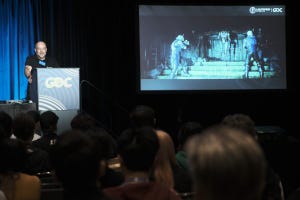
During 'The Nuovo Sessions' microlectures at GDC Friday, indie game developers who are known for pushing the boundaries of innovation shared ideas and development philosophies.

And despite the fact that they share the label "indie," their views -- as espoused in this last-minute replacement for Experimental Gameplay Workshop centered around the IGF's Nuovo prize for new and different games -- vary.

Alexander Bruce, the developer behind the Unreal Engine 3-based "art game" Hazard: A Journey of Life, said that he hated art games, but somehow ended up making one himself. He offered his personal development philosophy, which is more conducive to innovation and experimentation rather than commercial viability:

1. "If it's what everyone is doing don't do it."
2. "If it's an established design rule, don't do it." (i.e. HUDs, menus, death)
3. "If it's something people understand, don't do it." Players should, however, understand what you're doing by the end of the game -- the point is, the player should learn something new.

He admitted that his way of doing things is risky, but without the will to experiment, we wouldn't have the TV, phone or rockets, he said.

Tyler Glaiel and Jon Schubbe, who worked on the Independent Games Festival finalist and Nuovo award nominee Closure, take a different approach to their puzzle platforming game. "I think this game really bridges abstract ideas with established gameplay mechanics," Schubbe said.

Introducing completely new ideas should be handled carefully, he said, otherwise you can limit your audience. "You have to judge what to keep the same, and what's worth changing, Schubbe said.

Ian Bogost, creator of the Atari game A Slow Year, another Nuovo finalist, ties his games very closely to the Atari hardware itself. "If creativity comes from constraints, there must be infinite creativity on an Atari," he said.

A Slow Year revolves around very slow-placed scenarios, such as watching a thunderstorm, sipping coffee and even napping. "This is not an easy game to demo during a five minute talk," he said laughing. "It's really slow."

Bogost said working on the Atari isn't much different than writing a sonnet or blowing glass. Like the scenarios in his game, making A Slow Year was a slow, deliberate and meticulous process. "I wanted to make the Atari seem beautiful," he said.

Other developers showed brief presentations of the making of their games. Terry Cavanagh, developer behind the gravity-flipping platformer VVVVVV (previously called VVVVVVVV, Cavanagh said) showed gameplay elements that didn't quite make the cut.

In addition, Chaim Gingold, who designed EA's Spore Creature Creator before going independent, showed progress on a highly-customizable game he's currently calling Pocket Kingdom, which contains a robust and fun-looking array of editors.

Ian Dallas, creator of last year's IGF student finalist Unfinished Swan said he landed a deal with an undisclosed publisher, adding that he believes in games about curiosity and discovery, it's important to introduce new stuff "every 30 to 60 seconds."

Farbs, creator of Captain Forever, creates games and also offers development tools on his website, and is a proponent of getting people to create, share and collaborate. But he says games like LittleBigPlanet miss the mark. "What I thought was missing [from LittleBigPlanet] was [the game] tying everybody's efforts together," he said.

Farbs later worked on a game called Little Shit Planet, inspired by Mark Johns' Shit Game, but Farbs considered his game a "failure" that missed the point itself. Shit Game, he said, was interesting because it showed "you can just shit ideas out," but there will still be some interesting ideas mixed in.

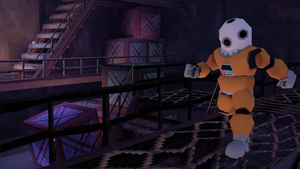
A demo of Justin Smith's intentionally ugly Nuovo finalist Enviro-Bear 2000 drew laughs from the crowd. Smith contemplated why people find the game so funny. "It's the same reason Half-Life is funny. Gordon Freeman is just this nerdy guy, so it's a miracle he gets anything done." In other words, it's funny because bears don't drive cars, and apparently, nerds don't save the world with crow bars.

Finally, IGF 2010 Nuovo award winner Jonatan Soderstrom, a.k.a. Cactus, offered a short explanation of his game Tuning: "It's a really simple game that is weird."
 
 
Top Stories

image
Blog: We're indie, we like Microsoft. So what?
image
Xbox One preowned rumors batter GameStop shares
image
Blog: Theme and craft, games and art
image
Xbox One: A flawed plan, well-executed


Comments

Taure Anthony
profile image
Nice article....Indie is always where its at in any medium (music, film, gaming). We are cut from a different cloth its just a matter of getting distribution type of deals similar to music artist; who can put out the music thats true to them and allow a big label to package and market the product.


Go Indies!

Tim Carter
profile image
Innovation is defined by what you do, not by what you don't do.


none
 
Comment:


UBM Tech