|
 |
 |
If you enjoy reading this site, you might also want to check out these Think Services sites:
Game Career Guide (for student game developers.)
Indie Games (for independent game players/developers.)
Finger Gaming (news, reviews, and analysis on iPhone and iPod Touch games.)
GamerBytes (for the latest console digital download news.)
Worlds In Motion (discussing the business of online worlds.)
Game Set Watch (the Group's alt.game weblog.) |
 |
|
 |

| |
Nordic: Remedy's Myllyrinne On Large Games From Small Teams
by Staff, Katherine Schoback
|
|
| |
|
May 17, 2007
|
| |
In his Nordic Game Conference lecture, Matias Myllyrinne, business director of Remedy (Max Payne, Alan Wake) talked 'The Next Wave of Game Development… Large Games, Small Teams,' giving an overview on how small independent developers can best define their businesses to deliver large next-gen games with limited staff.
Myllyrinne's overarching theme of independent developers working within their means was best summed with a single quote: "You don't try to out-Hollywood Hollywood from a cellar in Espoo, Finland."
The best route of viability for independent developers, he said, lies in "owning more of the value chain or maintaining a smaller part".
With an industry climate with unrelenting demand for new interesting original IP at low risk, said Myllyrinne, "the small have a break."
A small studio's agility was one of its greatest assets, he said, as small studios can "avoid having to lay down tracks in front of the behemoth," that is, avoid the need to find employment for a 150-person team between projects.
In fostering that agility, Myllyrinne stressed the need for focused development, and avoiding me-too features that add nothing to the game's uniqueness.
This he illustrated with an example, asking how many in the audience had played Monolith's No One Lives Forever. Though ten or so people had, when he followed by asking how many had played the game's multiplayer, no one raised their hand.
"That's a feature [Remedy] would have cut," he said.
Remedy, as a small studio itself, he said, will continue to focus on creating original IP. Its formula for success, he elaborated, was in taking an entertainment paradigm from a different medium such as film noir and combining it with innovative proprietary technology, such as shader technology.
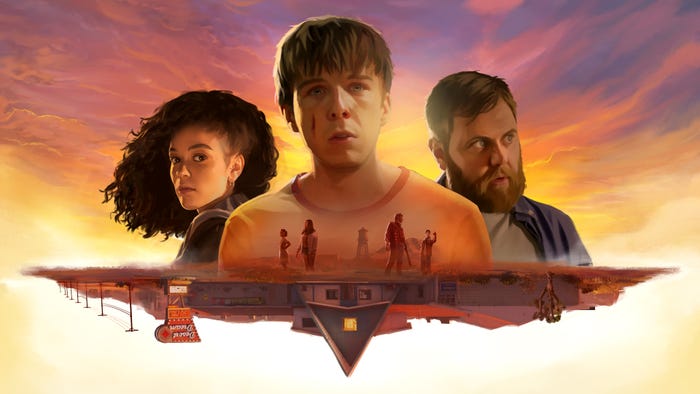
This, he illustrated could be seen with the studio's Alan Wake (pictured), where light becomes part of gameplay, in much the same way that time became a gameplay element in Max Payne.
|
| |
|
|