Latest News
spacer View All spacer
 
November 20, 2009
 
Video Game Watchdog National Institute On Media And The Family Shutting Down [9]
 
GDC 2010's Experimental Gameplay Workshop Calls For Submissions
 
Opinion: Rethinking Player Death [27]
spacer
Latest Features
spacer View All spacer
 
November 20, 2009
 
arrow Upping The Craft: Susan O'Connor On Games Writing [5]
 
arrow Small Developers: Minimizing Risks in Large Productions - Part II [5]
 
arrow iPhone Piracy: The Inside Story [48]
spacer
Latest Blogs
spacer View All     Post     RSS spacer
 
November 20, 2009
 
Planckogenesis, Part II: Song Structure & Gravy Train
 
Designing Games Is About Matching Personalities [1]
 
An Indie Developer’s “Biggest Mistake” [9]
spacer
Latest Jobs
spacer View All     Post a Job     RSS spacer
 
November 20, 2009
 
Warner Bros Games
Sr. Software Engineer, Gameplay - WB Games (Chicago Location) - #115557
 
Warner Bros Games
Sr. Software Engineer, Engine - Surreal Software - #114006
 
Monolith Productions
Sr. Software Engineer, Engine - Monolith Productions - #114703
 
Microsoft Game Studios
Multiplayer Game Design Lead - Halo
 
Warner Bros Games
Sr. Concept Artist - WB Games (Chicago Location) - #114692
 
Sony Computer Entertainment America
Developer Support Account Manager
 
Radical Entertainment / Activision
Mission Designer (Intermediate)
 
Sony Computer Entertainment America
UNIX Systems Administrator
spacer
About
spacer News Director:
Leigh Alexander
Features Director:
Christian Nutt
Editor At Large:
Chris Remo
Advertising:
John 'Malik' Watson
Recruitment/Education:
Gina Gross
 
News

  Mythic's Drescher On Warhammer Online In A Post-WoW World
by Christian Nutt, Staff
4 comments
Share RSS
 
 
July 14, 2008
 
Mythic's Drescher On  Warhammer Online  In A Post- WoW  World
Advertisement
Mythic Entertainment - which last week regained its original name after two years of being known as EA Mythic - is getting ready to make its next foray into the world of fantasy MMOs with Warhammer Online: Age of Reckoning.

The company's first full MMO to ship since Dark Age of Camelot, Warhammer draws from that game's large-scale "realm versus realm" PvP combat, framed within Games Workshop's medium-spanning Warhammer fantasy universe.

Gamasutra sat down with Mythic associate producer Josh Drescher to discuss how the company hopes to make its mark in an increasingly crowded genre, and what the MMO segment is like in a post-World of Warcraft market.

Do you work out of the Mythic studio in Fairfax Virginia?

Josh Drescher: Yes, scenic Fairfax, Virginia, home of the National Rifle Association... and very little else. And us.

Do you and the NRA vie for control of the area? Are you like the two factions?

JD: They are actually directly across the street from us, and we always threaten to just roll in there and eat all their food, shoot all their guns - but they're better armed than we are.

Do you, like, grind faction with the townspeople so that they -

JD: (laughs) We don't grind faction, we earn their respect with displays of greatness.

Couldn't resist that one. It was right there for the taking. Warhammer is out this year, right? It's been in progress for a long time now.

JD: Yes, fall of '08. It's been almost three years.

This is kind of the real big fantasy MMO coming out this year.

JD: That's a bold statement. We draw from a rich canvas of tradition; the Warhammer IP has been around for 25 years, so obviously we are drawing from the quarter century of content that Games Workshop has put out there in front of us.

That's been really great because we do get to go through all the books, all the comics, the graphic novels, novels, the pen-and-paper role playing games, obviously the tabletop game, and we could really drill down deeply into that content, and excavate all the really most exciting, interesting, weird bits, and cobble it together into our own version of what the Warhammer hobby represents. We draw from tradition, but we are actually very much a non-traditional type of game.

You think so?

JD: If you look at the MMO sphere, and if you look at PC gaming on the whole, there are two things that have always defined PC gaming. It's a solitary experience - you generally play them alone - and it's a non-competitive experience - when you're accomplishing things, it's almost always against the system, you're always playing against the game itself.

What our type of game brings to the table is cooperation - you play with other players - and competition -- you're playing against other players. So it's not just you alone against the game, or you with a small group of people against the game, it's actually you with thousands of allies - whether you know them or not - against thousands of enemies, in a persistent world struggle for control of the entire planet.

It's a tough thing though, to try and design an MMO that appeals to the core MMO audience, but to make it stand out in the crowd as well, right?

JD: First and foremost it's important to recognize that at this point the core MMO market is the general market. Especially for PC games, if you look at the games that sell, the games that drive this market now are MMOs. They are large-scale, socially-integrated, epic in scale, continuous, hobby-driven games.

While there's obviously still a place for your traditional "forty hours of content and then you're out," what people have been flocking to all over the world is games that have permanence, games that have an experience that continues beyond the linear narrative. So we're really targeting, at this point, the mainstream gamers.

The last five years or so have obviously been really great for our genre, as we move from the half a million people that were playing each game, to millions and millions of people playing these games. So we really are a broader, more general market.

So we're targeting that, and trying to find things that appeal to people who already like these types of games; we're trying to show that now that you've stepped forward, and seen the value of MMOs in general, let us show you what [realm vs. realm] can do.

So you think this is going to suck in that large audience that's basically been created.
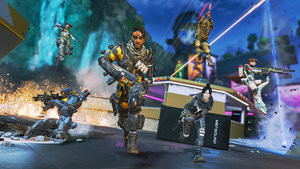
JD: We're certainly hoping to appeal to as many people as possible, but if the implied question there is, "Do we need to beat WoW to win?" then absolutely not. There's room in the world for a Michael Bay movie, and then for good movies. You don't need to always have it come down to how many people are playing the game.

An interesting "behind the scenes" thing that's happened with our genre is that if you actually look at the success rate of MMOs that launched before WoW, and you compare to the success rate of MMOs that launched after WoW, there is a dramatically significant increase in success rate in the post-WoW world. If you launched an MMO before WoW came out, you had a really significant chance of failing no matter how good your game was; there were a lot of really great games that came out that just fell down, because there wasn't enough of a market to appeal to.

So what WoW has actually done for the industry is introduced millions of players to this style of game, and that gives us the opportunity to go before them and say, "Hey! You've already tried this, you know what that can do, look how different we are! Look how much content we have!"

Well, Lord of the Rings has been successful, but then look at Tabula Rasa, or Vanguard; it's not a sure bet.

JD: Without naming names, I disagree with probably the metric of success that you use. I imagine if you ask most of the people who are continuing to work on those titles, they're profitable, and really, at the end of the day, that is the most basic metric of success. No matter what game you're talking about, there is a dedicated core of people that love that game, that play that game. That is a different measure of their success.

Now we have people that today continue to play Dark Age of Camelot, eight years after it came out. That continues to be a self-sustaining entity for our studio, and it's a passionate fanbase that's been with us for nearly a decade.

If you look at Ultima Online - which we also currently are the stewards of - that's a game that has basically had a static population of passionate, loyal, enthusiastic players, for a decade. For one third of my life, people have been playing Ultima Online. These are games that live and breathe and extend beyond their launch dates, into the distance.

Is EA going to be happy if you just keep the lights on, or is EA more demanding?

JD: I obviously can't talk internal metrics, but there has always been a very reasonable understanding of what it means to be successful, not just for us, but for any of EA's products. Obviously we would love a blockbuster; we would love to be The Sims or Battlefield, or one of those titles that gets out in front of millions and millions of people.

But at the end of the day, what John Riccitello has really returned us to, as an entire company, is a sense that you make good games, you make them well, you make them fun, you put them out in front of the customers, and that's job one. It's a fundamental belief that if you make good games, success will follow, and it's more important to make a good game than a game that you have to convince people to buy.

He really joined fairly recently, though, and this has had a fairly long development cycle, so to what extent has that philosophy been driving the development of this game?

JD: Well, when EA came in a year or two ago - I no longer remember dates and times - it's almost two years at this point. When they came in, the first message that they gave to us, they came to our studio, and they stood in front of us, and they said, "We're not going to meddle. No matter what you've heard, we're not here to destroy studios, we're not here to wreck games."

They only bought us because they believed in what we were doing; they had no interest in changing how we do our thing, how we build our games, how we run our studio. And, actually, since John has come on - John Riccitello, I don't mean to call him just John - since John Riccitello has come on board, he's really driven that message home.

The independent studios need to maintain that sense of individuality, of individual culture, of individual development types. There isn't one style of game development that works for every studio: The way you build Madden doesn't build an MMO; the way you build an MMO doesn't build Spore; the way you build Spore doesn't build Battlefield.

And there's a recognition of that, and there's a respect for that, and we've been very, very lucky to have only ever experienced that type of support; that type of affection for the individual vision. We love to be part of EA.

And you're still very bullish on the traditional subscription model, too, I'm assuming.

JD: Obviously there's going to be wiggling depending on where we are internationally - you want to respect the traditional mechanisms that are taking place in each part of the world - but the subscription model, especially in the Western market, is something that players have recognized value in, especially when you compare it to other types of entertainment that you can consume.

You know, if I'm renting a movie, it costs three bucks for In-Demand, or whatever, and that's ninety minutes of my time for three bucks. That's a dollar for every thirty minutes of time. And if you compare that to an MMO, averaging fifteen dollars a month for unlimited time, you know, there's just way more value in the subscription model than there is in the linear, standard, but also kind of time-limited amount of content.

And I think we're going to start seeing that not just in games but in all types of media. I think the idea of subscription-based massive media availability will continue to movies, music, television, and in games.


Comments

Anonymous
profile image
In a post WoW world you don't cut launch content to release your product.

William Armstrong
profile image
I've been following Warhammer for a while, and while the content cuts caught my completely by surprise, anyone with any realistic understanding of this industry (IE: isn't a frothing fanboy) understands the importance of getting a great game out on time rather than a so-so game out late. To throw out that well known nugget of Miyamoto's, "A delayed game is eventually good, a bad game is bad forever."

So four classes and 4 cities were cut from the game; big deal. Obviously, these classes weren't very interesting to play, and the cities weren't put together very well, so what kind of content are players actually missing out on besides stuff that was below average?

Comments like the one from Anonymous above come off as the bitter sentiments of a fan who's losing hope, or a fanboy glad to see World of Warcraft's competition 'failing'.

Some Dude
profile image
"In a post WoW world you don't cut launch content to release your product. "

Yeah, because Blizzard didn't cut hero classes, siege warfare and oh... world pvp where is that?

Seriously delaying content didn't do anything to hurt blizzard, I doubt it'll hurt War.

Best of luck Mythic!

Bob Langton
profile image
Oh please, Anonymous, you were never dedicated to this game and you never will be. Just another WoW fanboy in fear for his game. The people who truely believe in WAR would not be so easily against it, especially with the reasonable explanations provided by the people from WAR. So if you read comments like "Oh, well I'm not going to get this game because it cut some content" don't believe for a second that thats not a WoW fanboy trying to get people not to play WAR. It's still going to be an awesome game, and if it takes a patch or two after launch for it to be complete, I can wait.


none
 
Comment:


Submit Comment