Latest News
spacer View All spacer
 
November 21, 2009
 
Video Game Watchdog National Institute On Media And The Family Shutting Down [10]
 
Modern Warfare 2 Infinity Ward's 'Most Successful PC Version' Yet [7]
 
New Tech, Design Details Of Project Natal To Emerge At Gamefest In February
spacer
Latest Features
spacer View All spacer
 
November 21, 2009
 
arrow Upping The Craft: Susan O'Connor On Games Writing [5]
 
arrow Small Developers: Minimizing Risks in Large Productions - Part II [6]
 
arrow iPhone Piracy: The Inside Story [48]
spacer
Latest Blogs
spacer View All     Post     RSS spacer
 
November 21, 2009
 
Accepting the Inherent Value of Games
 
Planckogenesis, Part II: Song Structure & Gravy Train [1]
 
Designing Games Is About Matching Personalities [1]
spacer
Latest Jobs
spacer View All     Post a Job     RSS spacer
 
November 21, 2009
 
Sucker Punch Productions
Network Programmer
 
Sucker Punch Productions
Character Artist
 
Sucker Punch Productions
Texture Artist
 
Sucker Punch Productions
3D Environment Artist
 
Sony Online Entertainment
Brand Manager
 
Monolith Productions
Sr. Software Engineer, Engine - Monolith Productions - #113767
 
Crystal Dynamics
Sr. Level Designer
 
Gargantuan Studios
Lead World Designer
spacer
About
spacer News Director:
Leigh Alexander
Features Director:
Christian Nutt
Editor At Large:
Chris Remo
Advertising:
John 'Malik' Watson
Recruitment/Education:
Gina Gross
 
News

  EA's DeMartini Talks Hellgate: London Failure
by Chris Remo, Staff
11 comments
Share RSS
 
 
August 22, 2008
 
EA's DeMartini Talks  Hellgate: London  Failure
Advertisement
Following the near-shutdown of Hellgate: London developer Flagship Studios, David DeMartini of co-publisher EA Partners has discussed the game's failure, saying EA had staff "actively working" on the title and suggesting that the game "lost the fanbase" by the time it improved sufficiently post-release.

The EA Partners label of Electronic Arts announced in late 2006 that it would co-publish the much-heralded PC title with Namco Bandai Games.
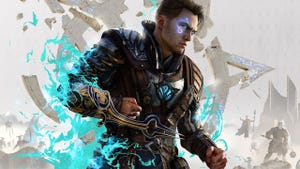
But the game, created by notable Blizzard veterans, never built up enough steam with the audience, and this led to Flagship's near-entire layoffs this July, as its expenses and borrowing significantly outweighed subscription revenue and retail sales.

When asked about the title, one of the few notable blots on EA Partners' publishing slate, which also includes hits such as Rock Band, Crysis and The Orange Box, DeMartini explained:

"We're certainly sad with the results for Flagship and what's happened with Hellgate, because at the time we signed it, we were trying to get involved in a very complicated relationship between Namco and Flagship.

We were coming late to the party, and trying to do whatever we could to sprinkle the game magic on the project and get it headed in the right direction.

I think that's an example where all three parties had the best interest of the game in mind, and sometimes the game doesn't work out. Hellgate is still an incredible concept."


Asked to detail further the situation in which EA Partners published the title and the eventual outcome, DeMartini added:

"We were co-publishing with Namco. I'm not going to dodge a bullet -- we had people who were actively working with them on the title.

We thought it would have been slightly higher quality than it turned out to be, and I think the problem with the game was that by the time it got really good, we were four to six months post-release. That was too late; we'd lost the fanbase.

It was strictly an issue of the gameplay and game quality needing to be higher at the start. Unfortunately, Flagship was in a situation where they weren't in a position to hold the game any longer, and the situation kind of took over."


Finally, DeMartini offered a tribute to the creators at Flagship who labored long and hard on the project:

"The guys who worked on it spent thousands of hours trying to make that concept work, and sometimes we just don't see something. Sometimes, we just didn't take enough time. Sometimes, things don't work out the way you expect.

It's kind of like a film with all big stars -- on the script, it should be successful, but the movie doesn't turn out as good as everybody hoped.

That's why EAP takes a portfolio approach with its games. You have to place a lot of bets, and hope for a lot of hits."


The comments came as part of a major new interview with DeMartini, also discussing new EAP deals such as Epic/People Can Fly and Grasshopper Manufacture, plus much more.


Comments

Anonymous
profile image
wait demartini was also part of another bust the God Father...ah EA

Anonymous
profile image
this game was really really bad, it felt like an MMO played in single player...the graphics where horrible as well, I mean I could play Oblivion on my machine why can't I play Hellgate?

I actually played it for 1 quest and that was it, it was over, why? Because there's a dozen other games out their I would rather play.

Anonymous
profile image
Charging extra for multiplay was pretty cheeky. I feel for them though, it started out looking pretty good.

David Delanty
profile image
"It's kind of like a film with all big stars -- on the script, it should be successful, but the movie doesn't turn out as good as everybody hoped. "

I interpret that as "we tried to sell a game by name recognition, not innovation. We were shocked by its failure."

I'm glad he made a parallel to movies. Because I, too, will make a cinema analogy. He is right that a movie will be successful just because it has a list of big names.

Problem is, though, the video game industry doesn't yet have big names that resonate familiarity. Poll your average kid on the street if they know Chris Taylor more than George Clooney. Even the brains behind Supreme Commander and Dungeon Siege doesn't come close to comparing to Hollywood brass.

DeMartini needs to emphasize that "lost the fanbase" isn't an excuse for a game that clearly lacks an innovative delivery in a saturated MMO genre. This is the video game industry. Not the box office.

Michael Gehri
profile image
David Delanty - Well said!

Chris Remo
profile image
David,

I don't believe he was saying he thought the game would sell because it had Bill Roper's name on it. He's saying he thought the game was going to be a better game because Bill Roper and a number of other Diablo 2 veterans were making it.

Rodney Brett
profile image
With the failures of Space Siege, Titan Quest, and Hellgate, it seems to be the equivalent of box office "poison" to try and make Diablo clones. Titan Quest was my fav of the bunch.. Perhaps "click a monster to kill it" gameplay is starting to run it's course out?

Hélder Gomes Filho
profile image
It is starting what is inevitable: Unless we grow the costumer base, MMO will soon fall...

How is that? It is simple: A MMO (or a "near MMO" like games that use small 16 player or less game sessions but still has his income from the "online play") needs player time, more than a single player game, because a single-player game the guy is playing, then he saves the game, and maybe play another day, but he already bought the game, with those "online" games, the guy need to play using his time, he will not play "several" games, so one time or the other with all those "online" games out there, the market will reach its limit, all the players will be already busy playing something, and making another game will only work if you hope to steal costumers from someone else.

The solution? Grow the playerbase, try to get new players, specially doing games that do not exist yet (I mean, not created another hardcore fantasy game... I AM LOOKING TO YOU DIABLE CLONES, INCLUDING YOU HELLGATE LONDON), some of the games that made sucess: Pang (a anime-styled golf game), a Korean MMO about dancing (yes, dancing), Gunbound (it is still a clone of worms, but it appealed to the oriental market more than the original worms), and the list continues... But people do not understand WHY they made sucess, and still try to COPY them, but the reason WHY they made success is their ORIGINALITY, not that being original is always good, but you need to have a sufficient new thing to attract new players ;)

A single person can not please greeks and troians, two persons can, thus pleasing everyone, but if one of these two persons just copy the other in hope to get a share of his sucess, both will have half of the sucess, and only half of the people will be pleased (the half that the two is focusing on)

Paul Lenoue
profile image
If the "money people" are the problem then why not get the money from the gamers? Has anyone tried coming up with a proposed business plan with a total cost, then selling shares in the project? There's a name for this system, I can't find it now, but it's done in many other creative realms, most notably off-Broadway theater (remember "The Producers"?) With the right safeguards it's entirely legal, such as the money paid for the shares is put in a money market account so if you don't make the total needed to start the project everybody gets their money back, and you keep the interest to pay for expenses (I think some states have this requirement, but it makes sense regardless).

This way if you think you have a good idea but the "money people" insist on the same old stuff, you can raise the funding needed from gamers themselves. If it succeeds they get returns on their investments, if it doesn't, they're only out $10 or $30.

You could even do it in stages. For example, your project plan could be that you need $2 million to start the groundwork and come up with a demo to show how your game is worth investing in. Then you use the demo to get more investors (and feedback) for the next stage where you develop the framework which will cost $6 million. While this stage is being worked on you're still selling shares so when it comes time for the final stage, putting it all together and finishing up, you have enough money to complete the project. This way you don't have to come up with the whole amount all at once and you can adjust your project plan if things change.

This method will allow gamers to support the games they want to play, rather than be stuck at the end of the pipeline where their only options are "buy" or "don't buy." For instance, Hellgate looks to me to be nothing but endless hacking so I would never buy a share to see it developed. However, I know a few hard core gamers who love nothing but endless hacking, so they would probably buy shares. Now if someone came up with an idea for multi-genre MMO (so players can jump from pirates to supers to steampunk to cowboys to toons to cyberpunk whenever they want, with the same character using something like a GURPS system for character development, and with a lot of player-created content) then I know of _MANY_ people who would eagerly buy shares to see it developed, as long you made it for both Macs as well as Windows.

This is just a suggestion. It works for other creative enterprises, and on a project-by-project basis, so I thought it might work for game development.

Anonymous
profile image
two main issues caused hellgates failure.

shipping before it was done (when has blizzard EVER shipped on time.). These guys shipped on time but didnt finish. They should have planned for the typical dev cycle of blizzard..ship it when its done.

the second issue is trying to build two companies at the same time, betting on other companies wanting to participate in the mmo battlenet space of ping0. They had the right idea but ping0 had to have gotten in the way of quality on the title.

on that note, i know some of the flagship guys and they were good people. i wish them all the best.


john bonachon
profile image
It is like in chess where the player blame for the pieces or even the chess table but himself for their own failures.


none
 
Comment:


Submit Comment