|
|
 |

| |
In Depth: Inside Mirror's Edge, Dead Space Sales Weakness
by Staff
|
|
| |
|
December 17, 2008
|
| |
It's now apparent that Electronic Arts' major releases for 2008 didn't meet the company's expectations; CEO John Riccitiello said as much, recently announcing that the company wouldn't make its numbers for the year and that a new strategy is in the works.
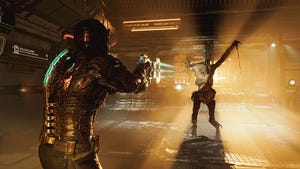
Gamasutra's exclusive NPD analysis now reveals the specifics of discouraging sales for EA's two new creative ventures Mirror's Edge and Dead Space, and disappointing life to date numbers for Burnout Paradise as well.
To be exact, numbers cross-platform are: Madden NFL 09 sold 3.9 million, Burnout Paradise sold 592,000, Dead Space sold 421,000, and Mirror's Edge sold 145,000.
From the exclusive analysis:
Electronic Arts had previously professed its faith in the creative process and the potential profit to be found in new properties. Titles like Mirror's Edge and Dead Space, both completely new material, were key to the company's end-of-year strategy.

To get an idea of EA's position, it is instructive to consider the following data, provided to Gamasutra by the NPD Group. The figure below shows the life-to-date (LTD) sales figures for four key EA properties: Madden NFL 09, Burnout Paradise, Dead Space, and Mirror's Edge.

(Only Dead Space is currently available for Windows PC as well as consoles, so the data above includes all of those platforms. Data for the other three games includes only console and handheld versions.)
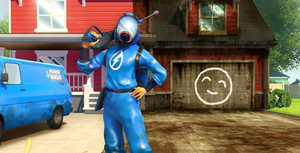
Not pictured, but worth mentioning, is Spore -- available for Windows PC, MacOS, and the Nintendo DS -- which has sold in excess of 2 million units since its launch.
What should EA make of these results? Its biggest annual software release, Madden NFL, is still doing quite well, although it is not growing its installed base as it has in the past. EA's high-profile designer, Will Wright, delivered a multi-million seller with Spore, but we have yet to see whether EA can successfully exploit it with add-ons as it had previously done with Wright's earlier game, The Sims.
To these successes we add Burnout Paradise, the latest iteration of the well-regarded Burnout series and the first on current generation consoles. It moved around 230,000 units (for the Xbox 360 and PS3 combined) when it launched in January of this year, yet the game is just now reaching 600,000 units LTD, even with heavily promoted gratis downloadable content.
It goes without saying that Burnout Paradise probably has not lived up to the company's expectations. (It should be noted here that the complete PlayStation 3 game is available for download from Sony's PlayStation Store, and sales figures for that version have not been released by either Sony or Electronic Arts.)
The two new creative ventures, Mirror's Edge and Dead Space, have both failed miserably. This is in spite of lengthy and extensive marketing for each game, including a series of graphic novel-style backstory trailers for Dead Space released over several months.
The brightest spot in EA's line-up turns out to be Left 4 Dead, a cooperative shooter developed by Valve and published by EA. The Xbox 360 console exclusive was 8th for the month of November with sales of 410,000 units. (It is also available for Windows PC, both as a boxed product and through Valve's own distribution platform, Steam.) The challenge for EA is generating those kinds of hit titles with the studios it owns.
You can read the full Gamasutra NPD analysis for November, including lots more specifics on trends, hardware and game sales, and prospects for the future.
|
| |
|
|
And I sure hope this won't result in cancellation of these series or that innovative games are a thing of past.
Unfortunate yes, especially for Dead Space which was a good title. However, I would argue the point of 'extensive' marketing. I never saw anything except a banner ad and didn't even notice that until my engineer showed me a video for the game. They may have spent a lot of money on advertising, but that doesn't mean it's the titles fault for not selling. I would argue the marketing group and the EA brand were the failure points.
Maybe Gears of War 2 had something to do with it.
Also I agree marketing wasn't aggressive and if they spent a lot
of money they probably did crap with it.
Mirror's Edge trailers , i think they were cartoons, failed miserably to convey the feeling of the game. Also who would
decide to use that kind of style for an obviously older target
group. Marketing guys screwed up obviously with Dead Space to
if they decided to make graphic novel like trailers....
Why do that? These games should be marketed as what they
are.
I would never buy dead space if all i saw were graphic novel
thingies.... Mirror's Edge game-play footage only appeared
near release I think....
Correct me if I'm wrong, but I think that if they couldn't sell
those games they are retarded and didn't do their research.
People who want to play FPS style games are into visuals
I would think, so show them visuals.
Anyways, I also hope that this does not mean less original IP
from EA. They should take a look at what Ubi does when they
are promoting a new IP.
Burnout paradise ships only on the 360, PS 3.
Dead Space is 360, PS3, and Windows PC, as is Mirrors Edge.
So they're comparing an established franchise game realeased across all platforms with unestablished one-off games released only on the high end/expensive platforms.
This is comparing apples and oranges. For this study to be useful it should compare the one offs to other AA or AAA games in the market at a similar time and price point.
Dead space looked great, had alot of push behind it, and got decent reviews. However, they released a new franchise in a time where biggies like Fable 2, Fallout 3, Gears 2, and COD 5 were around the corner. Most will take their limited gaming budget and wait for the big sequels, and then rent the new franchise. I think the same thing happened to Little Big Planet.
If they had released Dead Space in march, it might have done better.
Mirror's Edge might then have hope for its upcoming pack, which looks to get to the core parkour gameplay that the audience wants (or thinks it wants).
It'll probably never reach the sales EA wants, but they now have a play-tested FPS parkour system that they can leverage for a whole new channel of games. Whether they get the dollars back now, it's a worthwhile tech investment.
IMO its marketing budget was out of control and cost EA far more than needed. Who really cares about a full-length animated film based on a game they may not play? I *loved* Dead Space and have no interest in the movie and comics that no doubt cost a pretty penny to produce. The TV and online campaigns also seemed to go on too long (I believe the horror movie section of Hulu.com is still sponsored by Dead Space). Not sure if all of these media buys and non-game goodies were ever going to translate into explosive sales.
As the reviews and year-end accolades continue to pour in, and the price inevitably drops in 2009, it should eventually push the 1 million mark. Dead Space is the closest thing to a perfect game that I've played all year and it deserves to get a sequel. Can't say the same for Mirror's Edge.
Re: Left 4 Dead being "a lot cheaper to produce and market"? Valve blew $10m on the L4D ad campaign. That's hardly cheap.
Just an FYI. After completing the story mode for Mirror's Edge all Time Trial maps are unlocked. This is just a simple run here and there as quickly as possible with no enemies. They're a blast, and you can check out scores of friends and fellow gamers.
I think Mirror's Edge would have been a success if it included multiplayer and had a different release date. The story mode was too short, and Time Trials will only last so long. A tag game would have been a blast. The developers could also have looked into unique MP modes from other games like Splinter Cell.
The release date issue should have been a no brainer for marketing. Two many big time sequels came out in November. This game would have benefited more from a summer release.
#1: Practically no violence (in fact you're told to avoid being violent), no gore, no shocking impact, etc.
#2: Bad cost-saving marketing trick to use flash-like cartoons to present aspects of the game's story.
#3: Always expected to be too short, and the one aspect that was likely to add to the game's length and keeper-factor was moved to downloadable content. A level editor would have been highly feasible considering the direction they took with the downloadable content.
It's not those three specific points on their own, but their combination that makes Mirror's Edge a very difficult sell.
As for Dead Space:
#1: Sci-fi can be a though sell, due to its sterile nature. Gamers like to get a feedback from their actions, but in the cold of space only empty hallways are a witness to your achievements.
#2: No online or co-op mode. You might think that it wouldn't work because of the story or setting, but that's the developers' job to figure out how to make it work, and it was EA's job to give them the time to make it happen. It's a new license, you don't want to screw up, you want a big hit.
The fact that so many potential players were turned off by the short story campaign while so many others either returned the game or had only rented it in the first place to beat said story campaign is the best explanation for its poor sales performance.
I can only hope that, should EA decide to drop Mirror's Edge, some other passionate group pick up the idea and do another Parkour First Person game.
On the whole, I'd be inclined to suggest that far from being a failure, both titles did better than you could reasonably expect in such a hostile environment.
The market was just too insanely flooded. Sales have been disappointing for just about everyone: LBP, Motorstorm Pacific Rift (is it even on the charts ?!), Resistance 2 to a certain extent, EndWar...
It's the launch window. There was too much good stuff for anybody to handle, and it all got fragmented.
Next year, from Jan-August - we'll once again be waiting for months between "big" releases. In the meantime, I'll be enjoying these games at a *sub* $60 price-point. And next november, like clockwork, we'll get yet another onslaught of new titles all at once. And everyone will be forced to choose 1-3 out of 10. But of-course we'll see John R going on about how "it's the pirates fault" or something equally asinine. And then the company will announce that in 2010 all we're getting are our basic food-groups of sims, spore, and madden -- with a dash of securom. And everyone here will resume the status-quo of hating EA.
As for games like GTA they deliver incredible experience and they have built their brand properly and can have people out queuing for their games in the cold waiting to part with their cash as they know they will get something great. A similar story with LBP you knew exactly what you were getting a fun experience with broad appeal.
" Drop Mirror and Dead by $10. Fix bugs for current users. Snap! "
better yet, drop it by more. A big problem here is that these publishers are not willing to face the economic facts and lower the prices of games. $60 doesn't go as far as it used to last year, so people will buy 1 game a month, whereas last year they may have bought 3 or 4. If the prices were cheaper, they'd sell more, make the profit up in volume, and not have to put developers out on the street cuz they are too stupid to adjust their prices to what consumers can afford. Sometimes you have to get a little less profit off of each sale in order to entice more sales. It's some pretty basic economics that they are unwilling to accept, and the losers are the workers as well as the consumers.
If I went into a gamestore and could get 3 new games for 60 bucks, I'd buy 3 new games. Right now, I'm left having to choose one game to get. We are all losing out.