Latest News
spacer View All spacer
 
November 21, 2009
 
Video Game Watchdog National Institute On Media And The Family Shutting Down [9]
 
Modern Warfare 2 Infinity Ward's 'Most Successful PC Version' Yet [3]
 
New Tech, Design Details Of Project Natal To Emerge At Gamefest In February
spacer
Latest Features
spacer View All spacer
 
November 21, 2009
 
arrow Upping The Craft: Susan O'Connor On Games Writing [5]
 
arrow Small Developers: Minimizing Risks in Large Productions - Part II [6]
 
arrow iPhone Piracy: The Inside Story [48]
spacer
Latest Blogs
spacer View All     Post     RSS spacer
 
November 21, 2009
 
Planckogenesis, Part II: Song Structure & Gravy Train
 
Designing Games Is About Matching Personalities [1]
 
An Indie Developer’s “Biggest Mistake” [9]
spacer
Latest Jobs
spacer View All     Post a Job     RSS spacer
 
November 21, 2009
 
Monolith Productions
Sr. Software Engineer, Engine - Monolith Productions - #113767
 
Sony Online Entertainment
Brand Manager
 
Crystal Dynamics
Sr. Level Designer
 
Gargantuan Studios
Technical Art Director
 
Gargantuan Studios
Lead World Designer
 
Microsoft Game Studios
Multiplayer Game Design Lead - Halo
 
Warner Bros Games
Sr. Concept Artist - WB Games (Chicago Location) - #114692
 
Warner Bros Games
Sr. Software Engineer, Gameplay - WB Games (Chicago Location) - #115557
spacer
About
spacer News Director:
Leigh Alexander
Features Director:
Christian Nutt
Editor At Large:
Chris Remo
Advertising:
John 'Malik' Watson
Recruitment/Education:
Gina Gross
 
News

  Buser: PS3 Home Bringing Personal Interaction Back To Online Play
by Sande Chen
0 comments
Share RSS
 
 
March 11, 2009
 
Buser: PS3 Home Bringing Personal Interaction Back To Online Play
Advertisement
Sony says PlayStation 3's Home is a value-added component of PS3 ownership, and the company believes the social virtual world can fundamentally change the way gamers play online.

At the Gamasutra-attended Engage! Expo in New York City, SCEA’s Jack Buser discussed the strategic goals behind the creation of PlayStation Home, rather than comparing it to other virtual world offerings.

"Home is a really important strategic move for us at Sony," said Buser. "Early on, we saw a real need to bring the PS3 community together with a social network."

According to Buser, Home was designed to replicate the social interaction that has been lost in current online play. Back in the old days, console gamers would have friends come over and play multiplayer games by plugging in controllers.

During that play time, they would negotiate who would play what and which game was next. In the same way, gamers in Home can go to the Warhawk sand table, discuss strategies, and then launch into the game together.

Furthermore, Home provides gamers with a social setting so that people can get to know each other naturally. People’s friends lists, said Buser, are populated with friends from real life and friends gained through online play, but the online play is not enough to really get to know a person. Just as in real life, Home has social icebreakers like bowling alleys, hangouts, and house parties.

Currently at 5 million users while still in beta, Home also provides each avatar with an apartment. That’s where Buser feels Home really differentiates itself from social networks on other console platforms.

"An avatar without a space is pointless. The space around the avatar actually says more about that person than an avatar in isolation can," said Buser.

"People will go around Home, meet someone, and then say, ‘Hey, do you want to go back to my apartment?’ That's where you see the true engagement and that’s how people make friends."

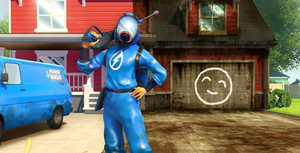
To decorate their living quarters, players have access to a variety of virtual wares, from ninja suits to samurai sword racks. Some are free, while others are available at a cost of $.50 - $1.

Brands have been especially interested in Home, said Buser, but Sony has been careful to partner only with brands that have credibility with the user base and add value to the community.

In addition, there’s content on Home that’s not available elsewhere. For instance, Resident Evil has a space on Home that looks like a scene from the game, but when inspected closer, it’s a faux film studio set that looks as if the game’s footage was shot there.

For 2009, Home is focused on putting up content as quickly as possible and is looking to third party providers for help. "The #1 lesson we learned is that the game community has a voracious appetite for content," said Buser. "They want more, more, more more stuff to do." Therefore, Home’s strategy is to continually provide new experiences, new contests, and new activities.

The bulk of the content requests come from the community. "We’re constantly in dialog with the consumer," said Buser.

For Buser, Home has accomplished its aims in that it has become the community for PS3 owners. In addition, partners are pleased with the amount of interaction with their brands. "It’s becoming a core part of the PlayStation experience. That’s what we set out to do."



Comments

none
 
Comment:


Submit Comment