|
 |
 |
If you enjoy reading this site, you might also want to check out these Think Services sites:
Game Career Guide (for student game developers.)
Indie Games (for independent game players/developers.)
Finger Gaming (news, reviews, and analysis on iPhone and iPod Touch games.)
GamerBytes (for the latest console digital download news.)
Worlds In Motion (discussing the business of online worlds.)
Game Set Watch (the Group's alt.game weblog.) |
 |
|
 |

| |
EA's Schneider: Army Of Two's Tone 'Didn't Work'
by Staff
|
|
| |
|
May 13, 2009
|
| |
The buddy-based core gameplay of Electronic Arts Montreal's Army of Two was one of its greatest strengths -- it "resonated with people," says executive producer Reid Schneider.

But examining the reaction to the title, Schneider says he realizes where it fell short: "What didn't work was really the tone," he says, speaking as part of an in-depth Gamasutra feature interview on the game. Many reviewers perceived the characters' brotherly good cheer as inappropriate alongside the game's wartime violence -- an installment of the popular Penny Arcade webcomic was just one successful illustration of this criticism.
"If you think about it on a scale, that's a good problem to have -- tone is more easily fixable than having people say, 'You know what? I don't even like the core fantasy or the core gameplay that you're doing,'" says Schneider.
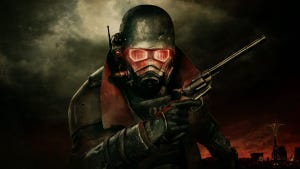
EA Montreal hopes that with the upcoming sequel, they'll be able to "just build upon all the features, fix the stuff that didn't work, fix the tone, and make it the experience we wanted."
Gamasutra also spoke to creative director Alex Hutchinson, who says he played the game from a consumer perspective before coming in to work on the sequel and found the reaction to Army of Two's tone "fascinating for a couple reasons."
"One is that people seemed to feel that the game was celebrating bad behavior," says Hutchinson. "Actually, if you play it, I think it's amoral. It has no opinion. That's really interesting to me from a development perspective, because what it means is the press wants you to punish the bad guys. They don't want you to have no opinion about the bad guys. They want to say, 'No, but they're evil! They need to lose!' And I think that's kind of sad."
"Isn't it more interesting to say to the player, 'What should you do? What do you do? And what is your reaction?'"
However, says Hutchinson: "I agree that the tone that we're going for in the new one is more appropriate and will hit a wider audience."
You can now read the full feature on the Army of Two franchise at Gamasutra (no registration required, please feel free to link to this feature from other websites).
|
| |
|
|
I wonder what, exactly, Hutchinson is trying to say here. Is he saying "I played it and felt like it's amoral" or is he saying "if you play it, you will agree with me in thinking it's amoral"
Amoral philosophers are one thing... sitting around discussing the existence of morality is fine, but men with guns, without morals, who kill people for a living are likely to be considered immoral psychopaths by everyone else with moral integrity.
To kill hundres of people in a game without having an opinion about why you are doing it or if it is right .. that's what I think is sad. Maybe the developers of this game are emotionally stunted ?
Recalibrating an IP to feedback is always a great thing, kudos to EA.
On the one hand, the fact that people feel uncomfortable speaks to a good awareness of the subtleties of the represented fantasy world. We (the players) can find it justifiably enjoyable because we know it's not real. We're just playing a game. But, we say to ourselves, the *characters* don't know it's just a game. To them it's reality, and in reality we would find that kind of post-combat exuberance distasteful. That distaste displays the vitality we assign to games, that we can consider them self-consistent and 'real' enough to judge them this way. All of which makes me think that games can be used for commentary on subjects where the actual aim is to make the players uncomfortable and give new thought to the issue presented. I'm actually slightly surprised that EA didn't offer this rationale to explain the tone they used.
However, I'm also a bit disappointed. I believe that games are a maturing medium worthy of such commentary as I mentioned above. Given that, why should Army of Two as a whole be maligned for the characters' portrayal? Perhaps it should be held to the same standard as movies like Apocalypse Now. Take the famous quote "I love the smell of napalm in the morning." If some viewers find that the character of Kilgore makes them uncomfortable, would we find it reasonable to say the movie was bad? Or would we accept the character as a portrayal that was intended a certain way by the creators of the movie and base our discussion on that? I think the latter is more likely, and feel that Army of Two should be afforded the same respect on it's own terms.
As should all games.
I think the difference is that in the movie, the audience is not told to express that the smell of napalm is nice in the morning.
In a game, we identify with the character we control - and in the cutscene, that control is taken away from us and instead we are made to react in a way we may find inappropriate. That's where nausea can set in.
If the characters' celebration is the same as the players' celebration, do the players feel uncomfortable?
If someone is watching the game as played by other people and sees the characters' celebration, does the watcher feel uncomfortable?
Your thoughts?
Personally, I had no problem with their inappropriate "good cheer." I had more qualms with the lackluster story. This may be due to the fact that I played Army of Two right after playing Metal Gear Solid 4, which dealt with a similar subject matter but in a much more satisfying way. I just did not particularly care about the characters in Army of Two, but I haven't played it enough times to dissect it.
John and Jason: I watch a character in a game (yes, even the player character-protagonist) as I watch characters in a movie or television show. It's up to the writers to flesh out the character, not me. If they make the character an asshole, it doesn't make me an asshole. It's the writer's story, so I let them tell it.
The difference for me, however, is when the player character is entirely customizable, so that it becomes your avatar; a direct representation of the player in the game. Sure, if you were a hardcore roleplayer, you would detach yourself from your avatar and just play your character according to his pre-decided personally traits. But whenever customization is allowed, I tend to create characters that are basically a video-game version of myself. This is when I begin to feel uncomfortable when I am forced to take immoral actions in a game. For example, I could not go through with the Dark Brotherhood arch when playing The Elder Scrolls IV: Oblivion.
I suppose what I'm saying is, once we've gone through wars with aliens, will we considered Gears of War's tone to be inappropriate?
Games can be both family friendly and a total gore fest wich would apeal to 18-20 somethings or more of deep storyline and several endings and sandbox gaming that would suit the more hardcore 20-30 something crowds :)
I do not mind if the game is lighter or has a sense of humor ...Bad Company etc...need that different feel and tone . We have enough CoD4 games out there and the like that are serious. Just need to flush out a better story and show us something new which itself is getting harder and harder to do.