| John Mawhorter |
|
|
The forklift section of Shenmue is at the same time one of the most fun and least epic experiences I have ever had in my life. The rest of the game is hardly epic, even when it might try to be, and is a good example of a game that doesn't play by the conventions. I really agree with your article, mostly because I find todays "epic" to really mean cheesy, over-the-top almost-parody-but-taking-itself-seriously rehash that doesn't come close to the Oddysey or any other real epic (or even stories that I find actually "epic").
|
|
|
| John Mawhorter |
|
|
"a game that exhaustively recreates all the minutia and mundanity of daily life" is almost exactly what Shenmue is, I would say.
|
|
|
| Glenn Storm |
|
|
Good point, John.
It's important to note that "epic" is most likely just the flavor of the month (or rather, of the last few years), just as it has been in Hollywood and on broadcast TV. The recent economic downturn has already course-corrected television production (if the recent "up fronts" presentation is any indication) toward more crest-fallen themes, smaller scope, more modest settings, meeker characters. I think games have already blazed quite a trail with the (over) prevalence of casual games. While some developers (even whole markets ... I'm looking at you, Japan) are in love with "epic", I'm gonna bet on a trend towards the subtle, the more nuanced, the more personable. |

|
|
| Adam Bishop |
|
|
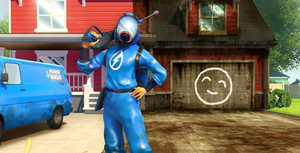
One game that *almost* managed to avoid this tendency was Indigo Prophecy. The first 2/3 of the game are very restrained, and deal largely with the personal relationships and struggles of the three main characters. There's a bit of supernatural stuff going on, but the focus is on the characters and their lives. Then in the last 1/3 of the game the supernatural part takes over, and the game becomes an "epic" save the world story. Interestingly, almost everyone who played the game didn't like the tonal shift towards the end, and actually wanted the game to stay restrained in its storytelling. David Cage has admitted that it was a mistake to go the "epic" route towards the end. So I do think that there's actually a pretty sizeable market for story-based games that don't go all "save the world!" on the player.
|
|
|
| Dan Kantola |
|
there will always be epic and there will always be subtle :)
|
|
|
| michael delosreyes |
|
|
"But I believe there is value in at least allowing for personal (and interpersonal) interactions that are self-initiated, not explicitly tied to the player's direct goal at a given moment."
An example that quickly comes to mind is KOTOR 2. Subsequent playthroughs were all about the conversations between you and your crew. "Can we please find this Jedi already so that I can get back to talking to Kreia." |
|
|
| Joshua Sterns |
|
|
I bet an old fashion detective game would be ideal for creating an entertaining non-epic experience. Interrogation skills, some fistacuffs, and maybe a knife or revolver for combat combined with some good writing would create an enjoyable game. Don't forget the moral choices or multiple paths.
|
|
|
| Thomas Whitfield |
|
|
Epic, then leads to epic + 1 sequels.
Beat the evil wizard! Beat the Demon Controlling the evil Wizard!!? Beat all the Demons everywhere !??!?? Beat some guy we made up who is tougher than all the demons.... he's a shark with lasers for eyes... urrrrrrr. Some things start epic, so get this absurd by the final baddie in game 1. I think boss fights, as a convention, drive up the un-needed epic factor in a lot of games. They mess up the flow in many cases... I just beat a 30 foot dinasaur... now I'm fighting "joe-average" soldiers again? WTF? |
|
|
| Sean Parton |
|
It sounds like to me the article's author just needs to play more indy games. That's where most of the non-epic stuff seems to happen, but he only seems to list blockbusters as his example, so of course he feels epic games are overdone.
And perhaps they are... but as a designer, that's mostly all I care about anyways, so I'm not going to halt with wanting to pursue it. |
|
|
| Stephen Chin |
|
I don't necessarily think epic precludes a subtle introspection or restraint; though on the other hand, that sort of epic is not the current connotation of epic. The Usual Suspects, at least personally, is a fairly epic movie but has few unrestrained epic moments. Like Mr. Delosreyes, for me Mass Effect was most compelling moments were not the 'epic' finale but everything before. Even the combat and side missions were fairly thoughtful but the finale was basically mindless combat with little input from what were otherwise talkative characters with interesting things to say. Some of the best moments were the smaller combats where you had all this subtle context and conflict - a sad to the point of crazy biotic, a group of biotics who just want some explanation and apology for their suffering. Even the early moments with Saran were thoughtful until he turned into a mindless villain.
|
|
|
| Chris Remo |
|
|
Sean,
I play quite a few indie games, but most of them are so different in technical scope to the games I describe that I don't think the comparison is as useful for this specific purpose. The reason I cited Zeno Clash is because it basically fits the same mold as the general class of games I was discussing. To just say "There are lots of non-indie epic games" is certainly true and I play lots of them, but saying that makes it sound like the issue I'm discussing has been remedied, which it hasn't, because I'm referring here to games with a fully-realized real-time 3D world that contains a defined world, representative characters, a relatively-authored story to progress through, and so on. That's not to say that style of game is BETTER, it's just that it makes up a really significant part of this industry, and since my point is about trying to exercise restraint when modeling reality (even an imagined reality), it's less useful to discuss something like Braid or And Yet It Moves or Castle Crashers or World of Goo or Flower or Gravity Bone or Darwinia or Defense Grid or Aquaria or Passage, for example, all of which I have bought or downloaded. Those are all great games in my opinion, but they already choose such a specifically-stylized take on representing their world and how it works that to me they don't fit as much in this comparison. It is still great when the team behind those kinds of games exercise restraint in their story or character, for example, but they are shooting for a different goal in my mind. I will say that The Path is one indie game that could arguably have been included in this article. Can't include everything, I guess. |
|
|
| Chris Remo |
|
|
Stephen,
I almost mentioned Mass Effect, but I decided in the end it was too time-consuming to try and describe the specific parts about it I liked (for those who have played the game: the initial space station hub and the ice planet hub) and why. I found the overarching story to be really cliche and uninteresting, but man, those two hubs had some of the most enjoyable gameplay I had played in a while at the time. I was extremely impressed with the interconnectedness of the NPCs' problems and the combination of ways the player could choose to approach them. |
|
|
| An Dang |
|
|
Glenn, Japan churns out plenty of non "epic" games. They just don't make it to the rest of the world.
|
|
|
| Valentine Kozin |
|
It's tempting to write off the utter lack of subtlety in games to, well, the more over-arching tendency of American culture - demanding that *everything* be bigger and louder and larger-than-life. It's a much bigger movement than games.
There's a reason, however, why we want the 'Epic'. We want to feel part of something larger than ourselves, we want a dramatic climax - the catharsis at the end of a drama in which the fate of the world teeters on the balance is much greater than the catharsis after a drama about saving a cat from a tree... right? Mankind has a fairly strong drive for the monumental, the breathtaking - the seven wonders of the ancient world spring to mind - being awestruck by breathtaking vistas, staring up at impossibly tall alien constructions, I reckon is appealing on a fairly basic level. Now here's the rub: the problem it all comes down to is that epicness quickly becomes meaningless without a point of reference. That is why, as Jon Mahwoter pointed out, that most attempts to be astonishingly epic do come off as so cheesy and "almost-parody-but-taking-itself-seriously". When everything is larger-than-life, you sort of readjust your scope - if you are going to be saving the world, then unless you've /lived/ in that world, experienced the mundanities of it and walked through it and unless you've looked at it through the eyes of a normal human being, rather than some power-armoured demigod, when you're playing the final mission your stakes won't be 'defeat the boss or that beautiful city will be destroyed'. The stakes will be 'defeat the boss or I'll have to reload again from the last checkpoint'. In short, I don't think there is anything wrong, really, with the tendency to strive for the epic. It can be effective and cathartic and quite captivating - as well as thoroughly memorable. However, epic and subtle are different things and they are not mutually exclusive. Ultimately, you need a strong touch of subtlety to maintain the player's suspension of disbelief and make sure that they relate to the characters and what is going on in the game - and the interaction between the small-scale conflicts (eg. wife divorcing the protagonist?) with large-scale conflicts (eg. space monster devouring the moon on which she lives) is what really creates a compelling and captivating experience. I think one of the reasons for the success of Final Fantasy games is that they do manage to draw a good balance between being subtle, drawing out the relations between characters, fleshing out the world and between being gratuitously over-the-top. If only this were reflected on the actual gameplay. Not that I think a shift for less epicness would be a bad idea =) Adam Bishop, I agree in part with your thoughts on Indigo Prophecy - and for that reason I'm looking forward very much to Cage's next game, Heavy Rain. It does concern me a bit however that ultimately the more reserved, smaller-scale scenarios in games are unlikely to ever capture the imagination and attention of your average ADD-ridden public masses - though I'd love to be proven wrong. |
|
|
| Will Hankinson |
|
John August had a great post about the same subject a couple of weeks back (http://johnaugust.com/archives/2009/only-death-star). I had the same feelings on Mass Effect--they've created a really amazing storytelling engine, but the only story they really chose to tell was the massive epic (which I guess justifies the cost of the engine).
I rambled a bit on the subject when I finished ME last summer (http://simianlogic3d.com/blog/2008/07/10/hero-fatigue/), but you can skip the full post for the summary: I'd love to see some expansions where they use the same character models to tell different stories: short, tightly paced 2-4 hour stories where the main character isn't always a "hero" (I use Maltese Falcon as an example). |
|
|
| jaime kuroiwa |
|
|
I'm arguing semantics, but I think restraint is the problem when it comes to epics. The whole point of an epic is to illustrate a fully fleshed-out setting for your character. Restraint -- the focus on core concepts -- has shifted the definition of "epic" to simply mean "big," and that's why these so-called epics seem more like parodies.
I think it's a fine goal to aim for true "epic-ness," because it demands complete (i.e. deep) understanding of every aspect of the setting/characters. Ico and Bioshock are great examples of how well-designed levels and interesting characters illustrate a world much bigger than your character and your story, thus becoming "epic." For the business-side, aiming for epic means that the game can branch out into other games, be it sequels, spin-offs, etc. Again, Ico and Bioshock are great examples of how successfully achieving "epic-ness" can add longevity to a title and make it a franchise. As for the Prince of Persia movie, I'm not seeing "epic." I'm seeing "big." That is not the same thing. |
|
|
| Chris Remo |
|
|
Jaime,
Fair point, but I did try to indicate that I'm referring to "epic" in the sense that it has become increasingly colloquially used in the last few years. If it helps, feel free to substitute any other word you like for your personal reading enjoyment. :) |
|
|
| Jorge Fernando A. de Zayas |
|
While definitively its a very gray area when to apply restraint in a given course of the main epic story of the game, I guess there will be one who finds out how to create a storytelling mechanics that don't suppress the action-fun-flow factor in the game, since the main problem to apply restraint is that one. So , until now the known solution its going the epic way to motivate and encourage the player to finish the game for the most strong possible generated reason: Save the world, save the girl, save your buddy or anything that can become important at later stages in the experience. Collateral stories and secondary challenges certainly make it into a refreshing and smiles creator role, but in the end main motivation goes (at least for the emotionally driven storytelling gamers) rises from the epic ending.
|
|
|
| jaime kuroiwa |
|
|
@Chris
I'm going to use "sammich," 'cause that makes me smile. |
|
|
| Aaron Casillas |
|
|
...great artistic points, but don't forget that funding and greenlighting a project with an Epic, Big Read, Awe-filling, Inspiring blockbuster soul will get more attention than a game that is "sigh" low key inside the board room. Big Moments in a game hit the player harder and grab their attention, while more subtle moments are passive. Most importantly you will have to make a decision were you want to spend your dev dollars on one or the other.
|
|
|
| David Tarris |
|
I don't think I'd call this trend to attempt a certain level of "epic" scope a fad, but I certainly think it will go away for a while once the market becomes over-saturated. It's the way the cycle always works: someone triumphantly succeeds at some style or genre (epic) with a well-received critical and commercial success (Lord of the Rings, Halo), and others try to copy that success. That's not to say everyone who comes after does it because "it worked for those other guys", but it certainly helps getting VC your way if you can prove commercial viability by comparison. For many people, "epic" just happens to be the kind of story they want to tell, and I say more power to them. I don't think this is something we as game developers need to necessarily worry about, however.
Here I find all too many similarities between the varying periods of literary trends. Between realistic and romantic, epic and subtle. Homer wrote the Iliad and some thousand or so years later Tolkien wrote The Lord of the Rings. Between the two, the epic story saw rises and falls in popularity, but it never ceased to be or took over the entire literary world. Point being, I agree with the author that we should strive to have our cake and eat it too, to have our epic stories and our more personal ones in games, but with regard to the sense that it's becoming somewhat of a concern that developers are being "too epic", I should disagree. |
|
|
| Bart Stewart |
|
|
With the benefit of hindsight and several good comments others have made, maybe a clearer way of stating the thesis of this opinion piece could be something like the following:
"The more deeply realized and character-driven is the world in which the action of a game takes place, the more likely that game is to have an 'epic' plot and events. Taking this as a rule, are there any games that are exceptions to it?" At a certain level of worldiness in the game engine/setting, it seems pretty much to be guaranteed that the main storyline will be "save the world." It's as though developers are thinking, "we spent so much time and effort creating this incredibly detailed world; we are not about to turn players loose in it and tell them that their overarching goal is to plant flowers or get a good night's rest." If that's the thinking, then how can it be addressed? What virtues does restraint have that could be used to commend it to someone who's created a complex and detailed gameworld? |
|
|
| Will Hankinson |
|
It makes a lot of sense to use the "epic"/blockbuster to finance the cost of the engine--but once you've got the nuts and bolts in place there's no reason they couldn't use that technology to tell smaller stories. Instead of telling one 40-hour story, tell one 30-hour story and a couple of totally separate 5-hour stories.
|
|
|
| Michael Rivera |
|
"To just say "There are lots of non-indie epic games" is certainly true and I play lots of them, but saying that makes it sound like the issue I'm discussing has been remedied, which it hasn't, because I'm referring here to games with a fully-realized real-time 3D world that contains a defined world, representative characters, a relatively-authored story to progress through, and so on."
I think the problem here is that any game that plans to have "fully-realized real-time 3D world" is also going to need a pretty big budget, and I really don't see many publishers that are willing to commit that much money to a "quiet and personal" game. This isn't just true of games, either. The most expensive movies are also often the most "epic". Not to mention you really have to look at the intended audience of 3D narrative-driven games. They are almost always targeted at the magic "16-24 year-old male" demographic, so it shouldn't be surprising that those games emulate the tone of movies that focus on that same age range. I suppose one could argue that expensive narrative-driven games can be just as popular with other age groups, but until someone with lots of money is able to prove that I don't see things changing anytime soon. |
|
|
| Chris Remo |
|
|
Michael,
You're right of course, but I guess this piece is less about technically finding out the cause (I do, after all, list a bunch of factors contributing) as much as it is raising it as a topic of discussion and contribute my thoughts on what I see as the unfortunately narrow narrative scope of games. It's true that there is a focus on that particular demographic, but that's just a self-fulfilling prophecy--surely, narrative games can appeal to more groups than just that, and surely the industry would like that to happen. |
|
|
| Michael Rivera |
|
Chris,
I guess my post was more meant to be a reply to your comment about non-epic indie games. I just don't really think it's fair to dismiss all of these titles simply because they don't match a certain format. True, most indie games don't create a 3D world with the level of detail of mainsteam epic games, but my point was that it's more a result of their lack of resources than overall design decisions. I don't doubt that once they reach the level of income needed to produce a living, breathing 3D environment, we'll see more quiet games along the lines of what you're looking for. Meanwhile blockbuster games will continue to rehash the tried and true epic storyline because it's been proven to sell well. So in short, yes, I agree that the industry would like to see a change in focus away from epic games, but first we're going to need games like Flower, Braid, and Passage to pave the way for us. The problem hasn't been fixed yet by any means, but it is definitely being dealt with. |
|
|
| Kevin Wei |
|
|
Purely big budget epic = low brow content that some would complain about, but sells very well.
Purely quiet and personal = sophisticated and critically acclaimed, but unproven sales. My solution: Maintain an epic overarching story, but focus the central action of the game on the quiet and personal journey. It would be critically acclaimed, win awards, and sell a bunch of copies. Where have we seen this? Funcom's "Dreamfall". |
|
|
| Nick Jacoby |
|
|
I have to agree with Kevin's solution. To use some prominent animated movie franchises as examples, just look at the success of most Pixar or Studio Ghibli films. They can run the range in terms of their 'epicness,' but are beloved by audiences because they make each story such a personal experience. Pixar's characters always carry more depth than the competition and Hayao Miyazaki's eye for animating the nuances of body language and movement in the world ground their respective movies in relatable settings. After reading the John August article that Will suggested, I also noticed that these films are usually conducted at a human scale; instead of "save the world" the goal for these protagonists is often "save a loved one," or "make amends," or even "become a chef" if you go further down the list (Ratatouille).
I --bawled-- during the montage that conveyed the deep personal regret of the protagonist in Up (see it. that one scene really captured the heartache and shame that accompanies guilt) and felt like much more had been accomplished by the end than if compared to say, the final victory in The Lord of the Rings: "We butchered our way through every obstacle! We vanquished the Dark Lord Sauron's fanny! There's a big exploding volcano now woooooo!" *yawn* It at least can be surmised that there would be a market for such "restrained" experiences, considering that both the video game and animated films industries likely share similar target audiences. -J |
|
|
More: Console/PC, Exclusive