|
|
 |

| |
GameCareerGuide: Game Design And Architecture
by Staff
|
|
| |
|
June 16, 2009
|
| |
Can the processes of game design and play be applied to the design of real-world architecture? That's the question Masters student Chris Totten asks in this write-up of his thesis work -- with the help of Valve Software.
The tenets of game design may have wider applications in the world. In his Masters thesis, which is covered in the article posted today on GameCareerGuide.com, Chris Tottent looks at whether or not the processes of design -- modeled on those used by Valve Software -- can lead to a new way of designing buildings.
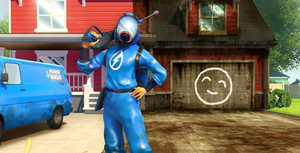
These are the three ideas Totten explore in this extract:
"- Creating a "core mechanic", the basic action a player takes within a game, as the design generator for an architectural space (the basic action someone takes within the building.)
- Using game engines to playtest building designs with clients and other designers to understand how an occupant will see and move through them.
- Designing in a "Cabal", similar to Valve's own designers, by having designers from different parts of a project exchange work and playtest one another's designs, ensuring that each element contributes to a cohesive whole and that the building follows the original design goals of the core mechanic and any other experiential concepts."
Both technology and design are merged in a new way -- to create architecture within Valve's Source Engine that can be designed collaboratively and explored as a 3D space before plans are finalized, in a collaborative environment.
Beyond that, though, Totten turned the design process itself into a game, and reports his findings here:
"The game was a success among my playtesters, who appreciated learning how they could design a more user-centric piece of architecture. Within the game, they succeeded in creating such user-centric buildings many times over the course of the semester. I had students consistently recreate the same building every week, so I could track how different core mechanics and game variables inspired the players in different ways."
You can read the feature on GameCareerGuide right now, which includes a link to Totten's full thesis.
|
| |
|
|