|
Introduction
Much
to the elation of the darkest underworlds of high school graduates
desperate to break in to the game industry, game design programs have
broken into the constructs of colleges around the country. And with the
plethora of impressive games and an economic weigh-in well above nearly
every other entertainment medium (and projections of it going even
higher), there is hardly a wonder why.
The
logic of the recent surge of such programs smell an awful lot like that
of our historical film schools: give passionate and idealistic students
experience in a specialized field that they would otherwise have
limited access to, study the theories and history behind the industry,
and try to better prepare students for a job after college than their
competition.
A
game design program is also subject to the same criticisms. One of the
biggest, and certainly the most highly debated, is that of utility.
What can you gain from a formal education in game design? Game design,
much like film directing, or sculpting, or music, is a technical
art form. It requires a level of technical proficiency in the
necessary tools, as well as creativity within the confines of the art
form itself Jack Emmert, lead designer for City of Heroes and City of Villains,
has been quoted as saying, “Games are the product of talent, not
training.” Can you teach talent? Can you teach creativity?
A
tough question. One that is the constant battle of film programs the
world over, and already, the lines are being drawn in game design.
Below
is an attempt of making odds and ends of the arguments for and against
an education in game design, and (hopefully) some sort of conclusion.
Tools of the Trade
As
I had said before, technical skill is a very large part of game
design. Without question, in order to be a good designer, you need to
know how games are made. It is not a matter of just having “a really
cool idea” for a game. On some fundamental level, a designer must be
able to understand whether or not a game is in fact feasible, and
roughly understand what it will take to make it a reality.
In
a field such as film, the tools of the trade have undergone few and
gradual changes in the 100 years of film's existence. Games change
constantly; industry standards today become obsolete a month later. The
medium itself undergoes radical changes as new consoles and
sub-industries emerge seemingly every other year.
While
this seems to render any sort of usable technical training useless,
that is not necessarily the case. While learning the details of how to
use the Hammer editor wouldn’t do you much good in the industry unless
you ended up working on a Source-powered game (which may not even still
be on market by the time you’re working anyway), practice and
experience in the theories behind designing in a WYSIWYG world editor
would cross over to many projects. Experience in the tools used in game
design puts you in the right process of thinking. You begin to think in
terms of objectives, balance and pacing. You can begin to see patterns
in what is “fun,” and what is not.
This idea extends beyond just experience in design tools. Game design, perhaps more so than any other medium, is a collaborative
art form. As a designer, you rely wholly upon your artists and
programmers to help make your vision for a game a reality, and as such,
must also understand their disciplines. The goal of a game design
education is again not to learn how to create efficient algorithms for
3d processing, but instead to learn how to communicate with those
people on your future team that will do that, and understand, if only
on some preliminary level, what they are doing. Taking overview
classes in art, animation, production, programming, and even business,
which most game design curriculums provide, are a great way to begin
building the vocabulary that will allow you to make the games you want
to make in the future.
Historical Perspectives
Another
unique point of contention in game design studies is that of historical
and critical studies. Today’s wannabe game designers grew up on the
games of the Atari 7800 and NES: but does studying those games help to
create good designers in the world of Xbox 360 and Playstation 3?
|
|
|
 |
 |
 |
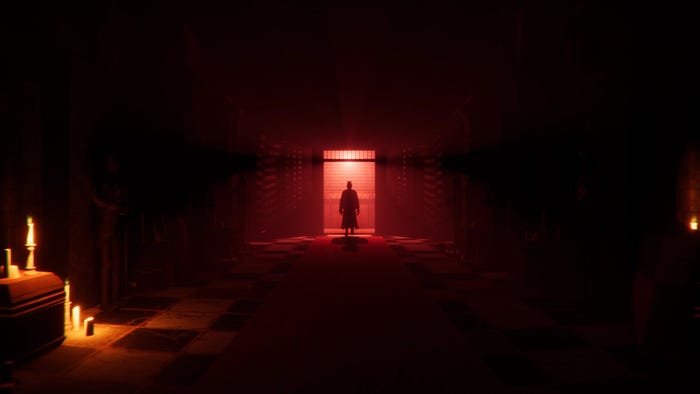
Do games like Atari's Midnight Mutants hold the key to the future?
|
Games
seem to undergo a complete redefinition every year. Realistic physics,
photorealistic graphics, and multi-core processors seemed like comical
proposals 10 years ago. Expectations for a game have risen at an
exponential rate, and continue to climb. Can we learn about good game
design from games like Super Mario Bros. and Pong?
Yes.
One
of the common misconceptions is that with higher expectations in the
fields of graphics, physics, and the like, comes an ever-changing
expectation from the designer. Actually, the designer’s main role has
remained constant: provide a gaming experience that is fun. Looking at
the choices made by other designers allows you to begin to identify
what made a game fun, and therefore successful, and what did not.
Of
course, along the lines of the continually changing game standards,
“historical” studies in gaming should extend to contemporary games as
well. In this sense, you can see what currently successful designers
are doing with the tools now available to them. Also, since gaming is
still very young, it is important to play unsuccessful (boring) games,
as a way to give students the skill to identify the mistakes of the
past, and (hopefully) not repeat them.
Nurture Vs. Nature
This is the big one: can an education in game design teach you the creative talent involved in creating good games?
Jack
Emmert, along with many designers, believe are that there are no real
tools to teach in order to make a game from scratch, only to copy, that
there are no tools that a student can learn that can predicatively
create an innovative new game. The theory is that, at best, a game
design education can only teach you to regurgitate and successfully
copy preexisting ideas. Can you be taught innovation?
We are now in the heart of the conflict undermining all artistic departments of study.
Here’s
my take: no, you cannot be taught innovation. Innovation comes from
sources and inspirations beyond an individual’s control, such as good
timing and luck.
However,
talent as a designer (as well as any technical artist) is not solely
based on your innovation. Your skill is defined by your awareness of
the choices that you can make within the confines of the medium. Anyone can get lucky. But consistent quality comes from an awareness
to the entire system of choices of game creation – from level design to
writing to programming to art to sound design to producing.
Innovation?
Here’s an adage made popular in film schools around the country: learn
the rules, so then you can learn to break them. It is about learning why
certain rules and standards exist, how they affect the final product,
and in what ways they can be bent, and at times, broken. Innovation is
your own personal response to any of the choices presented when
creating a game.
Here is a great case study: the 2004 release of Katamari Damacy,
often called one of the most innovative games in several years. When
interviewed, game director Keita Takahashi urges that this game was not
meant to be innovative; he set out to bring back the concept of simple,
silly fun to gaming. Was it innovative, or was it his own version of
what made old school games fun?
It’s
a question of nurture vs. nature. Surely, to say that a formal
education in game design is necessary to being a good designer is
laughable (I’m fairly certain that less than 1% of all game designers
ever went to game design school). Conversely, though, it is hard to
ignore the fact that USC’s film school has had an alumni nominated for
every Academy Awards since 1973. School in an artistic discipline
nurtures talents; it provides a format in which to enforce and guide
students through their own research as they identify their interests
and develop their talents.
Experience is King
But
that doesn’t mean that they will get a job. In the gaming industry in
particular, nothing can replace real work experience. As anyone who is
reading this is likely to attest to, getting your first job in the
gaming industry is nearly impossible (it took 126 resumes offering to
work for free as production intern to get one job interview), but that
experience is what will get you your next job.
Really,
I believe that this is the hardest challenge in determining the worth
of a game design education. Would you be better suited attending game
design school full time, or would it be better to explore another,
tangentially related field, and try to gain industry experience in an
internship?
Let
me put it this way: the game industry is built on a bunch of designers
and HR people who do not know much about game design degrees, much less
favor them. As such, relying on the degree to get you your job as a
designer is a strongly discouraged. However, if you really want to
sharpen your design skills, so that when the opportunity arises down
the road to design an actual game, you are better prepared, then going
to game design school makes perfect sense. Just know that you are
likely going to spend several years working in other capacities before
you get that chance.
It
is also fair to point out that game design programs are not solely
theoretical, and when you graduate you’ll have more to show for your
education than what “G.D.D.” stands for. In fact, you will have the
start of a portfolio, as well as the tools to do more. You may even
have a finished game that would be presentable as another
self-promotional tool. Any of this will certainly improve your chances
at landing a job (though don’t ever bring in game ideas, which they
cannot legally take a look at, and is not what they will be looking for
from you).
A Conclusion of Sorts
So, in the end, is it worth going after a game design degree if you want be a game designer?
Game
design programs offer people an opportunity to gain real experience and
knowledge in what it takes to create a game, and will give them a good
base from which to expand and become a good designer. But it depends on
an individual’s goals and level of commitment to wanting to be a game
designer, as well as their interest in other areas of study. If I had
the ability to do it again, I would probably have gone through one of
the programs (though I am a little biased, as I am a byproduct of
UCLA’s School of Theatre, Film and Television, and I have always like
the idea of poking fun at all those “real major” students). As for its
utility; only time will tell. Keep a look out for the students out of
these early programs a couple years down the road, and see what they
are making.
Beyond
that, the debate rages on. But bring it up next time you’re at the
water cooler, and revel in the fact that 100 years from now, you’ll be
having a similar argument with a barista who will huffily defend his
“game school” education.
[Darren
Guttenberg is an undergraduate at UCLA Film School. He describes
himself as the "black sheep" of the department, having chosen a
specialization in game design.]
_____________________________________________________
|