|
3. Staying True To The Vision
When times are tough, they can shake your values and make you desperate. For too many projects, when it looks like the funding goal won't be met, teams promise the moon and appeal to every request from folks in the community, oftentimes leaving themselves with an impossibly large financial commitment for the additional rewards and features they promised during their campaign. I know how tempting it is to compromise your vision in the hopes to achieve your funding goal, which I why I'm proud that we stuck to our guns and only made changes to our project that fit within the vision for our game.
This is one of the trickier aspects of running a Kickstarter campaign -- on the one hand, crowdfunding is all about making the community an integral part of the development process, but responding to every request can also doom your project.
In the case of République, we got both encouragement and seething criticism for announcing the game for iOS only. In general, it was industry colleagues who were patting us on the back for boldly throwing our support behind the iOS platform and committing to doing something new and different on iPhone and iPad.
On the flip side, it was mainly hardcore gamers who were extremely angry with us for announcing République (a game they admitted to wanting to play) for a platform that they not only didn't want to play it on, but a platform that they outright hated.
One of better-spoken critics led a mini anti-République campaign voicing criticism like, "We don't want iOS to be that platform. We are happy right where we are and always have been, on the PC. As more and more companies slouch towards Apple, we are told that it is inevitable that they will swallow core gaming as well. Whether that is true or not, it will certainly not happen with our facilitation. You are essentially asking us to help realize the future we fear most."
But for every well-articulated critique, we had dozens of hateful messages thrown our way for focusing on the iOS platform. The easy thing would have been to just listen to the community, quickly backtrack on our iOS aims, and announce the game for PC and PlayStation Vita, but that was never an option.
The team was settled on its long-term vision for République: our belief that iOS can and will be a serious game platform, and that it just needs more high quality games designed for the device from the ground-up. Even during some of darkest days early on, I had to remind myself that I would rather we fail in our Kickstarter and still hold on to our unique vision than to sell out and make promises that we didn't truly believe in, only to reach that illusive funding goal.
Still, amidst all the static, the community had a point -- we had entered the PC-centric space of Kickstarter, pitched them on a touch-only iOS game, and wrongly expected them to embrace it. It was then that the team kicked off a number of long meetings to discuss the creative and development realities of committing to a PC and Mac version of République.
From the very beginning, we all agreed that we would ignore those in the community telling us to "just port the game to PC" and instead focused the meetings on story and design changes that would play to the strengths of the desktop.
After a number of promising meetings (one of which we taped and shared with the community), we decided to pitch the community on a compromise: We would promise the game for PC and Mac, but only after the iOS version was designed and completed, and then we would use initial revenue to fund a reimagining of the game specifically designed for desktop play. The community response was extremely positive, and the praise we got committing to a unique development cycle for the PC and Mac version versus just porting the game validated our philosophies.
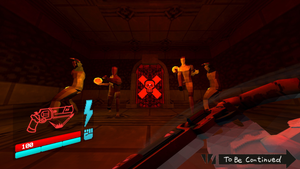
By the time the countdown clock winded down, it was the PC and Mac version that pushed us over the line of our funding goal, representing roughly half of the total pledges in terms of platform. In fact, as something of a happy accident, we stumbled upon a reward tier strategy that led to an increase in individual pledges: reward tiers that allowed pledgers to double-dip on the game, getting both iOS and desktop versions. For those interested, here are the survey results from our backers about which platform and OS they expect to play République on:


Committing to PC and Mac was the most exciting outcome of our Kickstarter. We stayed flexible and listened to the community, but also made sure we stuck to our vision and expressed that honestly to the community, who responded with generous pledges and words of encouragement. And most importantly, the team's happy -- we're still developing our dream iOS game while also knowing that we have a second Christmas when we can deliver a unique version of the game for PC and Mac users.

4. Generating Buzz
Our job in getting the word out about République was made much easier by the fact that both Logan and Camouflaj team members have been associated with dozens of high-profile projects, making it more likely that the press will pick up on the story of République's Kickstarter launch.
But it wasn't just our individual backgrounds that made the République story worth picking up. We also had an exciting story to tell: Console developers ditch the living room to make a console-like iOS experience built from the ground up. We prepped a press release and made sure to have plenty of screenshots and team photos available for any outlet interested in running a story.
All said and done, there were well over 100 articles written about République during our 30-day campaign and about a dozen podcasts that discussed the project, many of which were kind enough to invite me on their shows to chat.
One unique thing we did was show République to press members before we went live to give them a heads up as to what we were planning to do on Kickstarter. Kotaku ran a story that exclusively revealed République to the public, teasing our upcoming Kickstarter campaign and further adding to the online buzz leading to launch day. I believe this was a smart approach -- why keep your Kickstarter secret until launch? Give the community a heads up so they're ready to support you from the initial hours. Everyone needs a big first day on Kickstarter.
One unexpected source of online buzz was the surprisingly controversial nature of our game and Kickstarter. More so than any other Kickstarter project that I'm aware of, République was the focus of a number of forum debates ranging from iOS gaming to the true cost of game development to the press's role in this Kickstarter phenomenon. All of this attention (both positive and negative) led to a lot more exposure for the game, which was great.
While some of the criticisms we faced were quite pointed and harsh, we were not alone in defending ourselves -- the project had inspired a legion of supporters willing to go to battle with us. This made our last-minute success all the sweeter for our team and the thousands of impassioned République supporters.
|
We are doing pretty much Ok, and most probably we will reach our humble 10k goal, but I think that you are completely right about feeling like the feedback is confusing.
Kickstarter fatigue will increase. It's a 'me too' phenom already. Unique, then novel, then interesting. How long until it's passe? Reminds me of Ray Kurzweil's predictions - innovations will sweep through our lives with ever increasing speed.
That's a pretty incendiary statement to make. Which campaigns have actually been guilty of this?
That being said, I have heard discussion between some people that are weary of "gambling" on some of the less known projects. For example the Planetary Annihilation kickstarter seems to have gotten some praise for being a very experienced team behind it.
Take the Defense Grid 2 Kickstarter, for example. They asked for $1 million to fund a full sequel to the game, and I saw a lot of "How the heck can it cost $1 million to create a tower defense game??" Only after you run the numbers and think about it for a bit, you realize that $1 million can probably fund a company of 10 people working for average wages for a year. For a very highly polished game like the original Defense Grid, someone could easily understand how it could take 10 people working for a year to create that.
I wonder if it would be of help to some Kickstarter projects to be more transparent into where the money will go? If potential donors knew "This other game had X people working on it for Y months, and after costs of office space, legal expenses, and benefits, it costs us $Z to create", maybe it would make it easier to understand where they're coming from asking for a specific amount?
The more popular argument is of course that other Kickstarters ask for less. And, to be fair, if you launch a Kickstarter then you are competing against other Kickstarters. Maybe you really need $1,000,000, but if the other guys are asking for $200,000 or $50,000, it starts to look like you are greedy. Or out of touch. Or a company with ideals beyond your station. Or a company that should be looking at more traditional funding routes. You certainly aren't seen as a fan who wants to get a game out, but rather more likely as a business who, after seeing other success stories, is trying to jump onto the Kickstarter money train before it leaves the station.
(For Defense Grid 2 specifically, not only was it competing against other Kickstarters, it was competing against other Tower Defense games. That genre which the market has been flooded with for years, and for a while appeared to be one of the backbone of free Flash games. It was a sequel to a somewhat recently released game that didn't need Kickstarter. People only quirked their eyebrows harder when they were told that Defense Grid 2 was going with a high budget Kickstarter because the first Defense Grid didn't make money. And it certainly didn't help the court of public opinion when they saw the tiering system, and how the "goal" was only an expansion pack while the full sequel was a stretch goal.)

What turned me away was the fictional space and the aesthetic, which said: Mainstream.
There's a fantastic mechanic in there, wrapped up in a presentation space that feels very safe. This isn't a criticism. There's no problem with the space, and I love the blend of sci-fi espionage you have going on. But I've seen it, and done it, and don't really want to re-do it. It feels like big studio domain, and what has traditionally attracted me most to Kickstarter campaigns is the sense of something which is mechanically AND visually and emotionally risky (experimental, unique). You hit one target for me, but missed the other two.
Not that I want to imply that my feelings are indicative of some broad public opinion. In fact, I could very well be the only potential backer who felt this way. But I just wanted to offer you another point of view that you may not have considered, if it helps at all.
I do wish you the best of luck, and I'll almost certainly purchase the game because it looks phenomenal (I've seen so called triple-A games with less polish) and the main mechanic is brilliant.
Who would have thought that being too polished would be seen as a negative? Because certainly the opposite is true as well.
I guess you just need to communicate your idea clearly, demonstrate or prove that what you are promising can be done, and relate to the community in a more personal way.
Thanks again for sharing!
Interesting read, thank you for sharing and congrats!
Thank you in advance for your answer.
I'm really excited at the idea of "core" games on iOS, and I was crossing my fingers from day one. I'm super excited that you guys made it, and I can't wait to see the fruits of your labor. Wishing you guys a smooth development, I can't wait to see what you come up with!
I can understand why people would be put off by the "polished" look of the game. Personally, when I look at Kickstarter projects for games, I do not look for high profile names. Rather the opposite, I look for a small team with a cool idea, and not enough money, and for whom finding a publisher would be pretty hard to near impossible.
As for your game, you could have pitched it to any publisher, or any other kind of financial backing system and be rewarded with a pile of money, based on the sheer professionalism, and polish of your product, (not to mention the game projects that members of your team have worked on). This to me, (and this is my opinion here, but may also be shared by others) was what made me look at your kickstarter page, and your video, be interested, and yet not contribute to the campaign. I saw the product, and instantly I thought: "well this game will eventually see the light of day whether I contribute or not, there's no way that they wont be able to get financing in one way or another". Now, that might not be the best reaction, but I am sure that I am not the only one who thought and did so.
Anyway, that's it, I just wanted to shed some light as to what might be going through the minds of some of the visitors to your kickstarter page (or others like it), and hopefully help your team and others who will surely follow gain a bit of insight.
That being said, I wish you guys the best of luck on your project, and like most people, will be looking forward to seeing, and playing, the final product.
Cheers
Thank you for your reply, Ryan, and thank you again for mentioning us there in your update that time - I remember this too ;))
Good luck with your game!
I come from a core gaming background and still love them, but I can't see these "war on gaming" and "tablet supremacy = core games' death" theories as anything but irrational.
Anyways, I missed out on the Kickstarter (d'oh) but if you're still taking monies I'd love to chip in.
In the case of consoles, designing for consoles has certainly affected PC games. Where a couple of decades ago, PC games were the "best" and consoles had to get scaled down ports, now PC games are getting ports of console games, often with little to no improvements (and sometimes with added issues.) Publishers went to consoles because that is where they thought the money was (whether it actually was or not.)
That is why people get up in arms when a new PC game has a "Push Start Button" at the title screen. Or displays tutorial stuff with gamepad buttons, assuming you will be using a gamepad just because you've got one plugged in. When you go to the video options and see you've got only three or four basic things. When the PC version gets saddled with Games For Windows Live, because the publisher won't spend the money to create a new working network option. When Ubisoft does anything.
People expect similar to happen as iOS becomes more popular. The difference here is that PC versions of iOS games tend to be priced around 5-10x as much as their iOS counter-parts, even when they are nearly identical. So not only do you get a game made for a different environment (iOS games tend to be made for playing in shorter bursts, and for a different control scheme, for examples) and a weaker system, you get to pay much much more for it.
Personally, I will start watching a video and if it's good I'll click the link to go to the parent site (youtube or vimeo) to continue watching it in HD and read people's comments.
I have no idea if I'm the majority, but this could attribute some of those stats.