2003: Still Significant
We got some significant games in 2003, perhaps most notably Star Wars: Knights of the Old Republic, Call of Duty, and WarioWare. KOTOR put all of Bioware's famed skill at RPGs at the
service of the Star Wars universe, with highly-lauded results. Since it was
based on the d20 system and an existing franchise, I don't feel it broke ground
creatively, but was an excellent title all the same. Call of Duty made the player feel that he was actually part of a
battle beside his comrades, even in single-player mode -- an important step
forward, as most shooters take the lone wolf approach. WarioWare was just sheer mayhem: dozens of "micro-games"
that each took only a few seconds to play. It was gameplay reduced to its
barest essentials, but in colossal variety.
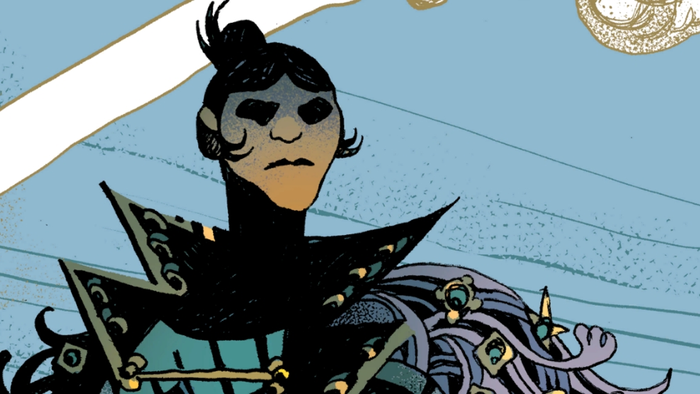
Viewtiful Joe took
the classic side-scroller and reinvented it with a twist: using Matrix-like visual effects to take out
enemies. Instead of block moves, Joe can use VFX (visual effects) tricks: slow,
mach speed, and zoom in, which can be combined for more powerful attacks. Also,
at a time when most developers were concentrating on photorealism, Viewtiful Joe went for a comic-book look
that was both attractive and entirely in keeping with its style of gameplay. It
gets my vote for pure imagination.
Like The Longest
Journey in 2000, Silent Hill 3 deserves
a special mention for the depth of its female protagonist, Heather. The whole Silent Hill series has been unusually
good about portraying real-looking women, but Heather is particularly
distinctive. Moody, temperamental, and not conventionally attractive, Heather
doesn't fit neatly into any of the traditional gaming stereotypes for female
characters.

2004: What's A Katamari...?
Two significant industry events took place in 2004.
Electronic Arts signed an exclusive 5-year deal with the NFL, thus freezing
everyone else out of the serious football market -- a thoroughly practical, if
ruthless and much-hated, decision. The same year, Acclaim finally declared
bankruptcy and closed its doors, and the only surprise was that it took so long.
I hate to see honest, hardworking developers lose their jobs on account of
managerial incompetence.
2004 gave us World of
Warcraft, City of Heroes,
Katamari Damacy, The Chronicles of Riddick as well as numerous successful
sequels such as Half-Life 2 and Halo 2. The Chronicles of Riddick broke ground by actually being better
than the movie that it's based on. Games based on movies are not reliably good
and many are distinctly poor, so this was an improvement of sorts. The other
big thing that happened in 2004 was the release of the Nintendo DS, which broke
just about every rule in the book. Two screens? A stylus? Wireless? What do
people think this is, a Pocket PC? But it was hugely successful, opening up
whole new markets for handheld gaming.
I don't there there's any question that the legacy crown for
2004 goes to World of Warcraft. You
simply can't have a success that huge without it affecting everything that
comes later. For the foreseeable future, WoW
is the MMOG to beat -- or to avoid competing with directly, a much safer
strategy. WoW didn't invent all the
various improvements necessary to attract casual players (opportunities to play
solo, instanced dungeons, consensual PvP play) but it did put them all together
well.
Katamari Damacy only
did one thing -- but that one thing was something gamers hadn't ever seen
before, so I note it for its imagination. We had rolled balls around in games
like Marble Madness, but in Katamari they picked up anything they
touched like a snowball. The result was bizarre and hilarious.
Myst IV: Revelation
made a number of innovations that unfortunately went unnoticed by much of the
game community. The most important one was auditory. In most games the majority
of the world is silent, except for a few ambient sounds from specific
noisemakers. In Myst IV, you could

click almost any surface in the game and hear what it sounds like when tapped.
There
isn't a lot of gameplay need for this feature, but it represents a major step
forward in making a virtual world truly alive. You could also take pictures of
any in-game location, then type notes next to them for future reference; and you
could access the memories of NPCs through a special amulet -- a new way to
bring narration to the player.
2005: Expanding The Audience
2005 was notable for the PS3, Xbox 360, and Wii controller
announcements, and for the Xbox 360 beating the others to market in time for
Christmas. We also got a black eye this year: in a major industry gaffe,
Rockstar lied about the notorious Hot Coffee mini-game in Grand Theft Auto: San Andreas, thus calling the whole rating system
into question and bringing down yet more opprobrium on our heads. Take-Two lost
over $20 million as a result.
On the other hand, Shadow
of the Colossus came out! And so did God
of War, Psychonauts, Nintendogs, and Guitar
Hero. My nod for pure imagination goes to Psychonauts, which unsurprisingly was created by Tim Schafer, the
man responsible for Grim Fandango.
The game was a combination of platformer, comedy adventure, and just plain
lunacy. Unfortunately -- again like Grim
Fandango -- it didn't sell as well as it deserved to.
For important innovations, the hands-down winner in 2005 is Guitar Hero. No driving, no shooting, no
jumping -- just rocking out to a variety of tunes using the special guitar-like
controller. Guitar Hero did something
no game had really managed to do successfully before -- make a player feel like
a musician, even if he wasn't one. Music games are not new, but until Guitar
Hero they were a niche. Now they're a genre in their own right.
So far as legacy is concerned, my prediction for 2005's crop
is Nintendogs. Artificial pets have
been around for quite a while, but Nintendogs
was the first to make them seem real. It made excellent use of the Nintendo DS's
stylus interface, and was a big hit with girls. I think we'll see a lot more
such games in the future, and they'll borrow from Nintendogs's gentle, imaginative design.
|