|
These
days, to get a job in the game industry, you must have a demo no matter
which career track you choose as a focus. Writers create portfolios to
show off their best work, so do photographers. Obviously a game artist
won't get a job without one. Neither will a game designer, a
programmer, marketing professional nor a producer. What you put in your
demo depends heavily on what sort of job you're after.
Regardless
whether you create your demo in the form of a personal Web site, a CD,
a videotape, or an Acrobat Reader file, you need to put your best foot
forward. The biggest demo turnoff is a collection of big ideas done
poorly. So what's the right path to success? Follow our advice…
Game Designer, Level Designer, Or World Builder?
The
trick is to clearly show and communicate your abilities in the area you
intend to focus your career. For example, if you strive to be a full
game designer, what most game companies expect you to demonstrate --
outside of good communication skills -- is your ability to generate
clearly understandable design documents, diagrams, and AI designs. And
you should be able to pace out the gameplay throughout the entire game,
keeping the player engaged, excited, and not frustrated.
Similarly,
if you desire is to be a level designer or world builder, you should be
able to not only show levels you created in the area you are seeking
employment, but also an ability to walk your prospective employer
through each of your levels, explaining why you designed it the way you
did. Don't be afraid to talk about how you altered your designs to fit
a game engine or game hardware restrictions. That information is very
impressive. Show and share it!
|
|
|
 |
 |
 |
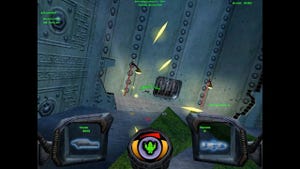
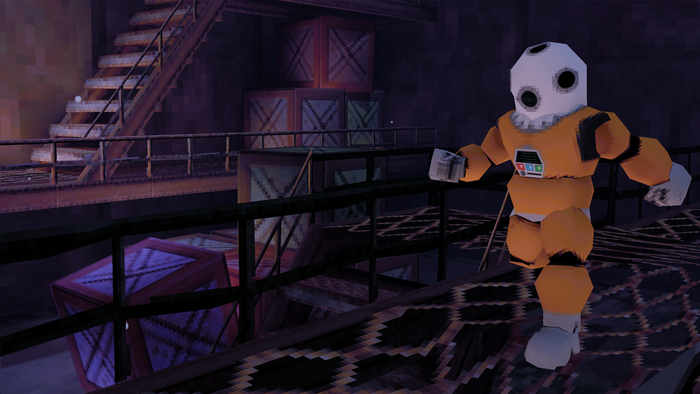
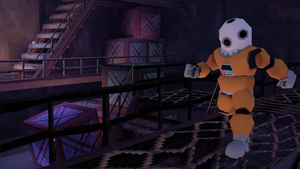
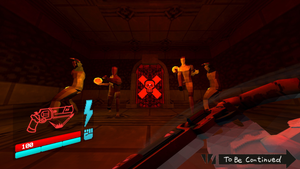
You should be able to show an example of your work such as this level made using the Half-Life engine.
|
The best format for your demo is a Web site or CD containing completed 3D level designs for Quake, Half-Life,
etc. Design map layouts, script AI behaviors, build and modify
characters, create and modify triggers, demonstrate your ability to do
level layouts using 3D Studio Max or Maya.
Your
samples should show an understanding of gameplay and strong design
principals. You'll want to include a text file with your levels to give
instructions on how to load the levels, and provide a brief summary of
your design thought process for each level. Include in your demo
samples of design documents, grid paper designs, game pitches, and game
systems (i.e. resource economies, combat models, etc.).
There
may be some areas of experience that are more important to your
specific target game company, so it's best to do as much research as
possible before submitting your demo. If you're target company uses a
licensed technology, like the Unreal Engine, then you should use the
same technology to create levels in your demo. Find out how your target
company prefers to see 2D or 3D levels and make sure your demo is
customized to this. Don't forget to add as many notes as possible
describing your play mechanics and how they work. Sometimes you will
find several designers working on the same world or level. Therefore it
is very important that, in your demo, you clearly distinguish your
specific contribution.
Game Programmer?
To
get a game-programming job, a great way to standout is to present a
portfolio of code samples and games you have developed. If you're just
starting out, create a game of your own or clone an existing game, yet
be sure to add an original idea. Create your own software tools for
game development. In short, design an application that showcases your
coding ability and strengths.
Your
demo need not be too complex; what you want to do is demonstrate your
grasp of current game programming techniques and technologies. Do this

by creating a few small, self-contained games. The more robust and

complete the game (multiple levels, beginning and ending sequences,
etc.) or tools, the more attention you will get. Your aim is to
demonstrate that you understand how a video game works and how it is
designed. You'll want to include a text file that gives any
instructions on how to load the game, and provide a brief summary of
your design thought process or what you learned technically.
Example
tools that you can create for working on a game include image loaders
for bitmap or GIF files, audio loaders for WAV files and MP3s, tile map
editors, preview utilities for audio and image files, or wrapper
classes that will make it easier to use a popular API like DirectX.
For
each game or tool you have coded, show screenshots. Consider creating
small AVIs that quickly walk a prospective employer through a level of
your game or that demonstrate functionality. That way, when someone
hops onto your Web site, they can quickly get a feel for your abilities
without having to take the time to download and then run your game or
tool.
On
your Web site, make available an accurate sample of your production
code with a large enough scope to demonstrate some interaction among
various sections of the code. This is a great way to show off your
coding prowess. Remember that the code needs to be clean and
well-documented. Technical hiring managers want to see how you organize
code and go about solving problems.
Another way to generate assets for your programmer demo is to join an open source project. Head over to SourceForge,
which is a repository of applications currently in development. All the
source code there is available for free. You can learn from looking at
other people's code as well as modifying it to your purposes. One of
the cool things about the open source movement is that you get to learn
from others and extend their work in your own way.
If
your target game company creates console games and you don't have this
experience yet, get creative. Figure out what you can code that might
assist your target game company more efficiently create games. I
promise you will be considered first for a job if you can provide your
prospective new boss with a solution to a problem they face.
Yes,
it is tough to obtain console experience without having access to a
development station. However, the Net has tons of technical information
available on almost any game platform. Do research and obtain the
specific information you need to familiarize yourself with a console
and some of the issues around it.
Game Artist?
Although
some game careers don't necessarily require a demo, you simply can't
become an artist without presenting a mind-blowing demo reel. The best
format is a Web site or CD containing clips from games on which you
previously worked. Of course, if you're trying to break into the
industry, you won't have professional game clips to show off, so you'll
need to get creative.
Game
companies receive literally hundreds of demo reels each month from
aspiring artists and, as you might imagine, very few make the cut.
Unfortunately, in most cases, it's the submitted material -- not the
individual's skills -- that gets in the way of scoring a job. So how
does one stand out from the crowd?
Don't try to be a jack-of-all trades. Use your demo to highlight and emphasize your strengths.
Are
you an animator? If not, don't put animation in your reel. If you're a
great animator but can't model, use someone else's models. Are you a
texture artist, are you good at color composition, at lighting?
Abstract or cartoon characters in your demo instead of realistic human
or other carbon life forms is an immediate warning to an art director.
If you can't really build characters, don't claim you can. Spend your
time refining the few elements you're exceptional at, rather than
trying to be good at everything.
Here is a list of suggestions for designing your demo:
Exercise #1: Generate
a series of concept drawings, color comps, and construction layouts
based on an original game concept, or take an existing game, book,
comic, or film franchise and visualize elements from it, as if you were
preparing initial images for a game project. Include conceptual images
of characters, objects, environments, and possible story/game scenes.
Exercise #2: Based
upon these concepts -- and using one of the noted 3D software packages
(preferably one that a prospective employer is using in production) --
generate several models. Choose examples from each asset type that you
have conceived: characters, objects, creatures, vehicles, and
structures.
Exercise #3: Now
that you have several models, it would be a good exercise to create and
apply appropriate textures to fully realize your aesthetic vision.
Using Photoshop -- and possibly DeepPaint3D or another UV mapper --
apply these textures to your models.
Exercise #4: Taking
your textured models, set them up for animating, if necessary, in your
3D software package. If you are not a proficient animator, apply mo-cap
or pre-animated files to your armature. If you are an animator, create
several short move animations of 30 to 60 frames, including a walk/run
cycle, several periodic personality idles which reveal your ability to
“act” through your character model, and a couple of dynamic action
moves to stress test your model.
Exercise #5: Finally,
either using a standard 3D software package or a commercially available
level/world editor, create an acceptable example showing your abilities
at building an exciting, compelling environment. Keep it limited in
scope so that you can use your limited resources of time and materials
to make the most professional quality portfolio piece of a world.
Concentrate
on those exercises that represent your best work for your targeted
career goal (whether that's a concept artist, modeler, texturer, level
builder, animator, or interface designer).
The
results of these exercises should yield quite a portfolio of game art
assets that, if consistently polished to a higher production value
through honest self-critiques and re-edits (and using successful
marketed products as the paradigm), they will no doubt fuel a very
appropriate demo presentation to prospective employers.
Putting It All Together
Once
you have your demo's assets organized and refined, put them on a Web
site, CD, or videotape. You never should be caught with an outdated
resume nor an outdated Web site, even if you're not actively job
hunting. You will need your Web site for networking.
And
never make apologies for your demo. It needs to be up-to-date, fresh,
and exciting. If you feel the need to apologize for the lack of quality
or the lack of substance, we suggest that you've got some work to do!
_____________________________________________________
|