Our Properties: Gamasutra GameCareerGuide IndieGames Indie Royale GDC IGF Game Developer Magazine GAO
My Message close
Contents
Turning a Linear Story into a Game: The Missing Link between Fiction and Interactive Entertainment
 
 
Printer-Friendly VersionPrinter-Friendly Version
 
Latest News
spacer View All spacer
 
February 6, 2012
 
Design success means knowing what to do with feedback [1]
 
January's game sales hurt by lack of major releases, says analyst
 
GDC 2012 details Google, Facebook, Unity dev days
spacer
Latest Jobs
spacer View All     Post a Job     RSS spacer
 
February 6, 2012
 
Nintendo of America Inc.
CONTRACT - Localization Translator (Brazilian Portuguese)
 
A2Z-OC Research and Development Center
3D Animator
 
A2Z-OC Research and Development Center
Software Game Development Engineer
 
A2Z-OC Research and Development Center
Software Game Development Engineer
 
A2Z-OC Research and Development Center
Games Development Engineer
 
A2Z-OC Research and Development Center
LEVEL Designer
spacer
Latest Features
spacer View All spacer
 
February 6, 2012
 
arrow Building the World of Reckoning [3]
 
arrow SPONSORED FEATURE: TwitchTV - How to Build Community Around Your Game in 2012 [8]
 
arrow Happy Action, Happy Developer: Tim Schafer on Reimagining Double Fine [8]
 
arrow Building an iOS Hit: Phase 1 [11]
 
arrow Postmortem: Appy Entertainment's SpellCraft School of Magic [5]
 
arrow Talking Copycats with Zynga's Design Chief [80]
 
arrow Finnish Experiments, American Nightmare [12]
 
arrow SPONSORED FEATURE: Are Game Development Funds Doing Developers More Harm than Good? [12]
spacer
Latest Blogs
spacer View All     Post     RSS spacer
 
February 6, 2012
 
Minmaxing - Is turn-based fun anymore? [21]
 
PRICED TO DIE [1]
 
What happened with Shadow Physics: An Introduction [3]
 
Developers Deserve Residual Royalties [20]
 
Examining The Concept of the "Anti-Co-op" Experience [10]
spacer
About
spacer Editor-In-Chief/News Director:
Kris Graft
Features Director:
Christian Nutt
Senior Contributing Editor:
Brandon Sheffield
News Editors:
Frank Cifaldi, Tom Curtis, Mike Rose, Eric Caoili, Kris Graft
Editors-At-Large:
Leigh Alexander, Chris Morris
Advertising:
Jennifer Sulik
Recruitment:
Gina Gross
 
Feature Submissions
 
Comment Guidelines
Sponsor
Features
  Turning a Linear Story into a Game: The Missing Link between Fiction and Interactive Entertainment
by Pascal Luban, Joël Meziane [Game Design]
Post A Comment Share on Twitter Share on Facebook RSS
 
 
June 15, 2001 Article Start Page 1 of 3 Next
 

The quest for more cinematic games is turning into a huge commercial prospect. To continue its development, the game industry needs to broaden its audience to include new segments, like casual gamers and women who are not generally attracted to current videogame offerings. Luring them requires gameplay that takes its cues from what they already know: cinema and literature.

Many people believe that games will never be able to tell a story the way a movie or a novel does, largely because interactivity limits the control a scriptwriter has over the story. This article argues that the games are very close to recreating the experience of watching a movie and offers a few tips for designing games that capture the look and feel of the cinema.


Creating a Cinematic Experience

The defining traits of fiction —theme, characters, script and production— are well known. These traits are common to any fiction, whether a novel, a play, or a motion picture. The idea of production might be most closely related to the worlds of cinema and theater, but is also appropriate when speaking of a book. A writer employs techniques such as the choice of words, the styling of phrases and the structure of the narrative to unfold a story. The same techniques employed by directors and screenwriters to captivate the audience are perfectly adaptable to video games.

How can games replicate the ambiance, the tension and the sustained pace of a good piece of fiction? What's the missing link? It's production, coupled with an appropriate game design.

Game developers can borrow the film director's know-how to improve the choice of cameras, the editing and in the end the overall credibility of the game's universe. There are elements of game design that allow a fusion between gameplay and movie-like content. Finally, game designers need to understand the defining traits of fiction and how they can be adapted to a game.

Luring players in requires gameplay that takes its cues from what they already know: cinema and literature.

The Choice of Shots
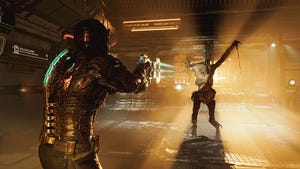
Shots are at the heart of producing any visual work. The choice of shots is a way of bringing out what is important in the unfolding story. An encompassing wide shot provides a good understanding of the environment —or illustrates a character's isolation. On the other hand, a close-up reinforces the viewer's connection with the character and highlights a character's emotions. A close-up also builds anxiety, as the viewer is unable to observe surrounding developments. Some shots have specialized functions, such as using zooms or traveling shots to portray motion.
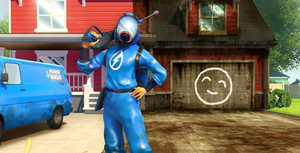
Some shots are not always suitable for gameplay. The challenge lies in reconciling the player's comfort with movie-style cameras. There are three approaches that can help reconcile shot control with player control:

  1. The player briefly loses control of his character while the "director" brings up a movie-like shot unsuitable for gameplay. For instance, if a camera used to portray a section of the décor obstructs the player from controlling the character, the software takes over and moves the character automatically. The player is deprived of control for a very short time, but enjoys superb camera position.
  2. Instead of guiding the character, gameplay consists of issuing orders that the character carries out on its own. The "how-to-win" technique only requires correct tactical decisions. This approach has been successfully tried in Shenmue. This way a game may employ movie techniques never before used in games because actual control of the character is not an issue.
  3. Where the character's nimbleness is not a priority, the game may employ cameras that would otherwise be impractical for gameplay. This technique is used in Silent Hill. In the footpaths that open the game, the player does nothing but advance the character. The cameras deployed along the path provide a particularly permeating environment.
 
Article Start Page 1 of 3 Next
 
Comments


none
 
Comment:


UBM Techweb
Game Network
Game Developers Conference | GDC Europe | GDC Online | GDC China | Gamasutra | Game Developer Magazine | Game Advertising Online
Game Career Guide | Independent Games Festival | Indie Royale | IndieGames

Other UBM TechWeb Networks
Business Technology | Business Technology Events | Telecommunications & Communications Providers

Privacy Policy | Terms of Service | Contact Us | Copyright © UBM TechWeb, All Rights Reserved.