GAME JOBS
Contents
Nihilistic Software's Vampire: The Masquerade -- Redemption
 
 
Printer-Friendly VersionPrinter-Friendly Version
 
Latest Jobs
spacer View All     Post a Job     RSS spacer
 
June 19, 2013
 
Trendy Entertainment
Community Manager
 
Trendy Entertainment
UI Artist
 
Subatomic Studios
Art Director
 
Airtight Games
Senior Software Engineeer
 
Edge of Reality
LEVEL ARTIST
 
Sojo Studios
Generalist Game Engineer
spacer
Latest Blogs
spacer View All     Post     RSS spacer
 
June 19, 2013
 
Pitfalls In Automation [1]
 
Some Advice for the Aspiring Sound Designer
 
How to Ace a Games Industry Job Interview [2]
 
Supporting Gamification User Types
 
Making Ear Monsters: Developing a 3D Audio Game [1]
spacer
About
spacer Editor-In-Chief:
Kris Graft
Blog Director:
Christian Nutt
Senior Contributing Editor:
Brandon Sheffield
News Editors:
Mike Rose, Kris Ligman
Editors-At-Large:
Leigh Alexander, Chris Morris
Advertising:
Jennifer Sulik
Recruitment:
Gina Gross
Education:
Gillian Crowley
 
Contact Gamasutra
 
Report a Problem
 
Submit News
 
Comment Guidelines
 
Blogging Guidelines
Sponsor
Features
  Nihilistic Software's Vampire: The Masquerade -- Redemption
by Robert Huebner [Postmortem, Programming]
Post A Comment Share on Twitter Share on Facebook RSS
 
 
August 2, 2000 Article Start Page 1 of 3 Next
 

When Nihilistic Software was founded in 1998, there were only two things we knew were certain. The first was that we wanted to form a company with a small number of very experienced game developers. The second was that we wanted to make a killer role-playing game.

Nihilistic got started without much fanfare, just a few phone calls and e-mails. After finishing work on Jedi Knight for LucasArts, the core team members had, for the most part, gone their separate ways and moved on to different teams or different companies. About eight months after Jedi Knight shipped, various people on the original team began to gravitate together again, and eventually formed Nihilistic just a few exits down Highway 101 in Marin County, Calif., from our previous home.


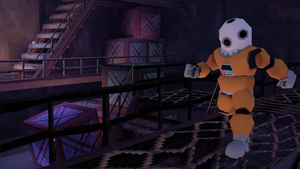
Having moved into our new offices and bolted together a dozen desks from Ikea, our first project was to build a 3D RPG based on White Wolf's pen-and-paper franchise, Vampire: The Masquerade. Before linking up with Activision as our publisher, Nihilistic president Ray Gresko already had a rough design and story prepared for an RPG with similar themes and a dark, gothic feel. After Activision approached us about using the White Wolf license, we adapted parts of this design to fit the World of Darkness universe presented in White Wolf's collection of source books, and this became the initial design for Redemption.

Because of our transition from first- and third-person action games to RPGs, we approached our first design in some unique ways. Many features that are taken for granted in action games, such as a rich, true 3D environment, 3D characters, and the ability for users to make add-ons or modifications, were reflected in our project proposal. We also adopted many conventions of the FPS genre such as free-form 3D environments, ubiquitous multiplayer support, and fast real-time pacing. To this we added the aspects of traditional role-playing games that we found most appealing: a mouse-driven point-and-click interface, character development, and a wide variety of characters, items, and environments for exploration.

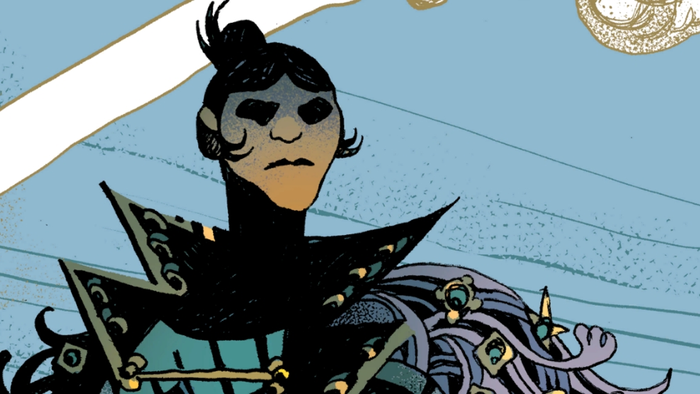
Professional conceptual art, such as this rendering of Alessandro Giovanni by contractor Patrick Lambert, helped the characters evolve as the art design took shape.

Using the White Wolf license also meant that our users would have high expectations in terms of story, plot, and dialogue for the game. It's a role-playing license based heavily around dramatic storytelling, intense political struggles, and personal interaction. Fans of the license would not accept a game that was mere stat-building and gold-collecting.

In keeping with our basic philosophy, we built up a staff of 12 people over the course of the project's 24-month development cycle. The budget for the game was fairly modest by today's standards, about $1.8 million. The budget was intentionally kept low for the benefit of both Nihilistic and our publisher. We wanted our first project to be simple and manageable, rather than compounding the complexities of starting a company by doing a huge first project. Also, we were looking to maximize the potential benefits if the game proved successful. For its part, Activision was new to the RPG market and was testing the waters with RPGs and the White Wolf license in particular, so they probably considered the venture fairly high risk as well.

Development started around April 1998. When we began, we examined several engine technologies available, such as the Unreal engine and the Quake engine, but ultimately decided against licensing our engine technology. The game we envisioned, using a mouse-driven, point-and-click interface, had a lot more in common with games such as Starcraft than even the best first-person engines. We decided to create a new engine focused specifically on the type of game we wanted to create, and targeted 3D-accelerated hardware specifically -- bypassing the tremendous amount of work required to support nonaccelerated PCs in a 3D engine. As an added benefit, the company would own the technology internally, allowing us to reuse the code base freely for future projects or license it to other developers.

 
Article Start Page 1 of 3 Next
 
Top Stories

image
The creation of Ubisoft Singapore: Building a ship as it sails
image
Puzzle design in Valve's Portal 2 alternate reality game
image
Why people cheat, and what to do about it
image
Bogost: Let's make 'earnest' games, not 'serious games'
Comments


none
 
Comment:


UBM Tech