|
[If you've discovered the value of Scrum agile development while making your game, expert Clinton Keith outlines Lean and Kanban, two ways you can be agile during all phases of the game development process.]
Many games teams that adopt Scrum quickly discover its value.
The improved velocity of introducing value, or fun, to the game at a regular
iterative pace shows where the project is heading and allows the team and
customers to react by improving the game frequently. However teams find that
when they enter production, the value of Scrum diminishes.

Many teams abandon some Scrum practices late in a project's life
cycle and return to more traditional waterfall practices. They call this
approach "a blend of Scrum and Waterfall". This article explains
the reasoning behind this and introduces the concepts of Lean Production and
Kanban as an alternative to adopting waterfall practices.
Lean and Kanban can answer the issues with Scrum that many teams
face, but they don't require the team to abandon agile methods. These
practices are based on real world production experiences which showed a 56%
improvement in the cost of level production.
In most agile projects outside the game industry, there are no
phases of development. There are no concept phases, pre-production phases or
production phases. These projects start with releases, and every release
delivers a version of the product to customers. Think of applications like
Firefox that release a new version every month or so. Most games have a
single release that requires years to achieve.
Eliminating phases is a big benefit of agile; waterfall phases
such as the testing phase force the critical activity of testing to be
postponed to the end of the project, where fixing bugs is the most costly.
Planning phases at the start of projects attempt to create detailed knowledge
about what features will be fun and the work associated in creating them.
Unfortunately the best knowledge comes from execution, which is why highly
detailed pre-planning fails.
For many games however, there is still a need to have phases
within the game. There are two major reasons for this:
There
is a minimum bar to the content being delivered regardless of the quality. Sixty-dollar
games must deliver eight to 12 hours of gameplay. This represents the major
portion of the cost of development and occurs after the gameplay mechanic is
discovered. This requires a pre-production phase to
discover fun and a production
phase to mass-produce the assets for the eight to 12 hour
experience.
Publishers
have a portfolio-driven market model. This constrains the goals of the games
that they fund. In order to gain publisher approval (which includes marketing
and often franchise/IP owner approval), developers need to create a detailed
concept treatment during a concept phase at the start
of a project. Developers are then unable to stray too far from this vision
throughout the project.
Pre-production allows more freedom to iterate on ideas and
explore possibilities. During production, we are creating thousands of assets
that depend on what we have discovered during pre-production. These assets
create a cost barrier to change during production.
For example, consider a team in production on a platformer genre
game. Platformer games (such as Nintendo's Mario series) challenge the player to develop skills to navigate
treacherous environments. The production team will create hundreds of assets
that depend on character movement metrics such as "how high the
character can jump" or "the minimum height that the player can crawl
under". Production assets depend on these metrics.
If these metrics are changed in the midst of production, it can
wreak havoc. For example, if a designer changes the jump height of the
character, hundreds of ledges or barriers would have to be changed. This can
create a great deal of wasted effort during the most expensive phase of
development.
It's critical to discover and lock those metrics during
pre-production. This doesn't mean that we can't be agile during production.
How we are agile does change. Instead of using an iterative and incremental
process such as scrum, a more incremental process such as Lean is more
applicable.
Sprints and Production
Asset
creation is deterministic and sequential work that does not fit the Sprint
iteration cycle very well. If we think about production as a factory assembly
line, then the two to four week iteration cycle doesn't make as much sense.
Factories don't empty the assembly line every four weeks and determine what
to build next.
Assembly lines have things rolling off much more frequently
and require incremental improvements instantaneously. The rate that completed
assets roll off the line becomes the new heartbeat of the production team.
|
Can we have more like this, please :) Implementations of quantitative software engineering and such in the game industry are always wonderful to read.
The first question is how a team would transition to Kanban production from pre-Production Scrum.
Logicaly I would assume you would move each group over incrementaly from the heijunka board, transitioning them from pre-production to production. Yet I didn't pick up on you stating anything about the transtion. I have missed things before, but I think you should elaborate on that, as it seems like it would be a prime area to find waste.
I'm also wonding a little bit in regards to the skills and responsibilities each of the groups had. For me the 'Script' group causes the most confusion. Are they Programmers or are they Writers?
Also, if I have software engineers developing new technology or I'm implementing middle-ware, how would that affect my project's heijunka board?
Ken - Agreed! Continuous improvement is a cultural change. Sometimes you can't even get near enough to the horse to saddle it;)
Tommy - I'll try to answer your questions:
Preproduction is partly about designing the value stream that will produce the assets. You build your heijunka board based on the value stream. This can transition at the end of a sprint.
For this example, the script referred to the story since it came before even concept art. I should have clarified that!
Ideally you develop tech that production is dependent upon before you enter production. If you have programmers within the same Lean team, they can work with their own Scrum task board, but they mainly support the production team. Outside the team, they can still be doing standard Scrum Sprints.
Hope that helped...thanks for the great questions and comments!
It's been used in a wide variety of projects. Time-boxing tends to allow for smoothing over volatility a bit, but you are right that volatility can occur. It can also occur on scheduled tasks as well, correct? Isn't it better to deal with it using an empirical pull system?
Also I didn't spend a lot of time on reducing other wastes in the value stream that is also quite effective.
Clint
Clinton, keep the articles coming!
In my head, I’ve been battling with the process conflicts of applying Agile to games development for years. Finally, it seems like someone is getting a good stab at the whole thing. A lot of pieces have fallen into place for me over the last couple of days, and reading this article certainly helped. I also read your blog on Alan Cooper’s Agile 2008 keynote. I’ve been a big Cooper fan ever since I first came in contact with Interaction Design, and that he now is focusing some energy on our industry, is really good news.
As I see it, one of the most fundamental issues still remains: Often we don’t know if what we’re building will really work until we can experience it in a greater context. Most elements of traditionally software is successful if it’s technically sound and user friendly, but with games we also have to get the fuzzy and elusive elements of aesthetics and gameplay right. Often that require us to go back and change things over and over again even when we’re in production. Sometimes that far exceeds what we can comfortable label as polish and tuning.
To avoid excessive waste, that would logically call for a more iterative process. I guess the confidence in our level designs could maybe be improved if they were mocked up or prototyped in pre-production. Expanding this part of the project, however, comes with it’s own drawbacks and might not even be possible. Another option would be to add some sort of flexibility to the suggested production process, but I can’t really see how to do that without messing up the fine-tuned Lean process.
Anyway, great read. I need to think some more about it.
How would you deal with using Kanban methods for dealing with multiple software projects that change regularly? Is there any way a more dynamic team can combine Scrum with Kanban to identify waste?
>Another option would be to add some sort of flexibility to the suggested
>production process, but I can’t really see how to do that without messing
>up the fine-tuned Lean process.
We didn't see that. The one week takt time allowed some iteration within the co-located team.
Dennis,
That's a good question. I know that people are dealing with this in the Kanban space. I don't quite believe that Kanban is better for more iterative software development, but not everyone agrees.
Clint
A couple of things:
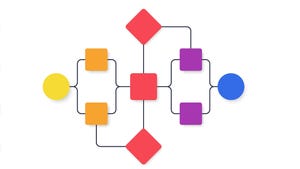
- The example in the article suggests some kind of hard requirement from left to right, whereas often there are 'branches' to the pipeline, where multiple streams of work can be carried out at once. How do you elegantly describe these scenarios in diagram and 'signal card' form?
- How do you introduce elements such as qa passes, or external feedback passes (say in a outsourcing context). Do you add extra loops into the board? Do you feed 'failed' stuff back into the beginning?
Branches and loops can be represented in the vertical space of the kanban board. You can also draw lines for the handoffs on the board as well. These are all implied in the simple example from the article.
Clint