My Message close
GAME JOBS
Contents
A Different Track: Frank Gibeau Talks Strategy
 
 
Printer-Friendly VersionPrinter-Friendly Version
 
Latest Jobs
spacer View All     Post a Job     RSS spacer
 
May 23, 2013
 
Wargaming.net
Release Manager
 
Virdyne Technologies
Project Manager
 
Virdyne Technologies
Software Engineer, iOS/Mobile
 
Stomp Games
Web Game Programmer
 
LeapFrog
Associate Producer
 
Hasbro
Producer - Boys Integrated Play
spacer
Latest Blogs
spacer View All     Post     RSS spacer
 
May 23, 2013
 
Want To Help Stop Youth Cyberbullying? Let Your Kids Raid More.
 
We're Indie, we like Microsoft. Too Controversial? [2]
 
The Procession of Progression in Game Design
 
Xbox One: a flawed plan, well executed [2]
 
Letting the Player Find the Fun [1]
spacer
About
spacer Editor-In-Chief:
Kris Graft
Blog Director:
Christian Nutt
Senior Contributing Editor:
Brandon Sheffield
News Editors:
Mike Rose, Kris Ligman
Editors-At-Large:
Leigh Alexander, Chris Morris
Advertising:
Jennifer Sulik
Recruitment:
Gina Gross
Education:
Gillian Crowley
 
Contact Gamasutra
 
Report a Problem
 
Submit News
 
Comment Guidelines
Sponsor
Features
  A Different Track: Frank Gibeau Talks Strategy
by Kris Graft [Business/Marketing, Design, Interview]
1 comments Share on Twitter Share on Facebook RSS
 
 
June 29, 2009 Article Start Previous Page 3 of 5 Next
 

Then 2008 came, along with lots of new IPs. Do you think that it was the right strategy to launch that many new IPs so quickly, or, as you look back on it, would you have spread them out?

FG: I'm not the kind of guy who ever looks back. I look back long enough to learn a few things and then apply them going forward. I think in the spirit of your question, I think we launched too many new IPs all at once in Q3.


I would have spread them out and found better windows for them. I would have had longer marketing for them. The marketing cycles were fairly short. We didn't have enough assets to really build the fanbase, build the community, and get that long lead demand built.

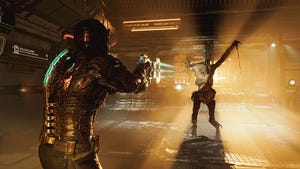
So I probably in hindsight would have picked a couple different windows for Dead Space and Mirror's Edge. It was kind of unknowable at the time, because a lot of IP gets created in those times. Big traffic, lots of volume.

We didn't anticipate a dramatic downturn in the economy at the same time. So, new IPs, we learned a lot about how to launch them and how to create them.

But to be honest with you, we didn't have a lot of sequel product laying around. So, it was a strategy that we had to embark on, which was to, you know, reload with intellectual properties.
If you look at Need for Speed as an example, a lot of the products that we hit last year were products that I inherited from prior teams because I'd been in the job nine months. Games typically take 24 months to build.

If you look at what we're doing now with Need for Speed, we're re-inventing it with Shift, Nitro, the multi-studio alternating year strategy that we embarked upon so that we could raise the quality of Need for Speed, get it back into the charts, get people fired up about the game.

It's a huge franchise, but it was sliding out on quality. We needed to shake it up and change it. I think the feedback we're getting back from E3 is positive on both of those games, so it's kind of doubling our efforts to do that.


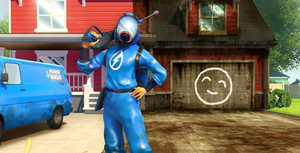
EA/Slightly Mad Studios' Need for Speed: Shift

I read the E3 Show Daily; you were talking about the renewed focus on quality. How has the greenlighting process changed? Obviously, you make the standards higher. How do you weigh that with scheduling of the releases?

FG: Well, you know, the market conditions don't exist where you could profitably make 75-rated games anymore. You really need to be in the 80s and the 90s, at least in the category that we're in, which is the blockbuster category.

So, in terms of greenlighting, what we've done is we've put a lot more focus on team composition and the quality of talent inside of the team, really understanding -- who are the 45 to 50 people that occupy the core creative team, how good are they, how can we add to them, who are the stars, and how do we make them better?

That has always been the best indicator of how a game's going to finish, the quality of that creative core. How long have they been together? Have they been through a couple of versions?

In the greenlighting process, it used to be a much more financial exercise. Now, I spend as much time on team dynamics and composition and also the IP as I do on looking at net operating income based on the franchise.

And we're also trying to, much more aggressively, put in at least two to three months of polish time back into the schedule. So, the game is actually functionally complete, content complete, then we go in and put it through massive amounts of tests, massive amounts of re-playthroughs, so that we can really get those five, 10, 15 points of Metacritic that you get at the end of the project.

EA wasn't doing that how long ago? That's a new thing?

FG: You know, three or four years, products were coming in hot and hitting the market hot. Dead Space is one of those titles that has a lot of polish built into it, and a lot of the games we're doing right now like, you know, Mass Effect 2 and Dragon Age, and Need for Speed Shift, is two months polish time.

Last year's Need for Speed finished and went into test, and that was it. There was no time in the schedule because of the way that the studios have been set up. So we had to break the cycle and start to give some very careful consideration.

We have to have that polish time at the end of the project... We have to make sure that on the front-end, we have the right IP and the right team to build it, and give them that frame. That's basically the formula that we're driving.

 
Article Start Previous Page 3 of 5 Next
 
Top Stories

image
Blog: I took my Ouya game to retail, and here's what happened
image
Video: Thief vs. Deus Ex - a design discussion
image
Here's how much 'whales' spent so far this year
image
'This model of game making is so fundamentally broken.'
Comments

David Reeves
profile image
Interesting read. It's about time to see someone at EA has woken up to what is needed. I am not an advocate of EA because of past experiences, so still not something I go out of my way to get a game because of it's EA logo.


That aside, why does it take a corporation so long to look at the people within to understand their talents?


Support, have you ever tried to use EA support yourself. It's pathetic, either because of the people working in that department, or the model of process that they're using. So just like giving support to "your" partners, why not stretch that to your support team so that maybe you can help your customers?


So let's hope that EA is actually woken up to itself. Things like "trusting the talent" on what they can do is the key (imho). I very much enjoyed Dead Space, it was something that has been sorely missing from game "quality" as you put it. Yet what you call quality from an EA perspective, and what quality us the gamers want is still needing to "educate" you.


At this turning point, I think the only reason corporations or suits revise things is when they get hit hard by the economy. I think they forget that the people waiting in their development studios need support 24/7 and be open and genuine in that support.


My worry is how you also mention lending a hand with hopes of gaining new "assets" and IP. You're right, you need to earn it!


Now I'm not "bashing" you directly or EA. Yet I think by discussing this more maybe we the audience and you the owner can finally get around to growing the industry. I am sick of hearing my friends (in the industry) are sick of sitting around with nothing to do. Sure they have a job, an office, they just have no resources to make. The pity is, nobody has actually asked them what they wanna make.


If it was me, then I'm the sort of person to find the boss and say, "Hey, WTF are you wasting our time for!" I'd rather leave a job than waiting or sitting around wasting both your and my time. It's too hard to stay creative and positive in that arena. So why stay.


Just hopefully, these sorts of thinking Frank, we may just get the industry moving again and have better things to do with our time than talking about yet another topic of Economic Crisis. The reason the world is still there is that they are still thinking in that area, rather than getting off their arses and getting back to getting things happening.


At least you've made a choice to move forward and that's always good.


none
 
Comment:


UBM Tech