Contents
The History and Theory of Sandbox Gameplay
 
 
Printer-Friendly VersionPrinter-Friendly Version
 
Latest News
spacer View All spacer
 
November 22, 2009
 
Video Game Watchdog National Institute On Media And The Family Shutting Down [11]
 
Modern Warfare 2 Infinity Ward's 'Most Successful PC Version' Yet [13]
 
New Tech, Design Details Of Project Natal To Emerge At Gamefest In February
spacer
Latest Jobs
spacer View All     Post a Job     RSS spacer
 
November 22, 2009
 
Trion Redwood City
Sr. Environment Artist
 
Trion Redwood City
Sr. Evnironment Modeler
 
Sucker Punch Productions
3D Environment Artist
 
Sucker Punch Productions
Network Programmer
 
Sucker Punch Productions
Texture Artist
 
Sucker Punch Productions
Character Artist
 
Crystal Dynamics
Sr. Level Designer
 
Monolith Productions
Sr. Software Engineer, Engine - Monolith Productions - #113767
spacer
Latest Features
spacer View All spacer
 
November 22, 2009
 
arrow Upping The Craft: Susan O'Connor On Games Writing [6]
 
arrow Small Developers: Minimizing Risks in Large Productions - Part II [7]
 
arrow iPhone Piracy: The Inside Story [50]
 
arrow And Yet It Grows: Analyzing the Size and Growth of the European Game Market [5]
 
arrow NPD: Behind the Numbers, October 2009 [13]
 
arrow Reflecting On Uncharted 2: How They Did It [5]
 
arrow Sponsored Feature: Rasterization on Larrabee -- Adaptive Rasterization Helps Boost Efficiency
 
arrow Postmortem: Wadjet Eye's The Blackwell Convergence [2]
spacer
Latest Blogs
spacer View All     Post     RSS spacer
 
November 22, 2009
 
Time Fcuk - A Postmortem [2]
 
Accepting the Inherent Value of Games
 
Planckogenesis, Part II: Song Structure & Gravy Train [1]
spacer
About
spacer News Director:
Leigh Alexander
Features Director:
Christian Nutt
Editor At Large:
Chris Remo
Advertising:
John 'Malik' Watson
Recruitment/Education:
Gina Gross
 
Features
  The History and Theory of Sandbox Gameplay
by Steve Breslin
7 comments
Share RSS
 
 
July 16, 2009 Article Start Previous Page 3 of 6 Next
 

Building

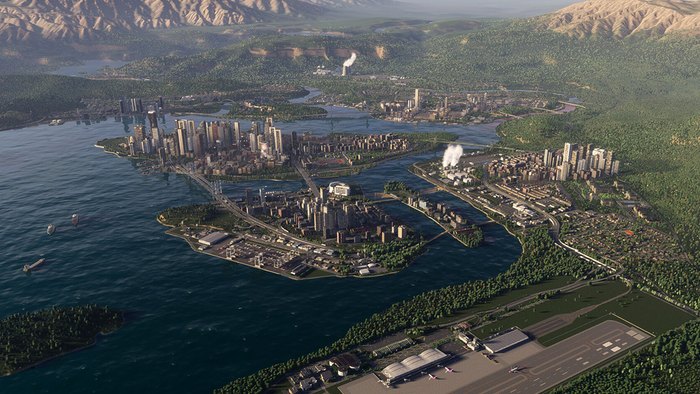
The intervening years saw many trends in free-play, the most popular of which was the city-building game. It began in 1982 with Utopia, but the city-building genre really came into its own when it ceased to be strategic/competitive and became instead an exercise in "free" building for its own sake.

The genre grew out of the natural pleasure of designing game-worlds -- a pleasure that game developers experience all the time. One developer, Will Wright, thought that it would be a good idea to share this joy as directly as possible, and this insight led to the development of SimCity, which became a record-breaking success, defining one of the largest genres of the 1990s.

Advertisement

Sometimes this sort of free play was blended with economic simulation, in such as the Tycoon games, starting with Railroad Tycoon (1990). Various more-or-less competition- and objective-oriented games joined its ranks throughout the following decade, from SimIsle to Capitalism (both 1995).

Opening game design to the player, even to a very limited degree, heralded modern player-generated-content games, from Second Life to LittleBigPlanet to Spore.

Encouraging Player Experimentation

The metaphor of the "sandbox game" finally emerged at the turn of the century, around the publication The Sims and the following year, Grand Theft Auto III, the two games which are traditionally considered the two original and canonical "sandbox" games.

The invention of the term did indeed accompany a new development in game design, but this was not, as the term suggests, player freedom, which was already available by any number of means: non-linearity; the lack of objectives or central storyline; automatic variation of the game-world and game-behavior.

It was in terms of responsiveness and encouraging player experimentation that these games represented a gradual but transformative change in game design.

"Sandbox" was a new development because it indicated a new promise: automated responsiveness to player behavior. In this sense it does not mean "free play," "non-linear," and the rest; rather, it indicates that which makes this style of play specifically and particularly interesting in its own right.

Most of all, this meant a radical development in design detail. The evolution of sandbox-oriented quality between GTA2 and GTAIII is truly astounding. The switch from bird's eye to 3D opened the world and shifted it from cartoonish "Hot Wheels" platformer to a realistic city. But the critical part was that the writing and detail followed through on the promise.

As mentioned at the beginning, sandbox design facilitates and encourages a sense of player freedom, while providing a framework for play and a rich and detailed world for interaction. This was definitively achieved by The Sims in 2000, and in 2001, Grand Theft Auto III. Let's now consider their innovations, starting with The Sims.
Towards Believable Characters: Psychological Games, A-Life, and AI

The amazing commercial and cultural success of The Sims might suggest that it was entirely new -- which means we are likely to forget that the genre began with Little Computer People (1985), even though the latter "game" was well celebrated in its time.


This is the birth of the mind game, the virtual seduction.

There were several studies in the 1990s, of what gameplay structures and presentation/interface regimes increase attachment, what exploits the player's tendency and desire to interact in a seemingly meaningful way with the artificial character. These always somehow literalize the metaphor of the game-world, bring the player into the virtual space and enmesh him there: enabling "physical" contact (mouse-petting), sharing "space" (e.g., the player and the character can manipulate the same on-screen objects), and so on.

Today we are so close to such virtuality that it has perhaps become difficult to observe its mechanism, but a primary aspect of sandbox play is the formation of a psychological illusion of contiguity, if not continuity.

Thinking more towards psychologically effective programming, let us consider the dual nature of AI. As any AI designer or programmer will tell you, the task of designing a "believable NPC" involves fostering an appearance or impression of that elusive philosophical notion of intelligence: the psychological impression of intelligence.

What contributes to this impression, however -- the underlying program -- is more or less "intelligent" in an entirely different sense. Where we speak of the "intelligence" of the program, we mean only the level of autonomy and generality. This is not the place to get into the specific maneuvers and techniques, but be assured that relatively simple programming can lead to really convincing NPC AI, and really it's mostly in the presentation.

The NPC programmer's plan, then, is essentially to write suggestive and interpretable behavior, so that the player will "read in" a lot more sophistication than is actually present. Computer-players can be good at winning a chess match or a combat, which has relatively simple rules, easily-validated success cases, etc.

But beyond this, the question of truly intelligent programming (in that ephemeral, philosophical and psychological sense) is well beyond our technological horizon and may well remain there forever. The question of NPC personality in games is always the question of faking it.

The main reason that this trend towards believable characters is compelling for sandbox play is that the characters are, at bottom, more dynamic and interactable. They help "sell" the game world because they seem more realistic. Not "realistic" in the sense that they can ever hope to pass the Turing test, but realistic enough that they'll lull you into forgetting about their artificiality. The more intelligently the NPCs respond, the more the game feels like a free and open world.

AI is widely various and can be complicated, but in general it is effect-oriented. The programmer has in mind a goal behavior, and writes code to meet this objective. In comparison with AI, Artificial Life is bottom-up programming, and it's all about emergence. The emergent behavior is not necessarily even known in advance.

The Sims, and especially the range of games it inspired, was heavily influenced by technological developments in computer science during the 1990s, and in particular Alife. By 2000, this has developed into the art of manipulating automated NPC behavior, even in an otherwise traditional title, as we have for example in Majesty.

In this classic, there is no player-character, and little if any direct action by the player. Instead we have NPC agents whose behavior cannot be directly controlled, but only indirectly influenced in some way: add stimuli and enjoy watching how the automatons respond. It's a delightful gameplay model, which we look forward to revisiting in the forthcoming Majesty sequel.

Playing with automated systems, watching NPC AI agents interact with each other according to their program, or even watching Alife virtual organisms go about their daily life, has long been and remains a key sub-genre of sandbox play. Further, believable and self-motivated characters have become key to sandbox play, because they produce a rich space for interactivity and greatly help establish the open-world aesthetic. But in another style of sandbox games, the game space itself plays this role....

 
Article Start Previous Page 3 of 6 Next
 
Comments

Luis Guimarães
profile image
My personal top list of games that did well what everyone around today calls "open-ended" games. The way it has become a "trend", or at least a discussion trend nowadays, is what makes sandbox games do be more sands of box.

Not necessary to be in the following order:
. Bioshock. (beeing indoor and having linear story does not mean having no freedom)
. Desperados: Wanted Dead or Alive. (simple mechanics with only useful interaction can do a lot)
. Castlevania: Symphony of the Night. (very little non-meaninful interaction and most good mechanics)
. Super Mario World. (one more exemple that game mechanics richness really open the world)

Gerard Gouault
profile image
Spore:
not a real sandbox as you notice that every time you play the same events happen at the exact same spot. ie. the meteor shower in creature stage, UFO flying over, the offered missions in space stage, etc..
The only sandbox aspect in Spore are the editors for creatures, vehicles and buildings. The gameplay itself gets boring after a couple of passes.

It is strange that the author only makes a small mention of THE only real sandbox game. Neverwinter Nights 1.
Nwn is still an active game system after more than 8 years.
Not only a sandbox game by itself but it also lets player design their own sandbox for other to explore.

Thomas Eidson
profile image
Any game that lets you create your own content is to some degree a sandbox. I believe that the author is saying that the content creation is created as part of the gameplay and not principally by external tools. A concept he mentions is player interaction with the game, which implies "in the game". This is not to say that external tools should not play a part with sandbox games, but that I think external tools do detract from the collaborative and social aspect of building something together in a world.

I definitely agree with directed content as a requirement from a developer, when building a sandbox world.

Ken Nakai
profile image
The idea of a "sandbox" games really has to be considered on a sliding scale. When you have something like SimCity where you've got a clean slate and can build your city however you want creating your own problems along the way (build too much of this, get that problem), you're on one end of the scale. When you're in a game like Spore or whatnot, where there is little you can do to the world except achieve some goals to exit the stage and move on, you're talking about the other end of the spectrum. Outside of this scale, running through platformers or other games on rails (Wolverine, for instance) is no where near a sandbox experience. It's like the shooter reference, Doom, that's no sandbox game. Once you've cleared a level, there's nothing to do unless you want to try to figure out how to get up to some hidden spot. You also can't argue that multiplayer shooters are in anyway a real sandbox. You're not making a new game...trust me...all those people playing CS and COD...on the same maps over and over again. You might have a different gameplay experience each time but that's no different than running through a single player game of L4D or something where the AI automatically adjusts the game for you.

Sandbox play is all about making a game out of a game. Whether it's the Sims or the vast array of tycoon games that came and went.

As far as the boredom aspect, it's so true. A poorly balanced or written sandbox game (for instance, those tycoon games or the 4X space RTSes) become boring fast. A big part of that is the lack of any short-term goals. Long term you're trying to get the most money or biggest city or dominate a market or whatever. When you've got shorter term goals, whether it's generating enough money to buy the next upgrade or game-generated ones that tell you to attack someone or that create enemies to attack you, it helps stave off that boredom. And, a lot of that boredom can come from the devs. To help extend the game experience (i.e. make it last 10 hours rather than 1), building something might take minutes at a time or generating enough income to build out or expand your city/empire/household/whatever takes a very long time unless you're lucky or you're deeper and farther into the game.

I personally love sandbox games...games that let me screw around or build out my business or empire however I choose...but it's rare to find one that's truly engaging over the long haul. I was done with Spore in no time but I still have Patrician 3 installed and play it from time to time. I guess it tells you just how much better some game devs were (even though we're talking no more than a 5 year difference). I think a big part of it might be the larger teams. Bigger teams mean increased diversity in thinking but at the cost of dilution of potential excellence. Someone could have a great idea but if the rest of the team doesn't think so, it's gone. On a smaller team, that someone might have been better able to convince the team to go with it. This combined with short-term sales goals that are similar to movies (publishers want to sell a million copies and once sold, could care less about how long you enjoy the experience). Ever notice how movie trailers are starting to actually show scenes from the endings of the movies in the trailers? If you didn't know the plot of the movie, you wouldn't know until AFTER you dropped $10 to see it. But, if you did know or could recognize what looks like an ending (sorry but "Knowing"...end of the world in the trailer? Check!), it ruins the experience. So it is with more recent games that either don't bother padding more than 4-6 hours of game play in their games (tacking on higher difficulty levels to compensate for a lack of replayability) or just find something stupid and monotonous for you to do (grinding, overly complicated puzzles) to fill the time.

Maybe we need to spend more time making games fun again, rather than taking a Wall Street view of things and trying to make the next moneymaker...you might be surprised how profitable a good game can be...

Michael Rivera
profile image
Great read.

Spore deserves a lot more credit for how it integrates sandbox mechanics into the overall game narrative, so it's nice to see an article that focuses on that rather than the "simple" game play.

Alex Covic
profile image
Elaborate article; tip my hat.

In the 80s I read an academic magazine about game theory (nothing to do with 'video games') and the definition in one article was truly simple:

1. Create a closed world
2. Define 'entities' within the world
3. Define a set of rules.
GO!

That's it.

This does not contradict with anything written above (or in the comments). It just shows, how much one can make out of fondling and tuning these basic rules.

Mark Venturelli
profile image
Interesting read, Steve. Keep them coming! =)


none
 
Comment:


Submit Comment