|
London, England headquartered Playfish (Pet Society) is one of the
leaders of the social gaming surge currently taking place, and Sebastien de Halleux, the
company's co-founder and chief operating officer, feels very passionately about
this trend. He sees the opportunity of bringing sticky, addictive games to social networks like Facebook and MySpace as a massive one.
But at the same time, he's
not afraid to criticize others in the market. Social games today can be
shallow, money-driven, barely even experiences -- and de Halleux sees a need
for design and innovation. Playfish, which received $17 million in VC in October 2008, believes in quality user acquisitions --
friends inviting friends to play because the game is fun, not because there's a
reward for the click. And its titles such as Pet Society sport relatively complex gameplay and graphics compared to many 'spreadsheet game' Facebook apps out there.
In the time since this
interview was conducted, transcribed, and edited, Playfish, intially best known for the Who Has The Biggest Brain? trivia title, has launched two
more games, bringing its total titles to nine. This shows how quickly the world
of social gaming allows products to be launched into the marketplace. That
speed and the ability to capture user feedback are two of its advantages.

It's a young industry, and
it's evolving rapidly. With traditional game designers like Brian Reynolds
moving to Zynga, and with emerging talents we don't even know the names of
yet working on social games at companies like Playfish, it seems that a close integration with social networks is a remarkably smooth way to let people play games.
You've spoken passionately
about your views on control of distribution. That most games, even indie games,
have to go through a distributor, but with Facebook you're going directly to
the user.
Sebastien de Halleux: We feel
very, very strongly about that. For us -- and partly because of the Playfish
founding team's history, rooted in mobile games -- we've always been used to a
dual industry, that's separated between developers, and then publishers. Where
developers drive toward a gold master of some sort, and then when the gold
master is done, they throw it over the fence to the marketing department, and
then some distribution magic happens.
And the distribution magic
has always been about controlling the catalog. So, whether it's the retail
catalog -- where, clearly, EA dominates -- or whether it's the mobile catalog
-- where, as you were pointing out, big brands and big licenses made the whole
difference.
And that's really, really
frustrating, when you feel that it's hindering creativity, because you feel
that the end user is not getting a good deal; because they only can see what
has been pushed on the catalog.
So what Facebook has created
for us is like a "catalogless" environment for us. It's like the
death of the catalog. There is no more catalog. Where do you find an
application on Facebook? Do you know where the directory is? If you do, you're
part of the very, very small percentage of users who do. Distribution through
the Facebook catalog is less than one percent of our distribution. So the interesting thing is,
having no catalog means that you can be an infinite shelf, populated with the
highest quality content for specific types of users.
How does a catalogless
world operate? It operates by you bringing content to where users are -- in
this case, Facebook, or MySpace -- so not asking them to come to you, where the
catalog is, whether it's retail or your website. And B, it's bringing content
to them, through their best friends. So you don't market at them, they actually
get a recommendation from their best friend, and get invited as part of an
experience, right?
So, that's a really really
big difference. Because a lot of people ask us, "But how do people find
out about your game?" Well, they don't look for those games; they get
invited by their best friends to join in the experience. And that distribution -- the
user as the distributor -- is a new shift that was just not possible before,
because you did not have these kinds of platforms that encouraged and made
referral very, very easy, and trustworthy, because it's only about your good
friends.
The benefit of that is that
playing means distributing, you know? And this is where game design plays a
central, central role. And it's way beyond metrics. I mentioned this at the
[Social Gaming Summit] panel: for us, it's about "how do you design an experience
that inherently is a social interaction?" -- is designed around social
interaction.
Because if you do that, then
without realizing, and without having to ask your users, your users will invite
other users -- their friends -- to be part of the experience, because it will
have an impact on the fun that they are getting from the experience.
And the example I gave at the
panel was, if you play a traditionally designed game, which is more for
immersiveness -- you mentioned BioShock, but it could be Tetris --
you distributing it to a friend of yours is just [that] you'll get a bit of
coolness rubbing on you, if your friend deems that that content is cool, right?
But if you look at even a
game like Monopoly: when you buy it, you want to invite your friends, or
organize some kind of Monopoly afternoon or night, because that's where you'll
get more fun, if there are more people around the board.

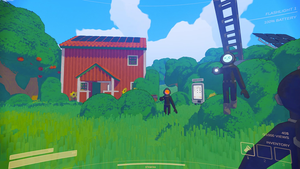
Restaurant City
So we're trying to design our
games as objects as social interaction. That's what I was mentioning before,
which is the core theme for our game design. And in Restaurant City, our
latest game, if you play the game on your own, you can kit out your restaurant,
you can change your menus, but then you've got no one working for you, so it's
not going to be fun.
So as you start hiring your
friends, and putting them in charge of different functions in your restaurant,
and come and check out how they're doing, and then you get to visit your
friends as well, to see their restaurant... You start to derive a lot more fun
from the game.
And that's really why; a root
cause of Playfish's success is this laser focus on providing fun to users, so
that they want to distribute your content. But never in terms of
distributing it; they want to actually invite their friends. And I could have
actually gone on forever on this...
|