|
[Gamasutra interviews Bethesda's Emil Pagliarulo and 2K Marin's Jordan Thomas to discuss the importance of building challenging, satisfying ethical gameplay -- both in games the duo created such as Oblivion, Fallout 3 and BioShock 2, and in the work of others.]
To a certain degree, all games are about choice. The player chooses how and when to react to a given situation, whether that situation is as simple as fight or flight or as complex as determining the future of an entire species. Given the role that choice holds in gameplay, it's no surprise that morality systems have become more and more common as games have increased in complexity.
Oftentimes these morality systems offer up only basic black and white choices: should I help this character or harm them? Should I defeat the evil wizard or accept his offer of power? Various types of moral choice systems appear in complex RPGs like Mass Effect 2, adventure games like Heavy Rain, and even straightforward action titles like Dante's Inferno.
Compelling moral choices can encourage players to experiment with different ethical stances over multiple playthroughs, while underdeveloped morality systems can seem like little more than an additional bullet point on the back of the box.
To examine how to make in-game moral choices that are both intellectually engaging and stimulating from a gameplay perspective, we spoke with key developers from two studios with very different specialties: Bethesda's Emil Pagliarulo explained how he and the rest of the team approached morality in RPGS like The Elder Scrolls IV: Oblivion and Fallout 3, while 2K Marin's Jordan Thomas discussed branching moral outcomes in the shooter BioShock 2.
The results of the conversations with the developers pointed to two aspects that need to be present in order to make in-game moral choices compelling: a virtual world that somehow connects with the player, and a set of choices that offer outcomes of significant moral weight.
The two required elements may seem obvious, but more often than not a game with a moral choice system is missing one or the other. Choosing to punish or absolve tormented souls in Dante's Inferno carries no weight because it has no connection to the narrative -- it's all about maximizing what kind of experience points you want to earn. InFAMOUS features a likeable protagonist and a recognizable world, but the choice to give food to hungry citizens or keep it for yourself is no choice at all in a game that doesn't require you to eat.
So how do developers tackle the issue? The first step is to create some element that players can create an emotional bond with. "It all comes back to the characters you've created," says Bethesda's Pagliarulo. "I think Heavy Rain has proven this better than any game in recent memory. In order for a developer to provide moral choices that matter, the player has to be convinced that those choices are going to have some kind of effect on the characters in the game, and the more believable those characters, the stronger the emotional impact.
"At the end of Heavy Rain, if there's one thing you feel it's that Ethan loves his son and is completely invested in finding him, and this really challenges the player's willingness to go as far as it takes.
"As it turns out, when I played Heavy Rain, I wasn't willing to do carry out one of the sequences, and I actually sat there yelling at my TV, saying, 'No! I won't do it! This isn't my fault! I will not be made the bad guy! You stole my son -- it's your fault! Not mine!' I was pissed off. Not at the developers, but at the Origami Killer. And you know what? The game didn't exactly have a happy ending."
Few games have managed to create the same kind of believable characters as Heavy Rain, but fortunately there are other ways to draw a player into a game. One of the strongest elements of the original BioShock was the city of Rapture, a game world that was so solidly drawn that it felt real. It had a history, a set of rules that it adhered to, and an internal ecosystem that made it feel like a real place.

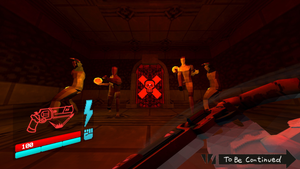
BioShock 2
"A lot of people told us that in their version of the world, they decided not to kill Big Daddies," says 2K Marin's Thomas. "This is not an outcome we support with any special content. This is a simulated moral decision that they chose to make based on their own level of empathy for these enslaved former humans."
The world of Rapture in both BioShock games is a place founded on debatable concepts, and both games use a clash of ideals as the basis for the narratives. Rapture is both physically and ethically murky, and as such clear-cut "good and evil" choices seem out of place. In Rapture, the choices should be every bit as unclear as the rest of the world, something which Thomas believes the original game failed to achieve:
"It chose a very binary set out outputs at the far end," he says. "The players who enjoyed that were those who kind of were those who felt that they were embodying a moral extreme anyway -- there was a sort of cogency between what they chose and the outcomes they received. The ones who were less satisfied felt that they were morally more grey, or granular, and as such neither of the endings of that game reflected them well."
In other words, the players who felt as if they were playing a purely good or purely evil character were satisfied with the two possible outcomes, but those players (arguably the majority) who viewed the BioShock experience as more morally ambiguous were less than satisfied with the simple either/or choices.
|
All the cues were there to make you wonder if what you were doing was wrong: from the majestically tragic colossi death scenes to the creepy little black spirits that enter your body when they die. It was perhaps the first game I've played where I wanted to throw myself against the 4th wall. I couldn't help but wonder if there wasn't some other hidden choice I was supposed to be making instead.
I'll admit I was somewhat disappointed that I didn't have the freedom to choose not to kill the colossi (other than turning the game off, which isn't satisfying).
If a game can manage to convey SotC's feeling of moral unease and still give the players the freedom to feel like they truly chose the actions that put them in that state, we'll have achieved something.
Certainly it sounds wonderful to say that players generally choose good even when evil is available, but why on earth is that a good thing? Surely we aren't stuck in the tired notion that our choices in games have much to do with who we really are? We already know that killing people in Grand Theft Auto doesn't make us sociopaths.
So as pleasant as that anecdote sounds, is it really a good thing that players aren't compelled enough to try making the "evil" choices, as it essentially means that half of the game content is unappealing to them?
I'm one of those people who always makes the "good" choice unless I force myself to do otherwise. But this is often because it's really annoying to have a videogame be morally outraged at me. inFamous was particularly insistent about making me feel bad about the stuff that Cole was doing.
People can read literature or watch films that follow the perspective of a morally questionable person and be really empathetic and engaged with that person. That certainly doesn't make the viewer evil.
I'm tired of videogames that pretend to be psych exams. These games are fantasy. They exist to be interesting. I can see that designers don't want to send the message that being evil is a good thing, but it's possible to make evil interesting and compelling while still not making it sound like something a person would actually want to do.
I want a game that presents me with fun and interesting options, not one that judges me. If evil isn't interesting to players, maybe it's time for a different duality.
This article takes the exact opposite approach, which assumes that making the player doubt his/her actions is good. That makes sense if ambiguity causes the player to really think about his/her actions, which will drive home an artistic or moral theme that can't be conveyed with purely instinctive play. But I wish this article went more into the balance/trade-off between conveying a theme to the player and creating a compelling gameplay experience.
There's definitely a cost to constantly giving deliberately frustrating/difficult choices to the player, and the best designs should be able to both deliver a moral theme *and* remain fun, rewarding, and engaging.
A game designed to focus on clear right/wrong choices will fail to satisfy someone who finds exploration of gray areas more satisfying. And a game in which every choice has both positive and negative consequences is likely to be unsatisfying to a player who wants to feel like a hero.
Is a best-of-both-worlds design possible? Can a game be designed so that it effectively satisfies both the gamers who want to be free to choose any action regardless of externally-imposed moral assessments, as well as those gamers who prefer that clear distinctions are drawn between right and wrong actions?
As you yourself said (with considerable insight IMO), the real value of the evil path may not be that it offers some amazing content, but simply that it exists and is always available. To put it another way, the reason for the existence of evil is to create the possibility that players may choose to do good -- good has no meaning unless it's a true and freely available choice.
My point was that a game with mostly black-and-white choices, where the good action can generally be distinguished clearly from the evil option, is likely to appeal to different kinds of people than a game where, as in film noir, no "right" choice exists and the only question is who has more power. The same person may be able to enjoy both Star Wars and Dirty Harry, but I think that person is still likely to prefer one over the other as representative of a style of entertainment. I don't agree that that's a false distinction.
So my question was whether it's possible to design a game that can satisfy both worldviews as gameplay style preferences. Can one game offer plenty of choices that are interesting because their positive or negative consequences to other characters are clear, while at the same time offering satisfying gameplay choices whose moral impact is mixed or unknown? Or does a game need to be designed to be mostly one or the other? I still think that's a valid question.
Another type of game that's interesting is a game with some clear-cut choices, and then a bunch of environmental choices which accrue good/evil over time--I'm thinking of the Fable series. Here there are a few 'big' choices along the lines of traditional RPGs, but EVERY action plays into the 'morph' system. Your character evolves over time, sometimes into a fat, balding hero with horns (which I had one playthrough). This is a game design that deserves more attention, even though many of the other elements of Fable I and II are shallow (i.e. relationships).
Mass Effect seems to attempt this, but ends up coming across as restrictive, rather than enabling the player. For example, dialog options become available/unavailable during conversations depending on what choices the player has made in the past. This system allows for extreme players to quickly choose to be the good guy or bad guy, and they would be satisfied. For the camp who prefers moral ambiguity, however, Mass Effect's design falls short - the "grey" options are usually neutral, instead of conflicted. So if the player doesn't believe in following one extreme in particular, the game ultimately restricts the player's options by disabling the extremes.
Instead of restricting options for this group of players, the game could instead provide alternative scenarios or choices - such as situations that were more difficult and conflicted, or ones that asked the player important moral questions. The main problem with trying to get the best of both worlds is that the game's content and situations naturally lend themselves to either black/white or grey choices; changing the content and these situations based on the player's actions seems like the most direct way to solve the problem. The challenge them becomes creating situations that can be skewed as either straightforward or ambiguous - and that sounds fun to solve :)
But isn't that consistent? A person who is not a Paragon is not going to successfully pull off a Paragon response (and ME does not have any method of 'failing' a conversation). However, I do agree with the underlying thought that often there is little incentive or support for a neutral answer - either you're picking good/bad (or whatever) or you're... just vaguely defined as far as the game's morals and ethics go. It would be, perhaps, more fulfilling to introduce a neutral option as a valid moral/ethical path. So, to use ME's system, you would have Paragon (how you do something is as defining as what you do), Renegade (the ends justify the means), and well... some other label representing something like acting in the moment - you make your decisions based on the individual circumstances. Or what not. You would have three meters opening and closing off different options - and in the case of the Neutral option, in addition to having it's own unique options, it might count as a small modifier to Paragon and Renegade score.
ME though, it should be noted does not necessarily equate Paragon as good and Renegade as bad. Both are portrayed as good - it's the means, methods, and motives that vary for each. Paragon simply represents more of the traditional heroic character - an altruist while Renegade is mroe of the Cowboy Cop (Dirty Harry).
We worry about the violence in our games, so we give the player the choice so we don't have to take moral responsibility for the actions of our game characters.

GTA IV doesn't worry about such issues, Niko is a killer, so technically you play an evil character. Yet you can really empathize with him. It's some of the best game based story telling in recent years.

But with Dead Red Redemption there are moral choice to be made, and its interesting that this game has not been as well received as GTA IV (its still great though), and is it because the main character isn't as clearly defined, as is more of a blank canvass that the player paints on to by their actions....? (and therefore for some its not as cool as a game with a clearly defined protagonist?)
Mass Effect 2, gives you two (three in a way), moral paths to follow, with ultimately the same goal - there are significant changes to the story though which makes it satisfying enough to do a number of repeat plays to see how things turned out. But again its difficult to take the moral high ground when you shoot the faces off people even if you do it politely.
But what about something like Modern Warfare II? Even playing the game is a moral choice, then there are other choices within the game to make, but to be honest once you put on the uniform the moral choice has been made. But killing isn't evil right, not if its against "them"?
Is a Soldier killing people morally wrong? In Christianity, Its one of the 10 commandments, "Thou shalt not kill". But as anyone even remotely schooledl in religion will know, that only applies to the followers of that religion. You can kill an unbeliever and are quite often encouraged to. Of course these days we take a less literal view of this.
But putting religion a side for a sec, society morality in the US and the UK, on the one hand punishes violence and vicious people, yet pumps millions of dollars and pounds, into "defense". We have armed forces around the globe killing people. Yet our governments take the moral high ground, and say they deserve it. I pretty sure a lot of people in prisons feel that whom ever they hurt or killed "deserved it too".
So giving we live in a society that is evidently conflicted about what is moral and what is not, this is subconsciously reflected in the games that we make and play, and some developers don't want the responsibility so they pass it over. But some (and probably the better for it), accept the morality of their characters because after all - ITS FICTIONAL, its not real world, its a form of escapism entertainment and should NOT be worried about, as long as it stays on the sensible side of decency.
I believe the answer to your question is yes, a game that encompasses both stark and nuanced morality is definitely possible; it's the kind of thing that keeps a show like Law & Order on the air for 20 years. Figuring out how to get that formula to work in a game will require lots of determination and a tremendous stroke of luck but I do think it's possible.
@David Hughes
Am I the only one who thought choosing The Needs of the One at the end of Fable II was the only remotely ethical choice? I had serious problems with the other two choices which seemed selfish, inconsiderate and unrealistic to me.
GTA4 is a different kind of choice based system. Niko, his story, and his good/evil -ness are a variable based on how you play. He's looking to start a new life. He can fail in a variety of ways non of which are scripted at all.
Niko living the shortest GTA4 game possible (say trying to get the "Liberty City Min." Achievement / Trophy) is Niko who is trying his hardest to get out of the killing business... to get better... to just do what little he has to to start a new life and give up all the killing.
On the other hand a Niko that goes for 100% completion is slaughtering and murdering hundreds and maybe thousands more people. He is taking more missions (pretty much all of which are pretty much morally iffy at best and gut level insane at worst... usually involve killing a lot of people. Not to mention all the little things 9shooting 100 pigeons, driving all over everything to do stunt jumps off of them). This Niko failed to get above the world he is trying to escape. He spends hours of quality time with his new "friends", often driving drunk. He has dived in head first and let the insanity and killing rule his new life.
The scripted sequences are exactly the same on both play-through types... but the Niko you end up with (as an assemblage of his total actions) are completely different. The short game Niko is a sympathetic character. The long game Niko is a complete psychopath, who may deserve the ending (again it is the exact same ending).
This doesn't take into account random player behavior. A player can play the short game and at the same time always drive his cars on the sidewalks so as to hit the most people.
The Niko i played was a sympathetic character that did not plow through crowds with a garbage truck or lob grenades randomly off of bridges... he wasn't a nice guy, he wasn't perfect, but he was a pretty grey character. My brother's Niko, however... was not well at all.
In games, morality is just different word for a win-win reward system.
- You helped granny cross the street. + 5 Good. She rewards you with 1000 Gold.
- You killed granny. + 10 Evil. You loot her corpse for 1000 Gold.
Is this what we'd call morality?
2.
Probably, the reason why people chose the "good" path is because it is as rewarding as the evil one (in pure game terms you are never truly penalized for choosing a specific path) and it arives at happy endings, which we're naturally inclined to pursue. "Good" points are perceived as more valuable than evil ones: most of us want to be adored, nurtured and loved, not hated and despised. Again, I think this has aught to do with morality - it's all a matter of making players feel rewarded and motivated to play. The final points of the interview sum this pretty nicely: all interviewed have to rationalize the "morality" system in accordance to real-life views, but in the end they all admit that to make a commercially viable game morality pressuposes rewards... all else is rhetoric.
3.
Morals should be a question of a true, unbiased choice, one which should not be "easy" to pursue. Real life offers powerful connundrums in terms of what is right and wrong, not clear binary choices on whether you're good or evil. Also, decisions branch out in complex, impossible to predicts ways, making the assessment of what is good or evil that much harder. Furthermore, in real-life, more often than not, good decisions warrant sacrifice, hard work, pain and even suffering to many. Bad decisions may bring about happiness and fortune to equally as many. None of this I see in either of the aforementioned games.
4.
Most important of all, unlike other mediums, I do not see an author's views on life in these so called 'morality' systems. I want to know what the game designer feels should happen in these moral conundrums. The consequences of players' actions should be dictated by a specific world view, not by a sanatized, polished, consensual (yet hypocritical) idea of "good" vs "evil". I want powerful dilemmas that move my heart, question my belief system, political views, and teach me something about life, not some sappy reassurance that I did a good deed by helping granny cross the street.
To even discuss morality based on the pre-adolescent logic of "Fallout 3" or "Bioshock" is something alltogether outrageous once you shift into perspective. Literature, theatre and cinema have all offered a great deal more insight into these issues, with an infintesimal part of the expressive potential that computers afford game designers, so why do we even bother dissecting this? What am I even doing here? I haven't got a clue.
I would love to play that 'game' of yours ;)
From a Narrativist perspective, it makes sense to define specific moral/ethical choices with clear outcomes since that's the most comprehensible way of telling a particular story or limited set of alternative stories. It also appeals somewhat to the Gamist designer (insofar as dealing with "internal" stuff like thoughts and feelings energizes the typical Gamist at all), since well-defined situations and actions can be seen as just another form of rules-following design.
But from a Simulationist point of view, that approach is relatively uninteresting because it has to be hardcoded. It's tedious hand-coding of individual cases instead of building a single Big General System that covers a wide range of possibilities. And it leaves no room for discovering the unexpected.
Better (the Simulationist thinks) would be to focus on creating a system with three features: 1) NPCs have goals, 2) NPCs know when you help them or hurt them with respect to their goals, and 2) NPCs can belong to groups with shared large-scale goals and pooled resources. Assuming you're able to do other things in this gameworld beyond just shooting everything that moves, if you help an individual NPC (which that character would see as the "good" option even if it looks evil to some NPC with opposed goals), your favor/faction/relationship with them goes up some amount, and by some smaller amount with any groups they're associated with -- likewise in the other direction if you do something that injures them in some way.
Add up enough such interactions over time, both locally and globally, so that individual NPCs and groups can recognize patterns in your behavior toward them, and what you wind up with is emergent ethics. You'll play the game in a particular way to be on the "good" side of individuals and groups whose goals you favor, but without any developer having to hard-code a +10 Evil value for whacking poor Granny.
So my question is, why don't more publishers want to fund Simulationist game designers?
(That's probably a question that answers itself....)