|
[In this excerpt from noted game researcher and developer Jane McGonigal's new book Reality is Broken, games are broken down into several different types of satisfying work, suggesting many ways to engage players.]
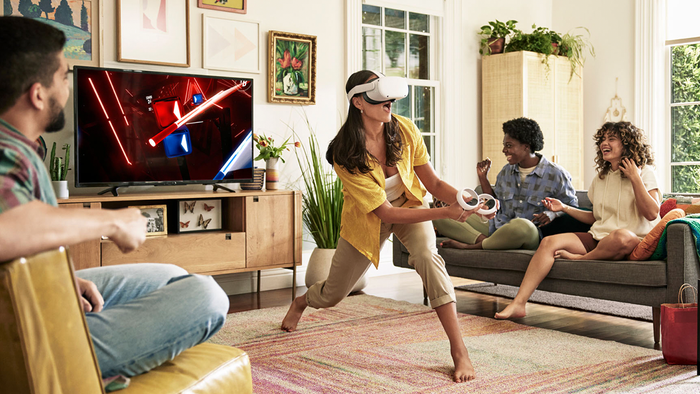
Games make us happy because they are hard work that we choose for ourselves, and it turns out that almost nothing makes us happier than good, hard work. We don't normally think of games as hard work. After all, we play games, and we've been taught to think of play as the very opposite of work. But nothing could be further from the truth. In fact, as Brian Sutton-Smith, a leading psychologist of play, once said, “The opposite of play isn't work. It's depression.”
When we're depressed, according to the clinical definition, we suffer from two things: a pessimistic sense of inadequacy and a despondent lack of activity. If we were to reverse these two traits, we'd get something like this: an optimistic sense of our own capabilities and an invigorating rush of activity.
There's no clinical psychological term that describes this positive condition. But it's a perfect description of the emotional state of gameplay. A game is an opportunity to focus our energy, with relentless optimism, at something we're good at (or getting better at) and enjoy. In other words, gameplay is the direct emotional opposite of depression.
When we're playing a good game -- when we're tackling unnecessary obstacles -- we are actively moving ourselves toward the positive end of the emotional spectrum. We are intensely engaged, and this puts us in precisely the right frame of mind and physical condition to generate all kinds of positive emotions and experiences.
All of the neurological and physiological systems that underlie happiness -- our attention systems, our reward center, our motivation systems, our emotion and memory centers -- are fully activated by gameplay.
This extreme emotional activation is the primary reason why today's most successful computer and video games are so addictive and mood-boosting. When we're in a concentrated state of optimistic engagement, it suddenly becomes biologically more possible for us to think positive thoughts, to make social connections, and to build personal strengths. We are actively conditioning our minds and bodies to be happier.
If only hard work in the real world had the same effect. In our real lives, hard work is too often something we do because we have to do it -- to make a living, to get ahead, to meet someone else's expectations, or simply because someone else gave us a job to do. We resent that kind of work. It stresses us out. It takes time away from our friends and family. It comes with too much criticism. We're afraid of failing. We often don't get to see the direct impact of our efforts, so we rarely feel satisfied.
Or, worse, our real-world work isn't hard enough. We're bored out of our minds. We feel completely underutilized. We feel unappreciated. We are wasting our lives.
|
"When we're depressed, according to the clinical definition, we suffer from two things: a pessimistic sense of inadequacy and a despondent lack of activity. If we were to reverse these two traits, we'd get something like this: an optimistic sense of our own capabilities and an invigorating rush of activity. There's no clinical psychological term that describes this positive condition."
As I'm sure you're aware, "Flow" is a term stemming from clinical research by Mihaly Csikszentmihalyi.
http://en.wikipedia.org/wiki/Mihaly_Csikszentmihalyi
Flow can be found in gameplay, or work, or critical thought. But just to be clear, gameplay could just as easily foster depression as any other activity. A propensity for depression would seem to depend more on the fundamental outlook and circumstances concerning the individual, rather than choice of activity.
Yes, the downside of excerpting a book is that everything else you've said gets left out ^_^ I'll see if I can help round it out a bit here!
Glenn, as you correctly predicted, flow is in the book, of course :) I was very interested in research that shows that flow, the "peak experience" of engagement, is just one part of happiness and that it's important to cultivate a more sustained kind of optimistic, challenging engagement with self-chosen work, or what I call unnecessary obstacles. We can't be in flow all the time -- although videogames DO get us in to flow faster than most anything we do in our ordinary day to day lives. There's a broader kind of positive engagement with challenges that extends before and after peak flow, and that's quintessential to gameplay. So this is building on what we know about flow to say, it's about more than just that peak experiences.
Christian, as you no doubt no, and were making a provocative point, mania is an extreme opposite of severe depression... most people experience neither severe depression nor mania in the course of their everyday lives. But many people are mildly depressed in everyday situations -- work, school, etc. What is the ordinary opposite of depression? The ordinary opposite isn't mania. My research suggests that it is optimistic, whole-hearted engagement with a challenge we care about. This baseline positive engagement is a really interesting experience that I can tell you from more than a decade's research in positive psychology there is NO clinical term for -- the closest has just been proposed by the field's founder, Martin Seligman, as "flourishing" -- and I quite like term. So perhaps we will have a clinical term soon -- flourishing -- and then we can say simply that when we play games, we are flourishing!
I agree that games (and interaction systems in general) are a great way to direct action, frame responses and generally set the tone of the "discussion" with player, and allow for flow to happen. Of course, designers have been doing this intuitively for ... ever, and I appreciate your focus on games as a bridge to talk about positive psychology, and how everyone can apply the concepts more broadly.
Thanks for clarifying. Cheers!
The idea of positive challenges we care about is compelling. People could be challenged to form unions in their workplaces, stop their governments lying to them, stop race violence and form effective counter-action against police forces.
Good luck with the book, I look forward to reading it.
As an aside: "Reality Is Broken" serves as an interesting counter/companion to "Battle Hymn of the Tiger Mother." In Tiger Mother, the author, Chua, describes how she pushes and challenges her children to punishingly hard work, claiming that mastery through difficulty leads to fun and enjoyment not the other way around. Mastery leads children to try harder challenges and the whole process repeats. Chua calls this the "virtuous cycle."
In some ways, both books are in agreement, though I'm sure McGonigal would argue that if, say, learning the piano were more like a video game, it wouldn't be so punishing but would still be hard work and have the deep satisfaction of mastery.
I wonder what Chua would think of video games after reading "Reality Is Broken?" (We know what she thinks of video games without having read it: On Colbert, http://www.colbertnation.com/full-episodes/tue-january-25-2011-amy-chua, she says given a choice, children would just play video games.)
Just started reading the book and am enjoying it. One thing I want to know more about is that she talks about negative stress and positive stress (aka eustress) and says there is no difference from a physiological standpoint. "Hard fun" creates eustress and it sounds like she advocates that we engage in more "hard fun" activities.
But one downside I wonder about is that hasn't stress been shown to lead to illness?
Do work.
~C - - -