|
[Plenty of studies are being done which examine the effect gaming has on the brain, and independent developer and former neuroscience researcher Erin Robinson takes a look at ten particularly interesting studies to see what they can teach us. You can follow Erin's work at Livelyivy.com, or on Twitter @Livelyivy.]
When I was in high school I had a psychology teacher we called "Max." On the day we were about to start learning about the human brain Max paused, closed the textbook, and said something that determined the next few years of my life. "If I could do it all again," he said, "I'd go and study the brain. Neuroscience is at the same place physics and chemistry were at a hundred years ago -- on the brink of all the big discoveries."
It stayed with me -- I got my degree in psychology and spent some time working in neuroscience labs before video games reclaimed my life.
I was invited to speak at GDC China last year about the intersection of neuroscience and gaming. I tracked down almost 60 contemporary research papers and handpicked the ones stood out to me in terms of their innovation and creativity. Here are 10 things we didn't know before.
1. People with no memory can remember playing Tetris
You may be surprised to learn that scientists are not only studying the effects of video games on the brain -- they are using games to help unravel how the brain works.
Consider anterograde amnesiacs, the unfortunate lot who have lost the ability to form new memories due to brain damage. It's the kind of amnesia suffered by the main character in the movie Memento, who lives in an ever-updating present, unable to remember anything that happened after his traumatic accident.
And yet, people with this type of amnesia can learn to play Tetris just fine, and even get better with practice (although not as well as people without brain injury). And it gets weirder. Have you ever spent a lot of time doing something repetitive, particularly something new, and then tried to fall asleep? Have you noticed the intrusion of visual images related to what you were just doing? Those are called hypnagogic images, and you guessed it, the amnesiac patients still saw things that looked like Tetris blocks despite having no recollection of playing the game.

This is the latest bit of evidence to suggest that there are separate memory pathways in the brain: explicit memories, which are the people, places, and experiences we remember, and procedural memories, which are the skills we learn with practice. And it's possible to suffer damage to one pathway and not lose the other.
By the way, becoming obsessed with an activity to the point that it begins to intrude your thoughts, mental images, and dreams is known as the "Tetris Effect." So that's something else video games have given us.
2. You can use the same drug to treat a heroin addiction and a StarCraft addiction
It turns out that gaming overusers share some brain characteristics with drug addicts. In a recent PET scan study, the brains of internet gaming overusers were compared to their non-gaming counterparts.
The gaming overusers showed abnormal activity in regions linked to impulse control and reward processing.
A main feature of this disordered thinking is the inability to resist the impulse to perform an action, despite its harm to oneself and others. It's commonly seen in not only drug addiction, but other disorders of impulse control like compulsive gambling.
So if the brain of a compulsive gamer functions like an addict's, can we treat gaming overuse like we would an addiction? One group of scientists decided to try it out. Bupropion, a drug commonly given to heroin addicts to cut their cravings, was given to a group of gamers who were excessively playing (what else?) StarCraft. The unhealthy level of StarCraft was defined as more than 30 hours per week.
The result: the drug helped. After six weeks, the patients had lower cravings for internet game play, less total game play time, and fewer symptoms of depression. Additionally, when the patients were shown images from StarCraft during an MRI scan, they showed less activation in the brain areas related to craving. The drug acts by inhibiting the reuptake of dopamine and norepinephrine, both involved in the processing of rewards. In other words, your cells stay happier longer, perhaps enough to fight off the impulse temporarily.
3. Child burn victims feel less pain when playing a VR game
We're all familiar with games as escapism, but there is now solid evidence that video games can also modulate the effects of real, physical pain.
One study looked at the pain experienced by pediatric burn patients during a particularly grueling process: the changing of their dressings. The usual treatment for these patients involved a strong painkiller, but these tended to have unwanted side effects like nausea and lethargy.
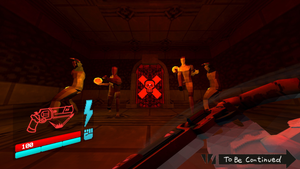
Then someone had the brilliant idea to have these kids play a virtual reality game (helmet and all) during the process. Not only did the children report significantly less pain, but they also felt fewer of the negative side effects of the painkillers (their nurses provided similar reports).
It is thought that the VR games interrupt and distract the way that current thoughts, including pain, are processed by the brain. The mechanisms for that process aren't clear, but VR games seem to at least reduce the perception of pain. While this study only looked at nine children, the results are similar to what they've found in adults. My takeaway: I cannot believe somebody found a use for VR helmets.
|
I also look forward to hearing that the England Rugby Team have all been on a strict diet of Counterstrike to improve their situational awareness ahead of the World Cup (September and October this year in NZ, in case you're not already on tenderhooks)!
Can you recommend any resources to help mainstream game developers connect with researchers exploring use of games in education? I understand there's often friction between these groups, but surely there must be a way we can help each other.
Many thanks again for your work!
Your question is a really good one. I say with confidence that many people who work in education are looking for ways to tap into the power of games. It's easy to design a game that's basically a multiple choice quiz, but having games teach something through play is another matter. Having professional game developers involved would be a huge help.
One place to start would be Jim Gee's excellent book about games and learning (http://www.amazon.com/Video-Games-Teach-Learning-Literacy/dp/1403961697). Another book on the subject is "Video Games and Learning" by Kurt Squire, who works with us. Both of them would be good people to get in touch with if you're looking for contacts in the education/research space.
I'm not sure there is anything special to the study of burn victims either, beyond "distraction works as a painkiller." It works with non-VR games, movies, music, even with an alternate pain sensation. It's just enabling temporary dissociation. If the victims have full-body burns, then I could see how using HMDs might help them temporarily ignore the nurse as he changes dressings.
But the technique itself is very old. It's the short-term, healthier version of what causes much psychologically addictive behavior: The distraction and/or placebo effect allows the person to temporarily dissociate away the pain, but if the source of the pain is long-term, as soon as they drop the stimuli the pain returns. This can create a cycle of addiction.
9. Video games and the aging population are going to be BFFs
While "silver gamers" may enjoy gaming more than pen and paper cognitive exercises, there is actually quite a bit of debate about whether cognitive exercises help the aging brain at all. Even if people enjoy video games more than pen and paper, there's no proof that EITHER help the gamers' brains as they age.
Do you mind citing some evidence that calls into question the benefits of cognitive exercises for the aging brain? I'm interested to see how well documented the arguments for each side are.
Great article. We are conducting research to see if selected popular video game play can improve brain-based executive functions in children with ADHD and Learning Disabilities. The preliminary research looks good. We see some growth in skills such as processing speed, working memory , and sustained attention. Rather than simply having kids play these games on their own, we encouraged parents to use the games as "teaching tools', where they mediated game play with discussion and probing about how skills were used in the game and could be applied in the real world. We believe that puzzle and problem solving games may be well suited for improving executive skills such as planning, organization, and cognitive flexibility.
The most recent article about our work, Teaching Executive Functions, Self-Management, and Ethical Decision-Making through Popular Videogame Play can be found in the book, Designing Games for Ethics: Models, Techniques and Frameworks edited by Drs. Karen Schrier and David Gibson.
When I was researching this article I came across many, many studies investigating whether or not games were bad for kids. It'd be nice to have some balance from studies like yours that say, 'video games can also be a tool to help kids.'
However, citations, as noted by a previous commenter are in order.
Also, I must have missed that protocol, when I was doing neurpsychological research, that suggested that I quote my boyfriend/girlfriend companion. I guess my mother was right about so many things!
There's a huge potential for games using neurofeedback to treat ADD/ADHD. I worked with a company called East3 10 years ago that was on that track, before being derailed by a crooked CFO. http://www.adders.org/news37.htm
http://gameolosophy.com/games/gaming-can-help-with-adhd-symptoms/
Not quite as strictly neuroscience, but of interest is ReMission from Hopelab, and the associated 3.75 million dollar study http://www.hopelab.org/innovative-solutions/re-mission%E2%84%A2/
Although ReMission helps kids with cancer, it does so not directly (in the sense that an exergame helps people burn calories, or a brain game might help build mental ability) but through education, letting the users "see" cancer cells from a POV within a body. It would be easy to dismiss a game about shooting cancer cells as a gimmick, but their study was very thorough, and people who played the game had a very significant increase in adherence to their chemo treatments. The control group and the test group were even both given a popular off the shelf video game to play to eliminate the possibility that simply playing a video game was having the effect, and not ReMission itself. Definite learning going on through gameplay.
Finally, a recent and ongoing study by Dr. Gazzaley at UCSF has people play a video game inside an fMRI machine - and eventually will include simultaneous EEG and fMRI (interesting details on the technology needed to do that!). The ostensible purpose is to study aging attention problems, but we in the games industry will get an amazingly detailed study of what "your brain on games" is actually doing in real time.
http://bits.blogs.nytimes.com/2010/12/29/my-brain-on-video-games/
http://gazzaleylab.ucsf.edu/
You're certainly correct that this is an exciting and growing field.
Noah Falstein
The Inspiracy/Suddenly Social
It's like Mirror Therapy! Fascinating.
Mirror Therapy where a subject is shown a reflected image of a part of their body so that they can feel whole and overcome phantom limb pain. In the burn victim's case VR allows them to perceive themselves with a new skin. I bet VR would work on the phantom limb pain problem, too!
Kewl and Disgusting story about Mirror Therapy here:
http://www.newyorker.com/reporting/2008/06/30/080630fa_fact_gawande
P.S. Citations would do wonders in helping pass this along to interested parties at Le Bonheur and St. Jude.