My Message close
GAME JOBS
Latest Blogs
spacer View All     Post     RSS spacer
 
May 20, 2013
 
3 reasons why Nintendo won’t abandon the hardware market
 
I want to experience games not just play them. [1]
 
Making 2D Games With Unity [1]
 
All You Need is Love [3]
 
Students: Tips for Learning Game Development Over the Summer [2]
spacer
Latest Jobs
spacer View All     Post a Job     RSS spacer
 
May 20, 2013
 
Ringling College of Art and Design
Game Art + Design Faculty
 
Havok
Havok- 3D Software Engineers (Work in Dublin,...
 
University of Central Florida/School of Visual Arts & Design
Instructor or Lecturer
 
University of Central Florida/School of Visual Arts & Design
Assistant Professor
 
Sony Computer Entertainment America LLC
Sr. Network Systems Engineer
 
Treyarch / Activision
Technical Animator
spacer
Latest Press Releases
spacer View All     RSS spacer
 
May 20, 2013
 
New HARDWARE:
Shipbreakers Trailer
Reveals the...
 
FIRST TOTAL WAR NOVEL
REVEALED; ‘TOTAL
WAR:...
 
Help us support indie
developers with the
new...
 
CastleStorm Releasing May
29 on Xbox LIVE®...
 
Total War™: ROME II
and Company of Heroes...
spacer
About
spacer Editor-In-Chief:
Kris Graft
Blog Director:
Christian Nutt
Senior Contributing Editor:
Brandon Sheffield
News Editors:
Mike Rose, Kris Ligman
Editors-At-Large:
Leigh Alexander, Chris Morris
Advertising:
Jennifer Sulik
Recruitment:
Gina Gross
Education:
Gillian Crowley
 
Contact Gamasutra
 
Report a Problem
 
Submit News
 
Comment Guidelines
Sponsor

 
Hand-drawn iOS 'interactive comedy' began as a failed arcade experiment
Hand-drawn iOS 'interactive comedy' began as a failed arcade experiment Exclusive
 

June 28, 2012   |   By Brandon Sheffield

Comments 6 comments

More: Smartphone/Tablet, Art, Business/Marketing, Exclusive


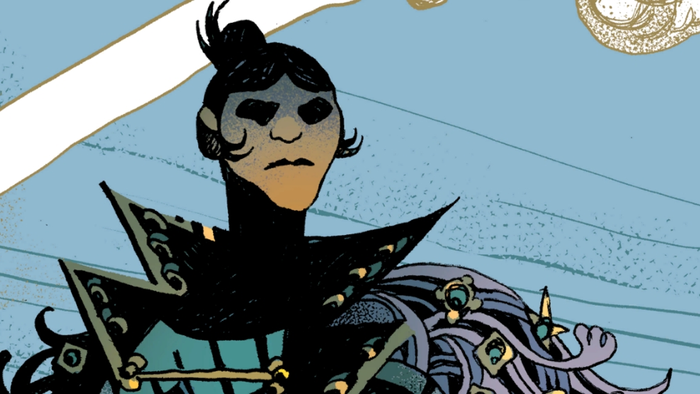
The Act was the brainchild of Omar Khudari, who hoped it would be the arcade game that would change everything.

The game, which was meant to release in the mid-2000s, hoped to create an emotional link between player and character through detailed Disney-style hand-drawn animation, with a simple control interface -- users simply turned a dial to make the main character more forceful and confident, or more tentative and passive, depending on the situation. It's a game Gamasutra has been following for quite some time: before it had a name, even.

The market for arcade games was weak, and an expensive arcade game based on a boy-meets-girl story isn't exactly an easy sell to distributors. Plans for wide distribution were quietly canceled in 2007, but the game was fully playable, and the curious could play the game at enthusiast events like the California Extreme Arcade Expo thanks to a limited number of kits sold by Khudari.

The project laid dormant for some time before a new company, React Entertainment, formed to release the game on iOS, with help from publisher Chillingo, which has been pumping a good deal of marketing spend to convince players to give the $3 "interactive comedy" a shot.

Gamasutra spoke with cofounder Daniel Kraus about The Act's origin, its new direction, and just where all that gorgeous hand-drawn art ended up.

What's the background of React?

We founded React Entertainment in 2009, and we're still a small company. We're just under 10 people. We have two offices: one in Montreal and one in Miami. Our goal is to transform classical 2D animation to become an attractive gaming experience. We've developed a proprietary platform that allows us to simply take any linear 2D animated media and turn it into an interactive game.

This was originally designed to be a video game, an arcade-level game. And Omar Khudari, who was the founder of the company that originally created it, was really a visionary.

What's interesting is his original vision for the game was that it would be a tremendous consumer-facing game. And so we were excited in 2009, after the video market had kind of trailed off, my partner and I approached him and said, "We really think that the time is right to go take this game to the next level. We think this mobile thing is going to blow up." This was before the iPad, it was before any of this had happened.

In doing so he kindly agreed to work with us, and so since then, the past two and a half years or so we've been iterating and growing the technology. We've been transforming the arcade game into something we can run on these other platforms.


Did you develop it off of his system or is it your own thing that you've adapted his game into?

It's kind of a combination. We've actually taken all of the original Cercopia [editor's note: the name of the developer of the original version of The Act] elements that were used on the technology side and also on the game side and we've replaced an awful lot of things. Our goal was to really keep the game as close to the original vision of the animators and Omar as we could.

So, in that sense, in terms of music, in terms of the imagery, the drawings and a few of the characters and the interactions were implemented, especially on iPad and iPhone. I think that reflects really, really well.

But it's been a huge amount of work, of course, because the original architecture was certainly not intended for what we're using it for, but we think there is a lot of potential in the technology that we have in hand.

What are you going to do with the technology platform going forward? Are you going to do more games like The Act or . . . ?

Daniel Kraus: We generally don't discuss our future plans but we're exploring a couple of different territories at this point. There are certainly opportunities in the game area for platforms and content that were extended forward.

Sure, like episodes?

How the original The Act was drawn, was it was actually drawn on paper. Hundreds of thousands of individual drawings. Truly amazing. And that actually reflects in the quality, and obviously since then there's a lot of other digital technologies that can be used to accelerate development in those kinds of things.

Well sure, but that was possible then, too, it was just kind of his baby. He really wanted to return to hand-drawn animation. How do you fit that all on an iPad?

We've done a huge amount of compression work. There's a lot, a lot, a lot of frames. The straight playthrough is probably, you know, an hour and something if you know what you're doing. But if you could include of the variants and if you actually hit all the variants its two or three hours. The original game was 235,000 frames. We still have the paper. All the drawings.
 
 
Top Stories

image
7 design lessons from Letterpress
image
How developers mess up immersion (you might be doing it wrong)
image
Market's ready for new consoles, but old-gen surprisingly viable
image
This augmented reality tech was originally a Valve project


Comments

Brian Canary
profile image
Incredible. I love that this title exists at all.

Chris Hendricks
profile image
I'd heard about this many years ago... I'd wondered what had happened to it. Nice to see they've found a place for it in the mobile space.

Ian Fisch
profile image
I can't believe they did the animation on paper. People still do that?

Christopher Totten
profile image
Played it on my iPad - great little game. It's very short but it delivers on being a funny rom-com style cartoon short. It's also very intriguing in that it's a game where the core mechanic is picking up and reacting to social cues appropriately.

John Flush
profile image
I almost bought it when it got a little advertisement out there - that and it was now from Chillingo. Then I saw the price and user reviews saying about how long it was. Unfortunately I didn't pick it up as there were other things out there I wanted more than this experiment. Who knows, maybe I'll go back and pick it up regardless simply because of the read from this article.

In a related gamasutra note... I see they marketed this with "Male Gaze" - now do I get it because I'm interested in what 'different' it does do or do I take a stand against everything impure with the world and not get it because of its marketing? lol

Paul Orlemanski
profile image
I remember a number of years ago, that one of the animators came to my college to speak and showed us some demo videos of The Act. He was a former Disney animator who worked on Lilo & Stich and Brother Bear.


none
 
Comment:


UBM Tech