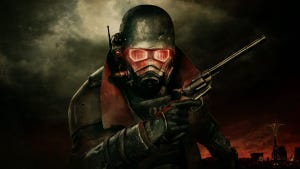
This means that anyone who purchases (or has already purchased) the Funcom game will receive all of its content without having to sign up to pay a monthly fee.
However, a monthly $14.99 'Membership' fee option is available to those who want to access some extras, including the ability to gain experience faster, and bonus points and items. Any current subscribers to the game are automatically transferred to this 'Membership' scheme.
Of course, the move follows the decline and subsequent switch to free-to-play for the Star Wars: The Old Republic MMO earlier this year.
The fall of the MMO subscription was quite clearly one of the major trends that defined 2012 for video games, and the fate of the The Secret World subscription model simply throws more water on this dying fire.
I doubt that. At this point this is defensive "minimize the losses". They lived with projections beyond what they could get. Now, it's covering the costs.
50% Steam Sales does nothing, IMHO - nor would it sell enough units. Look at Guild Wars 2.
Alex: I suppose there is a good chance you are right, but I think they have an opportunity for making money here.
Staff has already been reduced by 50%, large chunks from the presumably expensive Norwegian office, so costs are down. They were cash-flow positive for the game with the subscription model, but still has loans. The trick now is to increase the player-base, then sell story based expansion packs (presumably cheaper to produce than the main game).
This is of course dependent on whether the players like the game :)
How much they can expect from in-game shopping is hard to say.
I'm sad that their bold experiment ended not working, because TSW, content-wise, was one of the most interesting experiences of the year. But now I'm happy because I'll be able to play without going broke...
I'm with you, Leonardo. I enjoyed The Secret World, but unfortunately wasn't able to justify the subscription cost on top of other monthly payments. Hopefully this new model will help them get back on their feet.
this is repeated ad nauseum but it's hogwash. TSW is a standard MMO in virtually every way except for the setting, which is only skin deep.
the lack of labeled classes doesn't change the gameplay or group dynamics one bit. the lack of labeled levels doesn't stop you from gaining exp and being gated from content based on your gear. in fact gear IS your level in TSW and the whole game is completely linear.
the only two functional differences from a regular mmo are the skill setup and server setup, both seen in guild wars in 2005 and done better then.
the only risks Funcom took was releasing a third MMO without cleaning up their image(or cleaning up their act at all) and making a MMO instead of a cheaper game.
I was really interested in TSW for a long while, but a particularly bad pre-launch trailer threw me off and I lost track of it in favor of other darlings like GW2. Now might be a good time to check TSW out if you've ever been curious about it and what it does differently. Support a struggling developer while they find their feet as a best case scenario, or get a chance to play a game before they shut down the servers as a worst case scenario.
I thought the subscription model died back in 2005, at least that was my assumption at the time. It still seems to crop up in products from older, more established developers. Then they change their minds a few months after launch... This completely puzzles me. The time to change your mind is at least a year *before* launch.
I liked the game when I played it, but there needed to be a bit more variety in the classes I think. They tried too hard to balance them and they ended up feeling a bit vanilla. Launching against GW2 didn't help either.
If Funcom and other want to have games that last long enough to pull in recurring payments, they need to have economies in their games that give meaning to long term advancement. There is very little in the way of an economy in TSW.
"Then they change their minds a few months after launch."
Perhaps it's not strictly changing their minds, perhaps a combination of box sales and initial few months subscription is a revenue stream worth taking advantage of.
I have no idea precisely how much it costs to change "an mmo" from subscription based to free and I expect it varies from game to game, however it's possible it's a strategy to get the best of both worlds. Like having two launches, the cost of converting may be worth it for the initial income of a box sale and subscription followed by the income of a free to play re-launch.
Not saying it wasn't a mistake here, just that it's possible sometimes its intended.
Good post Ramin. While some games have made the transition, it leaves a rather important element up to luck. At this point there can be no reason but hubris to think you can launch a subscription MMO and make it go.
It seems like there is a set progress for MMO releases.
1. Release with a retail copy of the game and charge a monthly fee
2. Drop the monthly fee, but offer premium items and still charge for the game.
3. Go completely free to play and offer premium items (micro transactions).
4. Go out of business.
It would behoove developers of these games to just start at step 3 so that the barrier to entry is less of a risk. Capitalize on the general interest of your game right off the bat rather than squandering it for little initial revenue. Interest and loyalty are worth more than that initial few dollars.
This is the best move Funcom could have made considering the circumstances -- however, if they haven't already done so, they should have optimized the game for micro-transaction items before removing the subscription model.
Although I'm sure they're eager to recoup their losses, they're risking significant backlash by getting new players and adding micro-transaction elements afterwards. The worst thing they could do is break existing systems, then sell consumables to restore the systems to their original functionality; if that's something they have to do, they should have done it before removing the most significant barrier to entry.
I'll definitely be picking this game up now that the subscription fee is gone; assuming they quickly monetize with microtransactions for the initial flood of new players, this could save the project. If not, I'd like to experience TSW before the servers close.
If the $14.99 "membership" fee is the same as the initial subscription fee and the MMO peaked at 200,000 subscribers then the company was taking in approximately $36 million annually. Granted I'm just a peon and don't know how the big boys do business, but this seems like a lot of money to me. Anyone have any insight into this observation?
What Diana said, and that you have to consider what portion of that 200k subscriber base was concurrent vs. what portion paid for a month or two and then never paid a monthly subscription again. I don't have the data but I imagine the number of subscribers they had for the entire full year was pretty low.
Apparently City of Heroes was making $3 million a quarter profit and that wasn't enough for NCSoft to keep it running. Companies seem to have huge expectations these days
On top of that, the game has only been out since July and that was a "peak" number which was likely only for one month. MMOs have a STEEP drop off after the initial month. Plus, that might have just been all the people who were playing with their initial free month as well.
TSW offended me because they had both a subscription requirement and a store which sold some non-trivial items. Do one or the other.
It had an interesting story, but the mechanics of the game were uninteresting (combat is boring) and the graphics make you feel like your character is disconnected from the world.
It had good points, but....
Their last big MMO, Conan, had 20 brilliant levels, then boredom. They never seem to be able to execute w/quality all the way through.
I find there to be more than somantic differences between a game "going" F2P and adding an F2P option. Having unlimited free access to all of a game's components while paying additional for extras is free to play. Having limited free access to some if not most of a game's components (with µxactions bringing F2P closer to sub level) while subscribers get unlimited access to all of the game's components as part of their subscription is not free to play. That's more of a sub model that also offers an extended trial.
Thus Mr. Rose's statement that SWTOR went free to play is inaccurate. In fact (though they are still tweaking it) there is even a migration level between subs and F2P.
I agree with Diana in that this appears to be more of a desperation move than a planned infrastructure streamline. If the extras aren't appealing enough or the cash shop inventory isn't robust enough, then where does sustaining revenue come from?
Does anyone know how well GW2 is doing right now? From what I've heard from a few associates, it has seen some significant drop as well. Of course that wouldn't hurt them as bad as it hurt Funcom, considering that their primary business model is the B2P.
i think the drop off has been somewhat exaggerated, the last time i logged in was well after it was supposedly losing many players and it was packed. also, the game is still residing at or near the top of sales charts. the lack of payment up front also removes a barrier to coming back .
50% Steam Sales does nothing, IMHO - nor would it sell enough units. Look at Guild Wars 2.
Staff has already been reduced by 50%, large chunks from the presumably expensive Norwegian office, so costs are down. They were cash-flow positive for the game with the subscription model, but still has loans. The trick now is to increase the player-base, then sell story based expansion packs (presumably cheaper to produce than the main game).
This is of course dependent on whether the players like the game :)
How much they can expect from in-game shopping is hard to say.
the lack of labeled classes doesn't change the gameplay or group dynamics one bit. the lack of labeled levels doesn't stop you from gaining exp and being gated from content based on your gear. in fact gear IS your level in TSW and the whole game is completely linear.
the only two functional differences from a regular mmo are the skill setup and server setup, both seen in guild wars in 2005 and done better then.
the only risks Funcom took was releasing a third MMO without cleaning up their image(or cleaning up their act at all) and making a MMO instead of a cheaper game.
I liked the game when I played it, but there needed to be a bit more variety in the classes I think. They tried too hard to balance them and they ended up feeling a bit vanilla. Launching against GW2 didn't help either.
If Funcom and other want to have games that last long enough to pull in recurring payments, they need to have economies in their games that give meaning to long term advancement. There is very little in the way of an economy in TSW.
Perhaps it's not strictly changing their minds, perhaps a combination of box sales and initial few months subscription is a revenue stream worth taking advantage of.
I have no idea precisely how much it costs to change "an mmo" from subscription based to free and I expect it varies from game to game, however it's possible it's a strategy to get the best of both worlds. Like having two launches, the cost of converting may be worth it for the initial income of a box sale and subscription followed by the income of a free to play re-launch.
Not saying it wasn't a mistake here, just that it's possible sometimes its intended.
1. Release with a retail copy of the game and charge a monthly fee
2. Drop the monthly fee, but offer premium items and still charge for the game.
3. Go completely free to play and offer premium items (micro transactions).
4. Go out of business.
It would behoove developers of these games to just start at step 3 so that the barrier to entry is less of a risk. Capitalize on the general interest of your game right off the bat rather than squandering it for little initial revenue. Interest and loyalty are worth more than that initial few dollars.
Although I'm sure they're eager to recoup their losses, they're risking significant backlash by getting new players and adding micro-transaction elements afterwards. The worst thing they could do is break existing systems, then sell consumables to restore the systems to their original functionality; if that's something they have to do, they should have done it before removing the most significant barrier to entry.
I'll definitely be picking this game up now that the subscription fee is gone; assuming they quickly monetize with microtransactions for the initial flood of new players, this could save the project. If not, I'd like to experience TSW before the servers close.
It had an interesting story, but the mechanics of the game were uninteresting (combat is boring) and the graphics make you feel like your character is disconnected from the world.
It had good points, but....
Their last big MMO, Conan, had 20 brilliant levels, then boredom. They never seem to be able to execute w/quality all the way through.
Thus Mr. Rose's statement that SWTOR went free to play is inaccurate. In fact (though they are still tweaking it) there is even a migration level between subs and F2P.
I agree with Diana in that this appears to be more of a desperation move than a planned infrastructure streamline. If the extras aren't appealing enough or the cash shop inventory isn't robust enough, then where does sustaining revenue come from?