|

|
 |

| |
WoW Bucks Aussie Norms, Gets M Rating
by Leigh Alexander [PC, Console/PC]
|
|
| |
|
October 14, 2009
|
| |
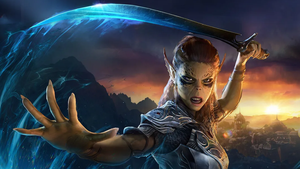
The much-maligned Classification Board of Australia has made a small stride toward getting in step with global game ratings by applying an M rating to Blizzard's World of Warcraft.
Unlike most of its neighbors around the world, the Australian ratings system lacks a classification for mature titles, as the U.S. has with the ESRB's M rating -- which means titles that would fall into this category can't be rated, and are effectively banned without edits to objectionable content.
Australia's system, however, has long lacked any rating whatsoever for massively multiplayer online games; rather than barring them for sale, however, this ratings gap means MMOs are simply unrated on retail shelves.

According to consumer site GameSpot, however, Blizzard has attained what it hopes is progress through a rating for its explosively popular WoW, which will now carry an M rating for "fantasy violence." The game has been sold without classification in Australia since 2004, and Blizzard told the site it's worked to change this in the past.
"Blizzard Entertainment has always worked closely with the Classification Board for all its titles," Blizzard said. "However, back in 2004, we were advised by the Office of Film and Literature Classification (OFLC) that the online-only nature of World of Warcraft was unclassifiable under its definition of computer games at that time."
"Recent changes at the Classification Board have led to their ability to classify online-only games such as World of Warcraft."
In the U.S., boxed retail with online components are rated on their content, but warnings firmly declare that online interactions themselves are unable to be rated by the ESRB, as the presence of others adds an unpredictable component.
The Australian Classification Board insists that the rating of WoW is no departure from its usual policy about what constitutes a "computer game."
"It is the Board's view that World of Warcraft meets the definition of a computer game provided in the Classification Act and therefore can be classified,” the Board told GameSpot. "This is consistent with the intention of the National Classification Scheme to provide parents and consumers with classification advice on the content of games."
|
| |
|
|
The OFLC ratings don't line up the same as the ESRB ratings.
Russell: If it's anything like movie ratings, there can be a negotiation process. "We'll give you this if you do that." And like all negotiation processes, there is a potential for special interests,"unofficial" influence, and dick-wagging. An example from the MPAA (ratings for US movies): Disney's "The Lion King" was originally slated to receive a PG rating for emotional disturbances for small children (you get the kids identifying with Simba, then Simba's father is killed on-screen and Simba's life is threatened repeatedly... MPAA said "this is not G-rated fare"). Disney informed the MPAA that if they didn't give "The Lion King" the "G" rating that Disney wanted, Disney would withdraw from the MPAA and denounce the MPAA's ratings process, and very seriously cripple the MPAA's credibility. The MPAA gave in, lest they go the route of the Comics Authority. (source: Disney character designers and animators who worked on "The Lion King" whom I personally know) It's business. Arm-twisting is a part of business. Has this happened with the ESRB? I have no idea, but it's certainly plausible in both directions.
Effectively in terms of mapping ESRB to Australian OFLC ratings (using the categories Australia uses for film)
ESRB Ec, E => Australian G
ESRB E10+, T => Australian PG
ESRB T => Australian M, MA
ESRB M => Australian MA, R18+
ESRB AO => Australian R18+, X
Of course, the R and X ratings in Australia don't exist for games (they do for film).
The vast majority of ESRB M games get released with MA or sometimes even the lower M (Australian) rating. The issue in Australia is that the ESRB M rating is slightly less restrictive - defined as being suitable for people 17+ years old, where Australia's is 15+. Effectively it means that there is a gap between the two, where there are games at the top end of the ESRB's M pool which fall outside the realm of what the Australian system allows for. Australian gamers are asking for the R18+ rating all the time because we want to cover that gap. The rhetoric that always flies around is that an 18+ rating in Australia would result in a flood of porn games or the like, but the reality is that it would be putting us on par with the bulk of the rest of the world and the bulk of those sorts of games would be unlikely to fly in Australia regardless.
Technically the ESRB has the same problem that Australia does regarding an actual 'for adults' rating. The ESRB AO rating is effectively the kiss of death for a video game, in that none of the console publishers will allow an AO-rated game on their system, and most retailers won't stock them. Australia lacks this rating category (R18+) for games completely. In both cases there's the same kind of push to get content squeezed just inside the boundaries of the lower rating.
It also doesn't make much sense that all manner of violence earns a t or an m rating, but a too much sexual action pushes the AO meter so quickly. But thats more of a societal issue rather than a ratings issue I'd think. Is there a Euro/Japanese rating board and are they easier/rougher on these distinctions?