[In a series analyzing games a year after their release date, Gamasutra's Simon Parkin examines EA and Visceral Games' Dante’s Inferno, to find a game that, despite featuring a “50-foot topless Cleopatra from whose pert breasts knife-wielding infants leap” is "unlikely to be nearly so enduring as its inspiration."]
Few video games have drawn upon 14th Century Catholic poetry for inspiration, and yet this unorthodox starting point did little to distinguish Visceral Games’ take on Dante Alighieri’s poem Dante’s Inferno -- released for consoles in February 2010 -- from the pack.
The scenes featured in Renaissance Catholic nightmares, it turns out, share much in common with the stock environments of contemporary video games.
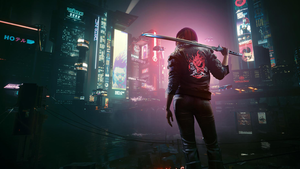
The bloodied walls, Hellish monsters and unending screams are as much a canonical part of gaming’s landscapes as the pea-green hills of Mario’s Mushroom Kingdom. The tone and imagery of the poem is already embedded into the medium, from id Software’s Doom all the way through to Brutal Legend.
As such, EA’s eagerness to generate a storm of controversy ahead of the game’s release - even going to far as to hire actors to pretend to be Christian protesters at E3 in 2009 – seemed wholly misguided.
For one, the original’s author would no doubt be thrilled at the prospect of his poem being turned into a hack-and-slash video game, rendered in all its gory detail, in the hope of shocking a new godless generation into repentance.
But more than that, Dante’s Inferno is a work that visualizes the horrors of hell, a rich pool of inspiration perfect for a video game artist to plunder, albeit perhaps without the subtext of hope for the player’s salvation.
Indeed, the only classic in danger of desecration at Visceral’s hands was God of War. It was from David Jaffe’s game from which the developer borrowed not only a slew of interactive vocabulary - from the button-mash weak and strong attacks to the Quick Time Event interludes – but also a general approach in turning ancient myth to modern game.
Squint and Dante himself even looks like Kratos, the bare, ripped torso distinguishable only by way of the crusader’s cross stitched into the flesh. Meanwhile, in the hands, the two characters are almost interchangeable, Dante’s scythe offering melee and ranged attacks with which to combo together kills, while his double jump and wall-scaling abilities facilitate rudimentary platform puzzles.
Arguably, however, the sequential circles of hell, each themed to one of the deadly sins offer a more robust framework for the game to fit within than the scattershot myths of Sony’s work. The sin in question themes the enemy design, while the notable villains from history that Dante encounters slot within each environment according to the wrongdoing from which they found their fame.
So a 50-foot topless Cleopatra from whose pert breasts knife-wielding infants leap represents the darker side of lust. There is no subtlety or nuance here, but then, Alighieri’s imagery left little to the imagination and even less to question.
Less successful than the game’s bold recreation of the poem’s monsters, however, was its ability to communicate the wider message of the original work. Impale an enemy on the tip of your scythe and you are given the option to either punish or absolve them via a gruesome finishing move.
Punishment earns you Unholy points, opening up offensive moves for purchase on Dante’s ability tree, while absolution earns Holy points that unlock new defensive and ranged attacks. While one might expect development towards ‘good’ and ‘evil’ to be mutually exclusive, morality choices within Dante’s Inferno have no meaningful outcome over the long term, instead merely dictating which areas in which the hero excels in the short term.
Even more interesting has been the commentary on the game from the academic community following its release, the game attracting criticism for its twisting of the relationship between Dante and his lover Beatrice Portinari.
In the poem, Beatrice’s role is to lead Dante towards salvation, a theme that is inverted in the game to the more orthodox video game premise in which the hero is on a journey to save the girl.
Columbia University Professor Teodolinda Barolini, a former president of the Dante Society of America, said of the narrative twist: “Of all the things that are troubling, the sexualization and infantilization of Beatrice are the worst. Beatrice is the human girl who is dead and is now an agent of the divine. She is not to be saved by him, she is saving him. That’s the whole point. Here, she has become the prototypical damsel in distress. She’s this kind of bizarrely corrupted Barbie doll.”
That the game should appropriate (and exaggerate) the imagery of Alighieri’s poem but discard the meaning may be troubling to Ivy League professors, but in a sense, the editorial lobotomy reflects the intent of its creators. Alighieri’s desire was to challenge readers’ beliefs.
By contrast, Visceral Games’ intent was merely to entertain, not to evangelize. Far easier to do that by having players rescue a damsel in distress than encounter a ghost who leads the way to a spiritual epiphany.
In a Western culture that has largely turned its back on notions of guilt and afterlife punishment, the Hellish visions in the game instead assume a kind of pornographic quality: they exist to delight through their riotous perversion, not to offer a sort of spiritual disincentive.
But even judged purely on that quality, the game falls short of its potential, the stand-out boss battles failing to elevate what is a woolly, imprecise God of War cover version. So while Dante’s Inferno the video game may rank higher than Dante’s Inferno the poem in a Google search today, it’s unlikely to be nearly so enduring as its inspiration.
True ... the only saving grace of this game was the challenge it offered in the gameplay .. very nicely balenced in the normal mode .. better than GOW3 IMO .. but repetitve otherwise.
Um. It was... alright. It didn't do anything particularly interesting or new, but it was varied and entertaining enough to keep me playing through to the end (although the desert-level was nearly enough to make me throw in the towel: crossing vast swathes of emptiness is *not* fun).
Conversely, the main thing I took away from Dante's Inferno was a sense of "generic". Following an animated movie which could have come straight out of Guitar Hero, you get to run around a medieval city for a few minutes, killing a bunch of shuffling zombies. Then you die. Death appears and you have a standard boss battle - Death runs through a series of pre-defined attack animations and you hit him until he dies - which can take a while, as Death is immune for several seconds after you get a hit in. Then Death dies in a pointless shakycam scene and you get to go out and hit more shuffling foes.
As far as character definition, plotting and gameplay entertainment goes, it scored a big fat average...
Darkstalkers is the rare game that gets better the further you get into it. starts off fairly repetitive, but gets better as you gain more weapons/abilities.
Like I said in another post way back... EA has been copying existing formulas of game play and not branching out to create new forms, or use the elements correctly to drive a good idea forward. For a company that is so large and so successful in its genre of sports, I can't for the life of me figure out why they are not more akin to try different achievement paths to craft a position their competition is clearly not engaging the player in.
Another game that falls into this category is the Medal of Honor, where they tried to reboot the franchise only to copy methods already set by CoD Modern Warfare, and then they created controversy around the Taliban Multiplayer decision they made to score hardcore points, only to have it backfire in their faces.
the makers seemed to take the low road at every possible opportunity and it was a real turn off, especially considering the source. I think it would have been far more successful taking a more mature route (I mean actual maturity, not more boobs and gore), instead of trying to appeal to 13 year old boys. but the complete lack of original gameplay makes me think they didn't have the ability to do that anyway.
Everyone has mentioned how this game felt like a copy--similar to GoW--at least in the gameplay mechanics...I'm not sure..didn't play it...but I have read the Divine Comedy--and would say I have to agree with you--This game could have used a more mature nature.
The whole story just seems way to serious to make a game out of--but if they used the likes of story telling similar to maybe heavy rain...with a mix of demons souls as a fighting mechanic--(limited and more real in movements...clunky at times with your armor..etc.) it could have done something special.
Its interesting to see an article that attempts to pitch such a horrible game in a better light. Personally, I would never have thought of so many pluses but Simon Parkin definitely has a good few ones - at least as far as the intent of the game is concerned.
I won't go into what I thought of the mechanics, which albeit generic had a few hits but mostly missed. What annoyed me the most, ignoring the marketing f*** ups and the treatment of the original, was the fact that the game advertised 9 levels of hell that would be stylistically distinct, both in environment and enemies within. What did I get? 4 Levels with different enemies that were recycled in the later 5... While I have many bones to pick with this game, this is one of the biggest - Blatant false advertising. I played the game in the hopes of seeing an artist's rendition of Dante's Inferno rendered in full detail... all I got was a cheap rip off where only the back-grounds changed and even they, began to feel contrived.
I don't really disagree with anything in the article.
I do wonder why you bothered to write the article though. Everything in this "analysis" was said in reviews a year ago or can be found on Wikipedia. Your money quote from the Columbia professor was published in Entertainment Weekly of a year ago. So where's the analysis? Did you have a point that you were trying to make that I couldn't read on metacritic?
"As such, EA’s eagerness to generate a storm of controversy ahead of the game’s release - even going to far as to hire actors to pretend to be Christian protesters at E3 in 2009 – seemed wholly misguided."
Haha, "Your mom... and God!!! both hate Dante's Inferno!"... Gaming marketing campaigns are an awesome plus side show!
"For one, the original’s author would no doubt be thrilled at the prospect of his poem being turned into a hack-and-slash video game, rendered in all its gory detail, in the hope of shocking a new godless generation into repentance."
I don't feel this claim is really supported by the rest of your article, which points out that the game neither does that nor attempts to do so.
I loved Batman: Arkham Asylum: played it, completed it
I liked Darkstalkers: played it, completed it.
I tried Dante's Inferno: spent twenty minutes admiring how generic the gameplay was and sold it on Ebay.
Worth playing?
And about Dante's Inferno, well, I'll say this: The cut scenes we're more faithful than the actual game to the book.
Conversely, the main thing I took away from Dante's Inferno was a sense of "generic". Following an animated movie which could have come straight out of Guitar Hero, you get to run around a medieval city for a few minutes, killing a bunch of shuffling zombies. Then you die. Death appears and you have a standard boss battle - Death runs through a series of pre-defined attack animations and you hit him until he dies - which can take a while, as Death is immune for several seconds after you get a hit in. Then Death dies in a pointless shakycam scene and you get to go out and hit more shuffling foes.
As far as character definition, plotting and gameplay entertainment goes, it scored a big fat average...
#corrections
The only recent Darkstalkers I found out about is a PSP fighting game and has little to do with the other games you mentioned...
just curious!
Another game that falls into this category is the Medal of Honor, where they tried to reboot the franchise only to copy methods already set by CoD Modern Warfare, and then they created controversy around the Taliban Multiplayer decision they made to score hardcore points, only to have it backfire in their faces.
Such a waste of R&D.
The whole story just seems way to serious to make a game out of--but if they used the likes of story telling similar to maybe heavy rain...with a mix of demons souls as a fighting mechanic--(limited and more real in movements...clunky at times with your armor..etc.) it could have done something special.
"Would Dante Alighieri be happy with how I am reimaging and reimagining his work?"
I would say he probably would not have.
I won't go into what I thought of the mechanics, which albeit generic had a few hits but mostly missed. What annoyed me the most, ignoring the marketing f*** ups and the treatment of the original, was the fact that the game advertised 9 levels of hell that would be stylistically distinct, both in environment and enemies within. What did I get? 4 Levels with different enemies that were recycled in the later 5... While I have many bones to pick with this game, this is one of the biggest - Blatant false advertising. I played the game in the hopes of seeing an artist's rendition of Dante's Inferno rendered in full detail... all I got was a cheap rip off where only the back-grounds changed and even they, began to feel contrived.
I do wonder why you bothered to write the article though. Everything in this "analysis" was said in reviews a year ago or can be found on Wikipedia. Your money quote from the Columbia professor was published in Entertainment Weekly of a year ago. So where's the analysis? Did you have a point that you were trying to make that I couldn't read on metacritic?
Haha, "Your mom... and God!!! both hate Dante's Inferno!"... Gaming marketing campaigns are an awesome plus side show!
I don't feel this claim is really supported by the rest of your article, which points out that the game neither does that nor attempts to do so.