|

|
 |

| |
Analysis: Have it Your Way - Tailoring A Game's Difficulty To Players
by Jeffrey Matulef [Console/PC]
|
|
| |
|
March 8, 2011
|
| |
[Writing for Gamasutra, Jeffrey Matulef analyzes innovative ways of tailoring a game's difficulty towards players, looking at games from the Tomb Raider franchise to God Hand.]
If you've never been to a Chang's Mongolian Grill, here's how it works: You grab a plate and fill it with raw meat, veggies, noodles, and a sauce of your choosing. Afterwards, you bring it to one of the chefs who cooks it right in front of you on a giant sizzling tray. With any luck your concoction will turn out well.
Every time I go I have the same reaction; I don't know how to assemble my ingredients for maximum yums. If left to my own devices I'd bury my platter in shrimp and leave no room for veggies and the results would be curiously bland. That's one of the core benefits to eating out; the chef presumably knows what they're doing because I sure as hell don't.
Games follow a similar protocol. With some games what you see is what you get, but others allow you to tinker to your heart's desire, whether you know what you're doing or not.
A notable example of this is the "player tailoring" system employed in Tomb Raider: Underworld. Players are given options to determine: Lara's ammo capacity, how easily she gets hurt, the length of time the players have to react to her losing her grip as well as more basic HUD tweaks like removing hint or button prompts.
This gave players ample opportunity to tailor their own experience. Eric Lindstrom, creative director on Underworld, said in a Gamasutra interview, "I believe that there should be the latitude for people to be able to personalize it and emphasize the type of play that they wanted." This way players who enjoy puzzle solving but hate combat can focus on the former and downplay the latter.
Much like the Mongolian Grill, I found these options overwhelming and instead left them all to their default. Lindstrom admitted, "People are not in the business of designing games. They're in the business of playing games," so player tailoring was easy enough to ignore for those (like me) who just wanted to get straight into the meat of the experience assuming the default settings would be well thought out.
The options were certainly appreciated, but without a designer's recommendation it felt too overwhelming to mess with beyond the most basic changes. In short, I didn't want to ruin the soup.
When players are given this much freedom, it's hard to know where to set the bar for oneself. One happy medium I've encountered is when games adjust their difficulty based on player's performance. God Hand did this, throwing more punishing enemies at skilled players for a greater reward upon being defeated.
Left 4 Dead had its famed "AI director" that would observe player's playstyles only to to turn it against them making for a tense, unpredictable experience. This way players could have their difficulty set for them (to an extent. Both games had difficulty settings layered on top of these adjustments) without worrying about cheating themselves by making things too easy or creating a frustrating experience by stacking the odds against them.
Perhaps my favorite way to approach game difficulty is the new trend of making games easy to beat, but hard to master. Super Mario Galaxy and its sequel are stellar examples of this. Simply gaining enough stars to defeat the final boss and watch the end credits unfold isn't particularly taxing, but getting every star is an arduous task.
Had Super Mario Galaxy contained a hard mode I may not have signed up, but by allowing players to discover the hardest missions on their own and pick and choose which ones they want to do, it's all too easy to stumble into collecting the most dastardly stars without realizing it.
This concept is taken to its utmost extreme in Kirby's Epic Yarn where player's can't get a game over at all. Yet if they want to see all the content the game has to offer they need to beat each level without taking damage, making it as Michael "Sparky" Clarkson dubbed it in his blog, "the hardest easiest game ever made."
Most recently we saw this notion applied to Stacking. Almost every puzzle has multiple solutions ranging from blatantly obvious to almost comically obscure. The game tallies up how many solutions the player has discovered relative the those available, encouraging players to solve them all.
Schafer said in an interview with Gamasutra, "If you're a more novice player, you can just play one of the solutions to any of the puzzles, and get through the game still.... As you start getting into it, you realize what you really want to do is get all the solutions to the puzzles." By not having this mandatory, it allows players to customize their difficulty without the added stress of feeling like they're not a proper designer.
The World Ends With You allowed players to set their own level, but rewarded those willing to take on harder challenges. This motive rewarded mastery, but still allowed more patient, less skilled players to persist.
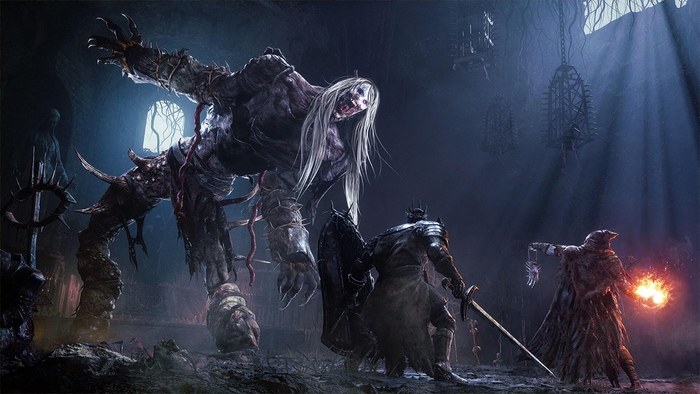
These adjustments don't always work. Sometimes a harsh difficulty is necessary to the story or feeling a game is trying to convey. For example, if Demon's Souls had an easy mode it would take away the nervous feeling one gets in the pit of their stomach after treading through a swamp without having saved in the last 40 minutes. It also wouldn't encourage people to work together towards a common goal if players could simply make things easy on themselves.
Whenever I'm given a choice on what difficulty level to start at I always default to "normal," under the assumption that that's how the designers meant for the game to be played. As a veteran game player, however, I find most game's "normal" modes to be too easy. Yet I don't want to bump it up to hard in case it gets too frustrating near the end. Decisions, decisions...
By setting wide variables for difficulty, games can personalize the experience, often without letting you know they're doing it. Through optional goals with worthwhile incentives, players will naturally gravitate to the level they're most comfortable with. Ordering outside the menu doesn't have to be scary.
[Jeffrey Matulef is a freelance writer whose work can be found at G4TV.com, Eurogamer, Paste, and Joystiq among other places. He's also a regular on the Big Red Potion podcast. You can contact him at jmatulef at gmail dot com.]
|
| |
|
|
I only remember one difficulty spike when I decided to play Orzammar first (solved by doing it halfway and coming back later), but when I played the Awakening expansion, I should have bumped it up to Hard because Normal in the expansion was too easy for me.
DA2's difficulty is probably quite different now that Friendly Fire is only in Nightmare mode.
I can give credits that despite the annoying camera and other annoyances such as party AI, it wasnt that bad...there was parts i couldnt get through except for some rethinking on how to cheese the upcomming fight...and those moments are what its all about.
But tedius encounter design just made me *bleh* the whole thing, i began to turn to easy moderate back and forth during the "derp roads"(yes im a codexer), and after i while i just set it to easy for the rest of the game, because frankly...it drained me..i just wanted the fights over with as quick as possible.
I think...if you can make the gameplay...INTERESTING...FUN!...difficutly shouldnt be an issue.
Remember, challenge is the key aspect of a game.
Also...more to your point....RPG's should throw you variation in combat difficulty, else how the hell are you going to test out your character created.
I think something that may help is to have some sort of common vocabulary to describe difficulty in games. Clearly, there are many ways of approaching the issue (as you've provided in your article), so the better we can put words to these approaches the better consumers can find their kind of game, and the better developers can market to their target audience. One example that has emerged is "easy to learn, difficult to master." But how would one describe Demon's Souls? "Punishing but fair?" Point is, different games have different "personalities", and I think it'd do the industry some good to coin more of these phrases to describe them.