My Message close
GAME JOBS
Latest Blogs
spacer View All     Post     RSS spacer
 
May 21, 2013
 
Using Small Studios As Stepping Stones In Your Career
 
How Can You Find Jobs At Blizzard if You're an Artist?
 
Let’s produce HTML5 games with a serious approach.
 
An Object Of Lust
 
Gamasutra Blog Guidelines - Updated and open for discussion [11]
spacer
Latest Jobs
spacer View All     Post a Job     RSS spacer
 
May 21, 2013
 
Insomniac Games
Engine Programmer
 
Vicarious Visions / Activision
Senior UI Artist-Vicarious Visions
 
Treyarch / Activision
Sr. UX Designer
 
The Workshop
Character Artist
 
Trendy Entertainment
Marketing Producer
 
Visual Concepts
Game Build Engineer - 2K Sports
spacer
Latest Press Releases
spacer View All     RSS spacer
 
May 21, 2013
 
Rolling Hero goes free on
the App Store
 
Dragon’s Prophet
Open Beta Announcement
 
Wargaming
Presents Weekend at
War 
 
Trucker: Parking
Simulator reaches 1
million...
 
Permanent price drop for
Guild Wars 2
spacer
About
spacer Editor-In-Chief:
Kris Graft
Blog Director:
Christian Nutt
Senior Contributing Editor:
Brandon Sheffield
News Editors:
Mike Rose, Kris Ligman
Editors-At-Large:
Leigh Alexander, Chris Morris
Advertising:
Jennifer Sulik
Recruitment:
Gina Gross
Education:
Gillian Crowley
 
Contact Gamasutra
 
Report a Problem
 
Submit News
 
Comment Guidelines
Sponsor

 
GDC Online:  Marvel Super Hero Squad Online  - When Grown-Ups Make A Kids' MMO
GDC Online: Marvel Super Hero Squad Online - When Grown-Ups Make A Kids' MMO
 

October 13, 2011   |   By Kris Graft

Comments 1 comments

More: Social/Online, GDC Online, Design


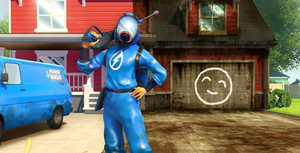
At GDC Online in Austin, TX, Amazing Society VP and founder Jason Robar and director of games Jay Minn described some of the key highlights and challenges of development for their kid-focused MMO, Marvel Super Hero Squad Online.

Gazillion-owned Amazing Society launched the Unity-powered, subscription- and microtransactions-supported MMORPG in April this year in a partnership with comic book and licensing giant Marvel.

Part of making a successful MMO for kids, said Robar, is knowing kids. The average age of the staff at Amazing Society is 38 years old, and many of them have children.
"We really wanted to solve the Candy Land problem," said Robar. The "Candy Land" problem happens when a kid asks a parent to play Candy Land. The parent has fond memories of Candy Land as a kid, so the adult plays the game, but then the parent soon realizes the game just isn't fun.

"We wanted to give something that was playable by the parents and the kids," said Robar. "The biggest shift in our industry is that [the first generation of gamers] have got kids... We want to share our primary form of entertainment with our kids."

Kids also played an important, direct role in the creation of the game. Minn and Robar showed off a reel of kids the team interviewed who playtested the MMO. Some kids gave five or ten – out of four – stars. One gave it three-thumbs up.

The target demographic was 6-12 year old boys, or 1st to 6th graders, said Robar. During development, kids came in to playtest the game every month. One area where Amazing Society fell short, however, was that the regular playtesting did not continue post-launch, until the game was readying to launch in Korea.

"Constant user focus and constant usability testing is key," Robar said.

While the target demographic only has a range of a few years, the difference of tastes between even a six-year-old and an eight-year-old can vary drastically. That's why the MSHSO team created a wide range of areas and activities that different users can take part in, whether it's solo, cooperative or competitive play.

"I like to call it a superhero theme park, there are different rides for everyone," said Minn.

Robar added that accessibility for children was important for the success of the MMO. The developer made the game "impossible" to fail. If a character dies, the superhero just respawns. It's the degree and speed of success that varies depending on performance.

"[Kids] want to succeed. They hate failure," said Robar. Parents know that kids get very discouraged that first time they try to ride a bike or fail at sports, for example. "The first time they fail, it's the worst thing ever -- they take it very personally." Robar said.

Robar said one of the design goals for the MMO was to create short, 15-minute play sessions, in order to address short attention spans and lack of free time.

The team also found out that even though game critics might slam "repetitive" games, kids don't seem to mind repetition at all. "They don't mind laying the same game over and over again," said Robar. "There's some science behind that. It leads to mastery."

Making the game fun right away was also important to Amazing Society. The team implemented rapid level progression. "Your level one guy has a full attack chain, so it's fun right away," said Minn. "… A level one guy and max level guy can still play together and still have fun."

To Minn, creating a game that feels great at its very foundation was extremely important. He wanted to make sure that the game felt good right down to the click of the mouse, and build on top of that. "A lot of times, people feel that they [should] build from a system level downwards, but I [work from the] bottom up. That click must be fun," said Minn.

Despite some hiccups with Scrum development, the fact that players were burning through content fast, the lack of microtransactions set up at launch and some other missed launch goals, Robar and Minn gave the impression that development of the MMO was a good experience overall.

Robar said "maybe once" some staff came into the office on the weekend to do a couple hours of work. But for the most part, "We actually had a Monday through Friday shop going all the way up through launch," a statement meant with applause by the game developer audience.

At the conception of the project, Robar was determined to "have a reasonable work-life balance" for the studio. He added, "Eighty-five percent [of staff were] married at the start, and 85 percent were married at the end!"

Minn admitted that the team had a wakeup call when the one of the studio's mottos, "When we ship, we win!" was proven wrong; the work was just about to begin when the MMO launched. The game had to gain traction in the market, and content had to be spun out in time for all of the major summer superhero movies released over the summer.

It wasn't a case of "Field of Dreams," where "if you build it they will come." But the team did get the game live as a "minimum viable product," and continued to iterate. Amazing Society released superhero expansion packs in time with movie releases, leveraging the marketing buzz around films like Thor, X-Men: First Class and Captain America -- but not without a few unwanted bugs that popped up from the rush to release.

Robar also showed off a series of metrics, such as the fact that players play the MMO in spikes during Fridays and Saturdays. He said, "We think the true hockey stick [sharp rise in usage] is still coming for us." At the same time, with all these metrics and charts available post-launch, the team has to stay focused on developing for fun -- the way they did pre-launch, with a game that earned "10s out of 5s" from the kid playtesters.

Robar warned, "If your entire game is metrics driven… sometimes fun is not part of your measurement. You get lost so much in the data that you forget that it's entertainment."
 
 
Top Stories

image
Unity's mobile licenses are now free
image
Watch the next Xbox unveiled live
image
Market's ready for new consoles, but old-gen surprisingly viable
image
The next Xbox: What Microsoft needs to reveal this week


Comments

Mary SchenckRoss
profile image
Congratulations, Jason! Well-done.


none
 
Comment:


UBM Tech