For the past 4 months we have been developing two titles for PlayStation® Mobile – ‘Life of Pixel’ and ‘MegaBlast’... here are the games and our experiences.
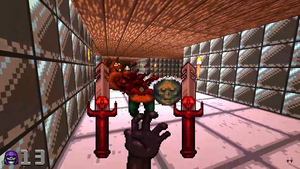
Life of PixelPlatform puzzle goodness set within a world of classic game machines; Atari 2600, ZX81, ZX Spectrum, C64, CPC, BBC, NES.
Each ‘World’ is set within one of those classic machines, and all graphics were created using the pixel resolution and palette restrictions of the machines.
This was a bit of a personal dream project as I never got to do game art for the older 8-bit machines, and it has been fantastic exploring the limitations of each machine and creating level graphics and sprites within those limitations, yet trying to make them look as good as possible.
I think since I started working in games, back in 1998, this has been the project I have enjoyed working on the most.
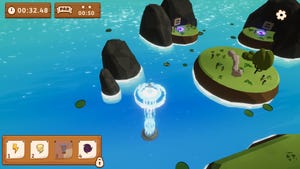
MegaBlastMegaBlast is an intense old skool score-attack arcade shooter influenced by classic space shooters.
I wanted to do something similar in style to the original Arcade shooters like Space Invaders and Galaga, yet with an updated take on them, both gameplay wise and graphically. So lots of experimentation with glow effects, vector art and so on.
A game that is all about high scores – well, and rankings too as I liked the idea of earning a new ranking as you do better and better. One day I will be a Fleet Admiral!
We are now in the final stages of testing and bug fixes for MegaBlast, and Life of Pixel has been submitted to Sony QA. As we are so close to completion I thought now would be a good time to put together a blog entry on our PSM development experiences.
2D OR 3DInitially we started out doing two 3D titles, but this triggered one of the most stressful ever working experiences of my career to date. It was hellish – taking more and more time on development but not really getting anywhere. We were trying to convert our 3D engine AND a game from C++ to C# to run on a system that was too underpowered to handle it (the C# code on PSM is run on a virtual machine, which is currently significantly slower than Vita native performance).
Now I am sure a 3D engine designed specifically for PSM may work, particularly if you are a ninja C# genius coder, but we couldn’t do it… The performance just wasn’t there – we’d have had games running at about 5FPS! All very VERY stressful, but then we had a good idea, we binned both games and switched to 2D with two new game designs.
We used the Sony 2D PSM libs, and from that point on the development process became an enjoyable one, rather than a death march. There are many more 2D Sony examples for PSM than 3D, and with the SDK performance being a bit (lot) of an issue at the moment I’d certainly recommend going with 2D.
I’d like to think Sony will address the performance issues, but I haven’t really heard anything to suggest that is being done. Fingers crossed though!
THE SDKThe SDK is good to work with – everything you need all in one place, along with the incredibly useful ability to test on PC via the simulator or directly on hardware. The simulator is spot-on too; matches pretty much exactly the hardware output – the only slight difference is that performance on hardware varies, with the Experia outperforming the Vita by quite some margin. I’m hopeful that this will be improved over the coming weeks with Vita performance matching/exceeding Experia (which is what you would expect).
There are also some decent code examples provided by Sony – for both of our titles we used Sony’s own 2D engine library, and it was pretty decent.
The UI Composer looks excellent too, although we didn’t need to use it given the simplicity of our menus, but it looks like it could be a huge time saver.
Another plus point for the PC simulator is that it makes it very easy to put together marketing materials such as screen-shots and gameplay videos, as you can use any PC applications to do this (such as Camtasia to record video footage).
PREPARING FOR SUBMISSIONIt was a relief to learn that the submission process was nice and straightforward – you need to prepare icons in 3 sizes (128×128, 256×256 & 512×512), plus a banner and up to 10 screen-shots. The only fly in the ointment is that you have to get your Meta (shop) text translated into a number of languages – English, French, Italian, German, and Spanish & Japanese. The best advice I can give (if you are on a tight budget like us) is to keep the text as concise as possible to keep costs down. If you shop around for translators you should be able to get the translations do for under 150 Euros.
Don’t forget to make sure it still makes the game sound sexy though, as this is your direct sales spiel!
Age Ratings:Unlike PSN and Minis, you don’t need to pay for ratings – you use PEGI express and ESRB short-form, both of which are free of charge. Looks like this is becoming the norm now for downloadable games – and both the PEGI and ESRB systems are super easy to use and completely hassle free. Yay
http://psm-rating.pegi.eu/Games/Submithttps://appratingtool.esrb.org/ARTcl...ionMobile.aspxSONY & THE FUTURESCEE have been very pro-active in sourcing content for PSM, and I believe this is something they should continue to do, as PSM will be a hard sell for many developers. If it becomes a marketplace similar to Minis, it should attract plenty of support as generally all Minis earned a few thousand in sales revenue. This is an attractive prospect compared to iOS or Android, where there is a very strong possibility your new title will earn next to nothing (you only hear about the big hits, but there are thousands of great titles with dire sales).
The biggest kicker right now with PSM is the complete lack of a cross-platform development strategy. Currently to get a PSM title onto say iOS requires a significant about of work; essentially a re-write. There are no cross-platform engine tools out there either, except for Monkey, but the PSM performance of Monkey is dire. This is a big contrast to iOS and Android, where you have Unity, UDK, GameMaker, AGK, Cocos2D, Game Salad and more.
It is very much a platform out on its own – so IMHO only good sales performance and decent revenue for all titles will provide PSM with a future. I hope it does continue to grow, as from a developer perspective a relatively unsaturated marketplace on great hardware is an exciting prospect (the Vita really is a superb games machine).
But based on observations on the number of ratings titles get, they are more or less comparable to Minis.
Unfortunately, that's the Minis program in the last year or so, not at launch.
And some games have been on PSM and seemingly bombed. Often there is a reason for that - games from Japan seem to be well, very Japanese and over priced for the US market. And some European games also don't seem suited, either, for instance, some company released a Cricket umpring trivia game.
Cricket is not at all popular in NA, to put it mildly, and after a month (6 weeks?) it still doesn't even have a single rating.
With a few exceptions, the quality of PSM games has been atrocious. And I think it's only going to get worse, as we've only seen the games hand-selected by Sony for release.
Aside from some MonoDevelop-specific bugs and the comments in Sony's code samples being in Japanese there's really nothing negative I can say about it. The simulator works well and the version of MonoDevelop that comes with it is well-configured. Plug in a compatible device and it pops up as a target device to deploy to. It's as easy to set up and deploy games with as XNA is.
I believe PSM support has been recently added to MonoGame.
https://github.com/mono/MonoGame/wiki
Still waiting for the big hit, but there's already some decent PSM games out there...nothing really scream must-have yet...
I think PSN.store.com covers everything that gets released on the platform...but the scores are usually generous...