It's free to join Gamasutra!|Have a question? Want to know who runs this site? Here you go.|Targeting the game development market with your product or service? Get info on advertising here.||For altering your contact information or changing email subscription preferences.
Registered members can log in here.Back to the home page.

Search articles, jobs, buyers guide, and more.

by Troy Dunniway
[Author's Bio]
Gamasutra
November 27, 2000

Printer Friendly Version
 
Discuss this Article

Letters to the Editor:
Write a letter
View all letters


Features

Using the Hero's Journey in Games

Contents

A Story Structure

The Hero's Journey

How Do I Design With It?

How Do I Design With It?

Creating an outline that combines a nine act story structure, the hero's journey and a game level layout is the first step in figuring out what you need to do. Each step of the hero's journey can fit into the nine-act story structure, but there is a lot of room for interpretation. Once you have a rough idea of how the different stages of the hero's journey fit into the nine act story structure you can then begin to figure out how your levels fit into this structure. I have used this same structure to develop everyting from a small 10 level game to a fairly large 50 level game, but I find it works the best with a 15-25 level game. Listing One provides a sample structure. This is a generic breakdown I use to help me begin laying out levels and story ideas. It is possible that your story isn't really a true hero's journey, but you may be surprised to find out that it is in many ways. The goal of this breakdown is to draw out a rough guide to follow as I write. While I usually write out a few paragraphs of general ideas before starting with this outline it is good to spend some time filling in the blanks before you start writing the first draft, especially if you only have a very vague story in mind.

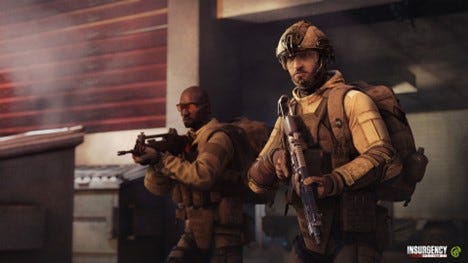
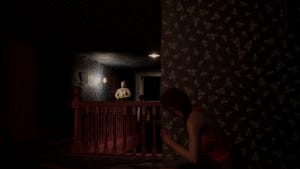
Screen shot from Blademasters

The most important thing is to figure out how many levels you have, and which ones already need to have a particular story line within them. The fewer levels you have, the more elements you must try to squeeze into a level. It is possible to move levels into different acts or parts of the hero's journey in order to lengthen or shorten different areas. It is also possible to cut out a chunk of levels to shorten the game -- or to add levels to lengthen the game. The general concept of what constitutes a level can be fairly vague and misleading, so make sure early on that you have a clear understanding of how large your levels will be and what will be included in each level. Some games have levels that last five minutes while some last five hours. A RPG may be one large seamless world without any true levels. If you have a large, open ended or seamless transitioning game, you'll generally still be breaking it down into regions, areas, or tasks which can still be represented just like a level. In the case of a game with really large levels, a single level may encompass many different acts of the story or different stages of the journey. Regardless, it must be fairly clear to the player which part of the story they are in, what they are trying to accomplish and why.

Game Length

One of the most important things I use in terms of structure in the early stages is an estimation of the game's length. You may be lucky enought to be able to make a game of any length, but it's important to know the scale of your game early on -- and if that scale is in line with your budget.

This chart help determine the desired amounts of game play. I use it to add up (bottom to top) to the total gameplay time desired. Your game may have other things in it to take into consideration, so think about everything the player will be doing in the course of the game.

Time
Event
Example
  Total Time of Game play 25 hours
  Length of Non-Interactive elements in the game (cut scenes) 1 hour
  Number of Levels 25
  Length of Level (times # levels) 1 hour
  Amount of time spent fighting in level 20 minutes
  Amoung of time spent exploring in level 10 minutes
  Amount of time spent problem solving in level 10 minutes
  Amount of time spent traveling in level 10 miuntes
  Amount of time waiting for something to happen (hopefully this is zero).
  Amount of time spend "doing other stuff" in level 10 minutes
 
Additional Things to Calculate
  Number of Main Characters 5
  Number of Secondary Characters 75
  Number of enemies in typical level 75


Usually, you must also take into account things like replay ability. You may want a person to finish a game in 25 hours the first time they play it, or maybe in just ten but with additional multiplayer aspects and a unique second pass adding up to 25 hours. Many role-playing games can easily take 50-75 hours to complete. Breaking down the time it takes to do each task in the game will go a long way in telling you how large a level must be, how much interaction should be included and how many events must take place.

This chart will also help you start thinking about how often enemy characters will be faced in the game. Typically a major villian will involve a long climactic fight or experience while a secondary enemy rates only a short fight. Most of the time the player will face many of the secondary characters over and over in the game. Getting an idea early on about how many characters you want in a level it will help you determine the length of your game. Also, as you get farther into your story, this chart also becomes a great place to begin laying out the location of key cut scenes and events in the game.

Using the Hero's Journey

Begin using the outline of the hero's journey by filling in the known blanks, my example is available in Listing One. Start with how little or how much you know and then use the guidelines for a hero's journey to fill in the blanks. The outline will often tell you what should go into your blank spots, it also is another good initial guide to get you thinking about different characters and how they fit into the story. I find it useful to add additional lines that say "Introduce Good Character #1" or "Fight Bad Character #2", when you know that you need to have an additional character, and then you can later decide which character fits into that spot. A great place to introduce characters is during the beginning of the fourth act (link #3) when the main character often finds some new ally to help him.

The initial story concept doesn't have to be precise or perfect, but it gives you something on which to build. Sometimes using this outline as a brainstorming tool is very helpful. You may know that the hero has to start somewhere and get to somewhere else, so now you have the beginning and the end (hey, it's a start!). As you think about the different stages of the journey and how they relate to the different acts of the story, you'll begin to realize that certain things can only happen in certain places. This makes it much easier to start filling in the blanks because you know that there are points in the story where conflict must exist, and that the conflict is generated for a reason. Your job is just to figure out how to make it fun and interesting.

Keep in mind that much of this is not meant to be taken literally, but metaphorically. There are many kinds of heroes and many kinds of ways to explain how to use this outline, but with a little imagination and some hard thinking you should be able to come up with a very interesting and compelling story.

As you fill in story details by act or by the hero's journey, the levels must also begin to fit into this rough shell. In this way you know that levels five (link#2) and six fall into the third act as part of the hero's journey "Into the Special Fantasy World". These levels are typically about the player entering into the new world, perhaps by trying to sneak into a castle or by flying their spaceship safely into the enemy's universe undetected.

Having the story take place in a single location throughout the game can be very boring. Take a look at any good James Bond movie, and you'll notice that he almost always travels to several locations, usually three, throughout the movie. If the game travels to a really wide variety of locations then you'll find that it becomes hard to come up with reasons why the player is constantly on the move. A few types of games, like a space combat or exploration games, might use this to their advantage, but it has to be done carefully. Having three different locations in the game will add enough variety to the game to keep it interesting, but not so much as to make it more difficult to produce. The point of having a new location in the game is to add interest and variety for the player. When you're laying out your game structure, think about having it progress to several different locations, this will also help you think of some new ideas on some levels because you are either having to transition to a new area or are exploring one.

It's really hard to write a story or design a game without taking into effect all the other potential problems, restrictions, needs and requirements that your game will have. If you spend tons of time writing a great story that takes places on twenty different planets, over the course of a hundred years, and meets hundreds of characters without taking into consideration all of your limitations, then you will have to spend a lot of time reworking your story or figuring out how to limit it in some way. If you've read the entire Dune series of books, and you were given the task of making a game based on this license (Westwood did a great job with Dune II but the story is very minimal), you would know how difficult it would be to make a game encompassing that entire universe. It's better to start off with a simple story and refine it slowly over time. Start with events that relate to the levels, and then progressively refine the rest of the events in the story. There is room to polish the story and the dialog later, so the most important thing in the beginning is to make your story fit the game play and vice versa.

I find it critical to design into the game a few extra levels that can be cut if time becomes a problem. If you have 20-25 levels in a game, it is not important to have critical story elements in each level. So if you design 15-20% of your levels as non-plot specific, it will save you a great amount of headache down the road when your producer comes to you and says that you have to cut five levels from the game because it is taking too long to make. As a writer and a designer, this can be a horrible experience because every level is usually somehow important. Inevitably, games tend to be overly ambitious and get scaled back. The best way to do this is by using sub-plots. A sub-plot should be a short diversion for the character to go on for awhile, that may have little to no ramifications for the whole story, but allows the character to explore the world some more or accomplish some additional tasks to fill some time.

There is no set way to create a new game and story, but hopefully this technique can help you apply what mankind has learned in other mediums over a long periods of time to your game designs and make a more successful game. Just make sure that your journey to create the game is a heroic one.


Additional References
I would highly recommend reading these three books and articles, and any additional books and material by these authors.

"Hero with a thousand faces" Joseph Campbell - http://www.jcf.org/27wm.htm

The Writers Journey Christopher Vogler - http://writerscomputer.com/cgi-bin/SoftCart.exe/store/info/writers_journey.htm?E+writers

Conflict Action and Suspense William Noble, ISBN: 0898799074

"Nine Act Story Structure" by David Siegel - http://www.dsiegel.com/film/Film_home.html

Mythic Structure in Role-Playing Games J. Patrick McDonald - http://www.interink.com/~jpm/myth.html


Other Articles on story structure and the hero's journey:
http://www.dailyobjectivist.com/Spir/mythology.asp
http://www.swin.edu.au/lib/melinda/mine/herojour.htm
http://tech-head.com/story3.htm


Discuss this article in Gamasutra's discussion forums

________________________________________________________

[Back To] A Story Structure


join | contact us | advertise | write | my profile
news | features | companies | jobs | resumes | education | product guide | projects | store


Copyright © 2003 CMP Media LLC

privacy policy
| terms of service