| |
|
|
||||
![]() |
||||||
| |
|
|||||
|
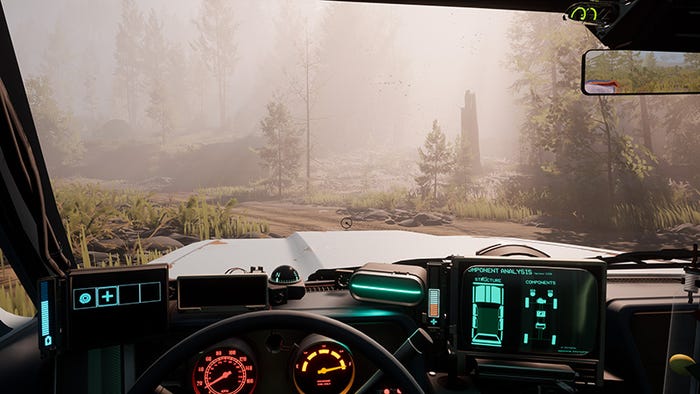
Guidelines for Developing Successful Games Interface Goals: Intuitive, Easy to Use, & Minimize Frustration The interface often is treated as an afterthought because it rarely has the ability to create the same sensation for the player as gameplay features, graphics, sound effects, and music can do. No one gets excited about how a game drops down menus or presents buttons. While the interface has little chance to dramatically enhance a game, there is a great risk, however, that poor interface design can do real harm. Keep in mind that capturing the player's imagination with great gameplay, visuals, and sound is only half the battle. Giving the player easy access to all of these cool effects without frustration is just as important. A confusing, difficult, and frustrating interface can ruin a game. Players encountering these problems in their first play session may easily lose interest and give up. Minimize
the layers of an interface (menus within menus), and control options (being
able to play the Age of Empires series using only a mouse is a
good thing). Providing an interesting and absorbing tutorial is important,
otherwise learning controls and operations can be daunting if the player
must learn a huge amount of information before beginning play. Provide Multiple Gaming Experiences within the Box To help reach a broad audience, include a variety of game types and adjustable game parameters that combine to create a range of different gaming experiences in a number different ways, all within the same game. Examples of different gaming experiences with the Age of Empires series are multiplayer death matches, single player campaigns, random map games, cooperative play games, king of the hill games, and wonder races. Victory conditions, map types, and level of difficulty settings are examples of parameters that can be adjusted to create different gaming experiences. Multiple options in each dimension (variable parameter) create a volume of different game types. For example, we want the smartest kid in the school (a hardcore gamer) telling his friends that our game is his favorite. When those friends buy our game, they probably won't be able to compete with him, but by adjusting those parameters, they can still find a type of game that suits them while still providing an enjoyable gaming experience. The average kids and the smart kids can both enjoy our game, although they play different parts of it. When we
provide a variety of gaming experiences within the single box, we increase
the number of people who can buy our game and be happy with it. Each of
these successful customers becomes in turn a potential evangelist for
our product. Player Investments Some of the most successful games require the player to invest in the experience of play by building empires, character statistics, or city infrastructures. Players enjoy creating within a game, taking possession of their creations, molding them to their personal taste, and using them to further their game goals. Examples of games requiring player investment include Sim City (city infrastructure), Diablo (character statistics), and Age of Kings (empire and technology). Building, defending, and using in-game investments create a strong bond between the player and the game.
Facilitate Consumer Content Player's
enjoy creating additional content for their favorite games, whether it
is new planes for Flight Simulator, skins for their favorite shooter,
or scenarios for Age of Kings. They get a chance to be a game designer,
create the add-on they want (but that does not exist), and see their own
work running on-screen. Players get a chance to be game designers. Consumer
content lengthens the working life of a game, and helps increase awareness
of it in the marketplace. Replayability It is better
to create a game that can be played over and over, rather than one that
is usually played only once. Providing replayability increases consumer
satisfaction and the perceived value of the game. The AOE series
provides replayability through randomly generated worlds, a variety of
maps and game types, and multiple civilizations. Story The storyline
in a game (or narrative) consists of a series of events that extend from
start to completion (victory condition). A great storyline keeps the player
intrigued and playing, thereby increasing satisfaction. The story told
through gameplay depends on the topic and victory condition, plus the
hurdles the player must overcome to reach victory. A great story uses
plot twists, reversal of fortune, and other ploys to keep the player interested.
Adventure games require that the designer writes the story and the player
acts it out. RTS games usually provide an empty map instead of a story,
like an empty page, where the player writes the story as they play. Quality vs. Budget and Schedule An extraordinary game that ships late makes its money in the long run, and has positive effects on customer satisfaction, the franchise, and developer/publisher reputations. A mediocre game that ships on time is a disaster (financial, brand, reputation). Game development
is more of an art than a science, and therefore difficult to predict.
Developers must demonstrate that a project is making good progress toward
a goal, and publishers must assess that progress. There is no reasonable
justification for major compromises in the quality of a product; make
a great game or kill it early. One of the values of early prototyping
is that it can reveal whether or not a game is going to work early on
in development. Gameplay vs. Realism or History We are in
the entertainment business, not simulation or education. Our priority
is to create fun and engaging gameplay. Realism and historical information
are resources or props we use to add interest, story, and character to
the problems we are posing for the player. That is not to say that realism
and historic fact have no importance, they are just not the highest priority.
Any education that follows from playing our games is a very positive,
though secondary, benefit. This is a great marketing point, and it adds
to the reputation of the developer and publisher. Polish the game Reserve time at the end of a project to polish the game by adding the little necessary touches, bringing all of the elements to a high production value standard. Test rigorously to insure balance (where appropriate), to eliminate any potentially fatal gameplay flaws, and to insure that there is no single optimal winning strategy (or unit, or spell, etc.). When the game reaches the customer, we want them to feel that every aspect of the game was well planned and executed. Polish tells our customers that we took the time and made the effort to craft an extraordinary product. Polishing a game increases customer satisfaction, enhances the reputation of the developer and publisher, and builds fan loyalty. Lack of polish has a negative effect on all of these areas, working against the goals of everyone involved in development. There is no acceptable excuse for not polishing a game. If you cannot afford to polish, you are in the wrong business or your team was inadequate (too small or unskilled). Nearly done is not an acceptable standard if you are going for the gold. Discuss this article in Gamasutra's discussion forum. ______________________________________________________ |
||||||||||||||||||||||||||
|
|