|
Designer's
Notebook

Bad Game Designer,
No Twinkie! V
It's time once again for The Designer's Notebook's annual compendium
of goofs, screw-ups, and errors of judgment or tastethose elements
that make a videogame less than what it should be. These Twinkie Denial
Conditions (TDCs) aren't restricted to bad games only; sometimes they're
just one blemish on an otherwise good game.
Almost all of these have been sent to me by readers (and if you
have some choice remarks about designers who don't deserve their
Twinkies, I'd like to hear from you too, at notwinkie@designersnotebook.com).
Unfortunately, I'm not rich enough to afford a PS2, an Xbox, a GameCube,
a Dreamcast, a GBA, and a top-end PC, all at the same time, so I
haven't been able to verify for myself all the examples mentioned.
But even if a detail or two is wrong, it's the principle that matters.
Wrecking a Game's Balance for the Sake of A
"Cool Feature"
Bryan Buschmann writes:
"The most recent gem I know of is from the makers of Silent
Storm. They hand you a big box of turn based stealth action
in a World War II setting. And then in the course of one mission,
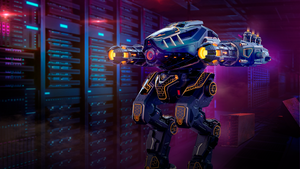
throw in walking tanks that are literally invulnerable to everything
except the new weapon that exists only as a) a giant, unwieldy
laser cannon you've never seen before, and b) a laser mounted
on one of these walking monstrosities. Once you've found and used
these laser weapons to kill the person inside the walking tank
(not the tank itself), you can get into the walking tank and essentially
turn your squad mates into a legion of unstoppable juggernauts
and thus totally destroy the balance of the game. It truly was
a sad moment, to see such an achievement of style and technology
wrecked in the later stages by ridiculous game design. Thankfully
in the expansion pack they listened to their user base and decided
to rework their entire implementation.
"There were people posting on the forums with such brilliance
as 'Well, if you just disregard all previous strategy that you
were doing and just do this one thing that I'm doing, it's fine!'
I don't like being told halfway through a game that my
previous play style is now invalid."
I think Bryan has summed it up pretty well. A lot of designers
succumb to this temptation. Their desire to incorporate, like, totally
awesome weapons overrides their desire to, like, balance the game
properly.
Personally, I don't know what giant walking tanks are doing in
a game about World War II anyway; it's been 60 years since D-Day
and we still don't have giant walking tanksI
doubt if we ever will, since they're totally impractical. Science
fiction, OKhistorical simulation,
not OK.
Dead Opponents Resurrected While You Sleep
Or when you save the game. Anita Ray (and several other people
as well) wrote to complain about this one. As she puts it,
"You have just successfully killed the Monumental Titan
Demon of Krall and 18,000 minions. Your health and mana are exhausted,
but now that all the titan demons are dead, the game will let
you rest so you can continue your adventures. So you rest
and discover that magically the Monumental Titan Demon and his
minions have been resurrected (probably before you've been healed,
too). You die a terrible, nasty death. This problem seems to occur
a lot after a save, too.
"This is lazy programming that kills accomplishment. It
makes saving/resting a potentially deadly encounter that frustrates
the hell out of gamers (at least me). And yet, it doesn't seem
to be unusual in RPGs. I've had this difficulty with games that
were otherwise decent (Morrowind and Baldur's Gate
pop to mind). It has caused more creative use of the English language
than the current political administration, and that's saying a
lot."
Ah, if only it could be attributed to the programmers! Sorry, Anita,
this one belongs squarely at the door of us game designers. The
whole issue of spawning and resurrection is a complicated one that
I'll deal with in a future column, but I do know one thing: when
a boss is dead, it ought to stay dead unless you reload the game
at a point before you met the boss. I'm not wild about bosses anyway,
but I recognize that they're a standard convention, so we need rules
for implementing them. A boss shouldn't be resurrected unless there's
some clear reason why it's possible (and some way to prevent it).
And a boss should certainly never re-spawn the way a normal grunt
does.
Un-configurable Controls
Someone who signs off as "Deathbliss" rants:
"I just got through playing Brute Force for the Xbox and
guess what? There is no way to map the controls the way I want
to! This is becoming more and more of a problem on the Xbox, and
I hear it's the same for the PS2. The best control mapping-scheme
I ever saw was in Quake 3 Arena for the Dreamcastthat's
the way it should be done. On the PC scene and loosely related
we have titles like Silent Hill 2WITH
NO MOUSE SUPPORT! Or Gothic, with the mouse not being something
you can configure and use the way you like."
I couldn't agree more. This is worse than a Twinkie Denial Condition;
any big commercial game that doesn't let the player reconfigure
the input devices merits withholding all snack food. This is especially
true if it's a twitch game requiring high dexterity, where a tenth
of a second counts. Configurable controls are trivial to implement,
cost next to nothing in RAM and storage space, and make your game
far more accessible. When are game designers going to realize that
human factors engineering is not just something for fighter planes
and nuclear power plants?
It needs to be done properly, though. R. Alan Monroe writes to
complain about
Bad Configuration Mechanisms
Mr. Monroe says:
"When I'm customizing the keys for a game (like an FPS)
I can click on the action and press a key, but how do I know which
keys are free, and not already bound to something else? There
are three bad ways to handle this: an error message saying the
key is already in use; the new action steals the key from the
original action; or me having to scroll up and down an endless
list in a little bitty window to see if it's already taken.
"How about: a) showing a list of all unbound keys, or b)
displaying the key remapping list full screen with four or five
columns, so I can see all of them at once?"
Once again, getting this right is just as easy as getting it wrong
and costs nothing, so why not do it right?
Out-Of-Sequence Checkpoints
This one's a little bit difficult to describe in generic terms,
so I'm going to let Jason Seip put it in his own words with a specific
example. He says it happened in Splinter Cell for the GameCube
and was just "a bad moment in a good game."
"I was in a building that was about to be destroyed by a
bomb. I misinterpreted my orders, thinking I was supposed to escape,
when in reality I was supposed to find and defuse the bomb. Checkpoint
A was the moment I was told about the bomb and shown how much
time remained before detonation. I ran as fast as I could through
the level, bypassing the room with the bomb, and further fighting
my way past enemy soldiers. Just before time ran out I passed
a checkpoint ("B") and thought I had succeeded, only
to have my game end about 5 seconds later due to the bomb going
off. When my game restarted, it was at the newly acquired checkpoint,
so the bomb went off again after 5 seconds. This kept happening
over and over, with no chance of me backtracking to resolve the
issue."
The moral, he says, is: "Don't let the player reach checkpoint
B if he or she hasn't satisfied the requirements of checkpoint A."
Checkpoint B should have been in some area that was completely inaccessible
to the player until the bomb was defused.
Jason actually ran across one of the fundamental conundrums of
linear interactive narratives: the Problem of Narrative Flow. How
do you make sure that the player has done everything he needs to
do by the time he arrives at the dramatic climax of your story,
when you don't control his actions? There are various solutions,
one of the simplest being: unlock the doors to the dramatic climax
one at a time, so the player can't get there until he or
she is ready. Jason actually got ahead of the story by skipping
a step, so the story took a wrong turn and came to a dead end.
Yet More Fantasy-Killing Elements
In my very first No Twinkie episode, I mentioned fantasy-killing
elements: elements of the game that are so stupid or inappropriate
that they destroy your sense of immersion. As you can imagine, this
covers a wide range of blunders. Gregg Tavares rings in with a few:
Music that doesn't fit the game. In many games an emotional
connection to the game is important. Music helps create this emotion
when done correctly (scored like a movie, for instance) and detracts
when not (generic peppy "game" music, licensed music,
user-selectable music, and so on). [I would add that the popular
practice of licensing completely inappropriate bands to do music
for a game is just as aesthetically bankrupt as that of doing it
for movies. M.C. Hammer for The Addams Family? Excuse me?
Thats marketing gone mad. Ernest]
In-game dialog that refers to real-world things. In Metal
Gear Solid, Commander calls Snake on the walkie-talkie and says
something like "Snake, to open the hatch press A on the control
pad." Huh? In real life no one would refer to a control pad,
because it's outside of the games world. Grand Theft Auto
3 has a better implementation. In GTA3 game characters
stay in character 100 percent of the time, and gameplay-related
explanations are printed on the screen, detached from any of the
characters.
Extremely ridiculous situations. This of course happens
in lots of Hollywood movies too. For example, you've got 18 hours
to stop an atomic bomb going off. Oh, I know, let's spend lots of
precious minutes flirting with an in-game character (Metal Gear
Solid). The world ends tomorrow, so let's go to an amusement
park (Final Fantasy 7). I'm around the corner from a guard
about three feet away, so let's have a conversation on the communicator
with the commander (MGS again).
Uninterruptible Movies
Jerry Strand and "loganb" both wrote to complain about
movies that you couldnt interrupt. Sometimes they're incredibly
long intros that you have to sit through every time you start the
game; sometimes they're cut-scenes that play right after a save
point. If you keep getting killed and have to reload from that save
point, you have to see the movie again. I'll add some more: the
uninterruptible 15-second spell-effect movies in Final Fantasy
8. (I haven't played the others in this series, so I don't know
if they're all guilty of this or not.) They're impressive the first
time, interesting the next three or four, and exceedingly tiresome
from then on. It discourages you from casting the spell or even
playing the game after a while.
Now, I actually like cinematics in games (Dogma 2001 notwithstanding),
so long as they're well executed, short and sweet, visually compatible
with the rest of the game, and actually add something to the plot.
Unfortunately, a harmonic convergence of all these qualities only
occurs in about 25 percent of the cases. The rest of the time, they're
corny, irrelevant, or both, and I want to button through them and
get on with playing the game. Once again, the fix for this is trivialso
do it!
Conclusion
That's it for this edition of Bad Game Designer, No Twinkie! Thanks
to all those who wrote in and apologies to those whose suggestions
I didn't have room for. But keep those cards and letters coming
to notwinkie@designersnotebook.com,
because all of you can play far more games in a yearand
spot far more Twinkie Denial Conditionsthan
I can.
|