'A Journalist Bent' is a regular column in which our roving reporter takes a hard look at all the issues of gaming, games development, and the games themselves. This week's column looks in the mirror.
Word Science
There's something I want to add to the recent discussions about the state of writing about games. To begin with we'll need some background, so take a glance at this much-discussed article by Esquire's Chuck Klosterman, and this response from Wired News' Clive Thompson.
Towards the end of his response Thompson begins to touch on what I think is the real issue behind the state of games writing, when he says: "Do the math: A serious RPG or first-person shooter or strategy game might take 40 or 50 hours to complete. Even if serious critics don't have time to finish a game, they ought to spend at least 10 hours to experience its complexity. So ask yourself this question: If movies took 50 hours to watch, would there be any movie critics?"
Thompson says not, but he's wrong. After all, my girlfriend regularly sits down to watch entire seasons of Buffy at a single sitting, and she's not the only one. People are always insane enough to indulge themselves completely in something they want to love.
Hell, I've sat through eleven hours of Matthew Barney's Cremaster Cycle in an squalid arthouse cinema because I wanted to know more about films. I'm certain that even if all films were that excruciating there would still be a handful of folks who would want to see them and write about them.
Nevertheless, Thompson goes on to expand the point into a more useful conclusion: "How exactly would a single critic remain authoritative? Pauline Kael watched, like, 10 movies a week. You couldn't play 10 games all the way through in a week if you tried; there are not enough hours in the day."
Knowing Lots About Things
We all know how valid these points are: the film critic who has only seen Jerry Bruckheimer films is going to have a very narrow set of experiences against which base his criticism, no matter how popular or well-made those films are. Likewise, the games writer who just loves the RTS and exults over Warcraft 3 is going to begin to falter as his range of attention broadens.
The longer games take to play, or books to read, or films to watch, the smaller our range of comparable experiences becomes. I can't usefully review flight sims. It's impossible. I don't have the palette of previous experiences do so with any authority, or even much creativity. Of course I've played a number of the big sims, but I'm acutely aware that my capacity to be funny or observant about the genre is always hamstrung with uncertainty.
This brute fact is, for me, the crucial problem with writing about games: the vocabularies of many of the would-be writers (including my own) are brutally truncated by the very amount of time that is poured into singular exploits. When Quake is all you've thought about for two years, how good is your writing going to be? (In my case, it was pretty awful.)
Come Out Of Your Corner?
I've listened to gamers attack their subject from such ghetto-ized corners of experience that their judgements are wildly unfair or inaccurate. Just look at the number of people who judge MMOs from World of Warcraft, or the number of US Congressmen who judge the issue of videogames on the content of Grand Theft Auto (YouTube link, strong liberal bias...)

This isn't simply an observation about genre preferences among gamers, either. Time spent playing games is time not spent reading War And Peace or keeping up with trends in philosophy or architecture. Great film critics tend to have seen a lot of films, yes, but they also tend to be literate, politically informed and knowledgeable of music, art and broader culture.
This is the fate of the expert: they're seen as geeks when they can't communicate effectively outside a tiny circle, and rightly so. The great communicators are usually cultural omnivores, but they're also people who do not solely obsess over a small amount of intellectual terrain. Their interest must be interest itself.
What We Need
Expert critics need to be able to write convincing and useful descriptions, but they need references that lie outside of the subject matter they are referring to if they are to connect with a diverse audience. Metaphors fall too easily into familiar furrows and need new experiences to shake them up. Writers talking to writers, or gamers talking to gamers will end up delivering us conversations where the snake ends up eating its own tail.
That's not a conundrum many of us are able to deal with. Games writers simply can't keep up with all the games that are out there, and their subject is one in which being appraised of the latest developments is absolutely paramount to worthwhile commentary. Nevertheless we have to try.
When I meet other games writers, our conversations these days tend to be less about the games we enjoyed or hated, and more about the games 'you really should play'. These aren't the ones that keep us in the same ballpark as everyone else, but the ones that allow us to reappraise our judgements and make new comparisons that we might not have been capable before.
Perhaps as people learn to deal with greater and greater volumes of information the truly versatile games writer will appear - one for whom all of play is informed by everything else in life. I've been having a go myself, but I seem to get distracted by spaceships and gamepad Kung Fu...
Knock On
Ultimately, the principles of research and a broad diet of cultural influences also apply to game design. Half of this website is dedicated to exactly that observation. Gamasutra isn't about navel gazing and self-analysis, but about realising how interconnected development is with the rest of culture.
Habitually roam the familiar cloisters of fantasy and your RPG artwork is going to be generic and desirable. Spend too long pumping through Diablo and your hack 'n' slash with come away with a few too many descriptions of what Blizzard did attached to it.
Conclusion
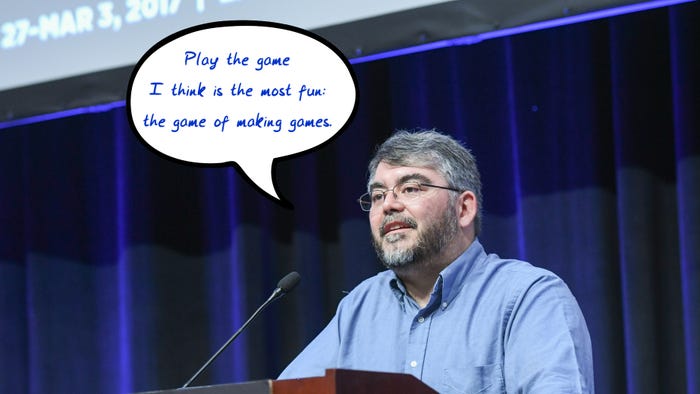
There's a reason why Will Wright is so popular to interviewers and conferences: his research covers a great deal of ground outside games. If developers are going to avoid hacks like me poking their work with a stick and mumbling about the lack of innovation in games then they need to stay a step ahead of the people trying to stay a step ahead.
Play the games, but watch the films, listen to the music, read the comics, and study the texts. Get a subscription to New Scientist - that's where the real science fiction is written these days. Videogames are, terrifyingly, the medium in which all that previous culture-stuff converges. If you we want to see greatness then we have to digest the lot. But don't worry - it's mostly delicious.
[Jim Rossignol is a freelance journalist based in the UK – his game journalism has appeared in PC Gamer UK, Edge and The London Times.]
|