|
GDC: Casual Games Summit 2006: An Introduction to Casual Games
All day
Tuesday, a board of twenty industry insiders swapped off on a series of
panels dealing with the current state of the casual game industry. To
start the proceedings, a selection of five speakers from a variegated
spectrum of backgrounds outlined the basic nature of casual games, as
they are today.
Unlike
past years, the idea this time was to present an overall "übertheme",
broken down into digestible segments. That theme, roughly hewn, was a
comparison of casual games now to where the industry was three years
ago. On that note, since 2003, the industry has gone from about fifty
million dollars in revenue, nearly all of which came from Internet
downloads, to five times that sum in downloads alone; meanwhile, other
revenue streams have become more important then before. There are now
two annual conferences, dedicated to casual games. And even just as far
as GDC representation, casual games have gone from a handful of
sessions to over twenty related sessions, including this full-day
tutorial.
Originally
the panel was to have been led by Steve Meretzky, chief game designer
for Floodgate entertainment, but he was unable to attend due to a death
in the family, his notes were quickly flashed across the projector
screen and read off.
What Are Casual Games?
The screen flashed through a series of concise definitions:
- "A game where all the rules can fit on a 3x5 index card."
- "Casual games have a short duration of play and are easy to learn."
- "Low required investments for the player (time, money, hardware requirements, etc.)."
- "A game you don't have to devote your life to."
- "Less dependency on being facile with the [hardware interface]. Games
that can be operated with the basic tools tend towards the casual.
Games that require [a dedicated input device] tend toward the hardcore."
- "Games where you never point, click, and shoot at the same time."
- "The old EA tenet of "simple, hot, and deep."
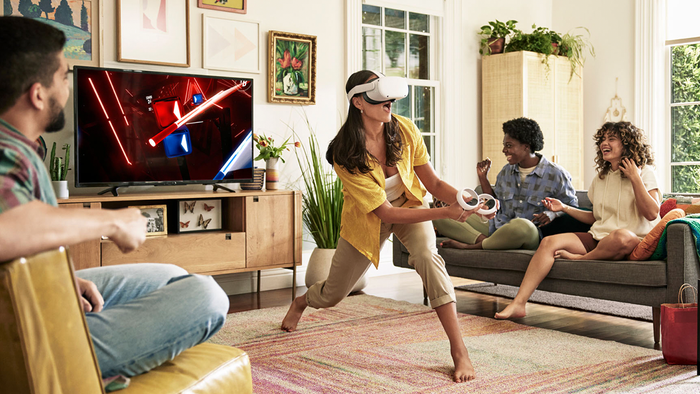
- And, of course, "If my mom can play it, it's a casual game."
To
be a bit more particular, the presentation then delved into the
specific characteristics of a casual game: that they be inexpensive;
that they have a low barrier to entry; a convenient, quick-starting
presentation; a short playtime; that they be exceptionally forgiving to
player error; and that they have a highly-replayable design.
One
might note that most of these factors could be used to describe a
successful videogame of any stripe. By this set of definitions, World of Warcraft
is a casual game in all save the time investment and (depending on
perspective and circumstances) price of play. One other factor that
helps to define a casual game is availability. A game like Rez, that would seem to meet most of these factors, is incredibly obscure, making it more of an "elite" game. Katamari Damacy
is less so, and is somewhat cheaper, though its presence on a dedicated
game machine and its distribution channels make it an unlikely title
for casual gamers to encounter without some level of indoctrination –
at least, in comparison to Yahoo! Games.
Business Models In Casual Games
James
Gwertzman, the director of business development for Popcap Games, next
dipped into the various ways to actually make money in this industry.
He outlined what he considers the four most viable business models of
today – "try 'n buy", also known as the old shareware approach;
advertising-sponsored; subscription-based; and "skill-based gaming" –
and the most enticing future prospect, that being the fabled
micro-transactions, where players buy in-game items or, as with arcade
games, pay to play.
The
idea behind the "try 'n buy" model is to entice players with a free
game, then to "upsell" – meaning, to entice them with the greater
prospects of – them to a free trial of a "deluxe" game, be it a sequel
or a more full-featured version of the game they already enjoy. Then
after the trial period is expended, put a price on it - thereby getting
the user to buy the game.
There
are the two old routes for in-game advertising: online ads and
sponsorship (which tends to include the "advergaming" contingent.
Online ads cost about five to twenty dollars per one-thousand
impressions, and they pay about one to four cents per session. Since a
session tends to contain about two ads, that means they pay around ten
to forty dollars per one-thousand impressions. Sponsorship goes for a
fixed fee, which tends to range between twenty-five thousand and one
million dollars.
Although
subscriptions are a good way for companies to build loyalty amongst
their users, they tend to be less popular with the actual consumers
(for what should be obvious reasons). They cost about five to thirty
cents per session, per subscriber. One functional model is a "Game of
the month" structure, where players pay a low monthly fee, then receive
a "free" game for every month they stay subscribed.
|
|
|
 |
 |
 |
Arcade games started out as games of chance like pachinko.
|
One
other model that's just coming into its own is known as "skill-based
gaming" – not to be confused with gambling, as it looks so similar. You
might recall that arcade games started out as games of chance (like
pachinko) before U.S. lawmakers began to crack down and the machines
evolved to incorporate a skill component (thus, pinball). So there's
actually a pretty rich connection between games and "gaming". The idea
here is, you pay cash to play against other users. The winner collects
most of the pot, while the house takes a quarter cut to split with its
partners. The typical session costs about a buck.
Lastly,
there's the eternal appeal of micro-transactions. The idea here is to
"monetize" your game through small transactions. A user pre-pays money
into a holding account, while the developer tries to find reasons for
the user to spend that virtual currency. Again, the most common routes
are to provide the player with in-game junk to buy – like power-ups and
clothing – to show off in a multiplayer context, or to simply go with
an old-fashioned pay-to-play model. Again, a lot of the new-sounding
theories here are, in principle, very old.
A Brief Look Of Casual Games
Next
up, Schelley Olhava of IDC delved more generally into the casual game
marketplace. She pointed out that the advantages of casual games
include the new gamer demographics they attract: females, non-gamers,
thirty-/forty-somethings, and "lapsed gamers" who no longer have time
or motivation to sink into deeper gaming experiences.
Key
elements driving the market include the mass adoption of broadband, the
continued evolution of the medium – graphically, aurally, in design
theory – the trendiness of advertising and sponsorship, the
preponderance of casual-themed subscription services, and a continued
tendency toward experimentation in new business models.
Possible
inhibitors include how many games there are out there – and not even
how many of them are poor; even having too many good games can result
in a glut. Conversion rates for casual gamers still aren't that hot,
meaning not a lot of people actually buy them after trying them. No
one's sure if there's any long-term demand for subscription services.
And just maybe everyone's relying a little too heavily on advertising
and sponsorship; if that avenue dries up, where will that leave the
business?
Casual Game Design
Juan
Gril of Joju Games gave his theories as to what makes a successful
casual game. His three basic rules are that: there be no obvious
violence in the game; that it takes no more than 90 seconds to
understand; and that the player can't be expected to multi-task. The
player should think, then point, and then execute; never all three at
once.
Much
as with arcade games (or what visionaries like Shigeru Miyamoto advise
of game design in general), designs should be based on a simple game
mechanic; one that's easy to play, and fun to repeat. Players should be
continuously rewarded and encouraged for positive actions. And then the
game should incorporate optional elements, which add an extra layer of
depth or challenge, to keep advanced players coming back and feeling
rewarded. Other details include making sure your game has actual
personality, through its characters, visuals, and music, and trying to
provide what Gril terms an "Aspirational Fantasy" – meaning an
idealized place to escape to; an appealing alternate world. As a
practical measure, it also helps to show the player what he'll get for
his purchase after she's played for sixty minutes.
Casual Game Production
Finally,
PopCap SF studio general manager Dave Rohrl rattled off a bunch of
details about the way casual games are currently being made. The
typical team size is around three to five members: one producer, one or
two artists, and one or two programmers. They typically take about six
to twelve months and a hundred thousand to somewhere upward of a
quarter-million dollars to produce your typical download product.
There
is an appeal in small teams and budgets, in that team members feel a
sense of ownership over their work. Projects are easy to manage. People
"wear lots of hats", so everyone has a good grip of what's going on.
Small budgets mean relatively small risk, and therefore allow for more
experimentation and – provided success – a massive return on
investment. Short schedules have a similar attraction, in that it's
easy to try out new games and genres. They also mean a lack of crunch
periods, an idea almost unheard of in the video game industry, and
allow for a great deal of audience feedback.
Again,
though, the market is getting pretty crowded. Because of that, high-end
developers are getting more willing to invest the cash to make their
games stand out – meaning startups will be finding it harder and harder
to get an edge. And casual users are getting more sophisticated,
therefore more demanding of value for their money.
_____________________________________________________
|
Comments
Login to Comment