|
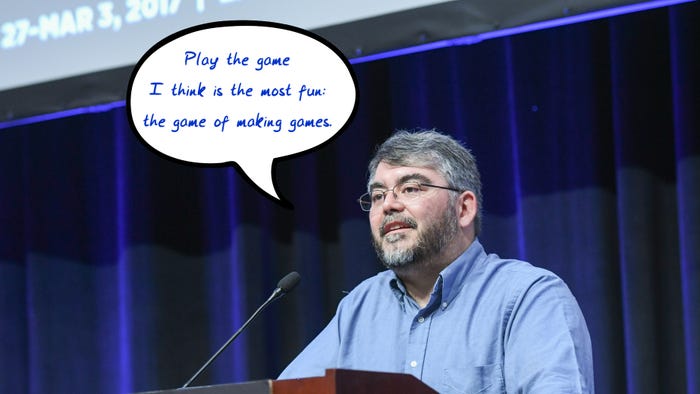
Narrative designer Patrick Redding and the team behind Far Cry
2 at Ubisoft Montreal have worked for several years to produce a game that operates outside of
the strictures of genre -- in fact, to deliver a game that operates outside of
the strictures of expectation, period.
With great attention paid to dynamic
gameplay systems and expansive design, the game has won plaudits from many
progressive-minded gamers, but has not satisfied all audiences.
Here, Redding looks back at
what the team learned over the course of its three-year development cycle,
reflects on current industry trends that informed its development and those
that will affect development in the future.
As he moves from this project into
a new, unnamed and unannounced inheritor to its innovative design at the Ubisoft
Montreal studio, Redding takes the time
to reflect on what the team truly accomplished.
Far Cry 2 has been out for a couple of months now. How
do you feel about it at this point, having completed the cycle?
Patrick Redding: Well, there are obviously lots of mixed emotions
on a game that you spent upwards of three years on. There's the weird
postpartum depression that comes from having finished the thing and having a
hard time believing that you're not actually working on it anymore. I think
everyone in the industry has experienced that at some point or another.
Then obviously, we're dealing with the more specific emotional
rollercoaster of seeing reactions to it and hearing what people say about it,
what they like, what they don't like. Obviously, there's seeing the scores come
through in your sales figures -- all that usual stuff that in one moment either
validates or crushes your dreams, right? [laughs]
What do you think of the reaction to the game? Compared to most of
the big triple-A games that are in the same market category, it seems like
there's more of a gap between people who understand what the game's going for
and those who don't.
PR: Sure. I think we're coming to grips with the fact that there
are a few challenges that a game like Far Cry 2 is up against. One is
when you create a game that is ostensibly a first-person shooter, we have to
understand that that market encompasses an awful lot of people who are not
particularly hardcore. There are guys that are going to get a fifteen-second or
ten-minute impression of a game by watching their buddy play it, and say,
"Yeah, okay. This looks cool. This is a game I want to try."
And I think that when people hear that you're releasing a first-person
shooter, they're kind of thinking in terms of this very accessible type of
experience that is going to be at least sort of similar to what they've played
if they've played Call of Duty or Half Life 2 or Halo or Gears
of War, even.
The reality is that we certainly have struggled with accessibility
issues with the game because the openness of it made us take a much more
systemic approach, for one thing. But also, it has a rhythm -- the rhythm
associated with the game is really different, because of the amount of
objective-to-objective movement, and the way the player is invited to use the
training, use the landscape as kind of a game ingredient.
And that's not something that most players have necessarily done.
But at the same time, there's also the part of the market that's totally fine
with that, and is totally anxious to see something that's new and different --
a new wrinkle in the treatment on the first-person shooter.
For them, I think our challenge is to not mislead those people by
making them think that what we've given them is some kind of RPG/first-person
shooter hybrid. There are folks who kind of compared it to Fallout 3 --
that tendency to view it as a first-person experience that involves a lot of
like exploring the world, meeting people, having conversations with them.
Players hear things like that.
Managing an inventory.
PR: Exactly. Like resource management. They hear there are
factions in the game -- that immediately implies a different kind of dynamic,
right? They're like, "Oh, why is everyone shooting at me?" [laughs]
Well, it's still a first-person shooter.
So, communicating those differences to those different parts of
the market is something I think we contended with. That's something that we're
still trying to do.
I think the reviewers who had an opportunity to take their time
with it -- not just kind of blaze away through the critical path, but got to
know the dynamics of the game world -- tended to end up giving us a very
positive reaction because they went, "Wow, okay. I understand after a
certain amount of time, this thing kind of clicks, and then I understand how to
maximize my enjoyment with it."
Obviously, some reviewers have five games they need to get through
that week, they're going to try to play it and think, "I'll sit down for a
couple of days and play Far Cry 2." And they may be left feeling a
little frustrated by it. That's something I think we dealt with. We're learning
a lot about how better to communicate.

It's an interesting game in that respect, because the movement of
a lot of shooters these days is more of a linear progression, and structuring Far
Cry 2 like that would basically make it pointless.
PR: Yeah, I think there's an agreement there with the player, and
the player has to be willing to commit themselves to that idea, and that's
fine. I don't think there's a problem with that. I think there are players out
there that are willing to.
But then the onus is on us to make sure that that commitment is
clearly spelled out in advance, right? [laughs] You know, we can't mislead them
or make them think, "I can play for fifteen minutes at a time and be
fine."
For me, a huge part of the value and quality of the game came out
of simply investing myself into the African savanna and just letting
interesting things happen as I tried to get the most out of the game's systems.
It's not only different to the "play for fifteen minutes at a time,"
it's basically the opposite of that mentality.
PR: I think a good way to think of it -- or at least the way we
thought of it -- is that a lot of what you're describing grew out of necessity,
as soon as we realized that we were going to be supporting an open world and
having to support a certain amount of exploration and a certain amount of
non-linearity.
What you're describing, that sense of being in the environment and
letting the environment kind of drive the experience, is a function of us
building that foundation. We needed to build an infrastructure, a framework for
supporting the player moving around the world kind of at his own will and using
whatever resources he wants -- whether it's vehicles, boats, on foot, or what
have you.
That's kind of like the base layer of the gameplay experience to a
certain extent, because in the absence of anything else, that's what the
experience is going to default to. Then, subsequent efforts and other
iterations of the game's development were about adding these additional layers
of experience on top of that.
So I think players may find that there are circumstances in which
some of those other layers have been throttled back a bit and they're
experiencing just the basic undistilled physical sense of being in that world.
I think that's something that we executed on well. And I think
that it's good to have a strong foundation, right? The game becomes a lot more
unpredictable and dynamic, obviously, when these other layers have an influence
and an impact on the experience. But they kind of come in and out at different
moments in the game, depending on the player's style of play.
|
As a side note: I think they have you personally to thank in some respects, Chris. In podcasts, blogs and on this site you have single-handedly made sales for them I'm sure.
And the audio was simply horrible. Too many times, enemies sounded like they were standing right next to you when, in fact, they were 30 feet away! Streaming your own music in the game was a disaster because if you decided to travel by boat it would drown out whatever you were listening to.
Fortunately, the realism was great and something that needs to be included in more games; the problem was with the execution. And Malaria was simply a cop-out that simply didn't need to happen. It's like saying here's a huge yard to play in, then realizing you have a chain around your neck that stops you from reaching the fence line. Malaria brings up a number of forced missions that should not need to take place. If you're working on adolescent fantasies, you need to let a character run free, at least for a while. Malaria should be a consequence of poor gameplay, not something your character is saddled with from the start.
Ultimately, I was left with the feeling that Far Cry 2 could have never been made and no one would really miss it. Sure, Ubisoft can make a pretty-looking jungle, but maybe they needed to focus on better gameplay instead of pretty graphics.
In Far Cry 2, I enjoyed receiving a mission location, then pulling out the map from the box - which I had marked up with known guard locations, safe-houses etc. - and plotting the best way to get from here to there. I'd usually take a bus to the nearest station, then plan to trek to a safe-house and sleep until night. Then, I'd make the final trip to the target, whether by driving around off the roads, or speeding through checkpoints on boat, or sneaking across the rivers and plains unseen.
This strategic dimension, beyond the tactical side of normal FPS combat, is what really hooked me into Far Cry 2. It's easily the best game I've played in some time. I think it's better than Crysis, for example, and waaay better than any of the Half Life 2 series - a series I find terminally boring, linear, predictable and insulting to intelligence.
Artistically the game is a triumph. It looks great and has a unique literary awareness that more games need. I really wanted to like the game. I've tried three times to start fresh, hoping it would somehow click, but still no love. You can, as Barry suggests, improve things by playing more strategically, but having to methodically plan every single same-ish mission over and over again just to bypass guard posts is equally interminable. In fairness, the destinations themselves can be pretty fun, AI quibbles aside.
I'm also interested in the disparity between game's reviews and the community's response. Granted every game has its detractors, but so many players seem to despise FC2 that it's as though they're playing a different game than the reviewers. I wish I'd have gotten Gamespot's copy of the game - it sounds far better than the turd I bought!
However IMO it seems a big opportunity was missed for multiplayer, esp on the 360. Why not have cooperative mulitplayer as the emphasis? Instead we have yet another lobby/match system that gets compared to COD4 and Halo3.
I guess I'm confused why games do not aggressively support co-op. Even spectating with voice chat and taking turns at missions would be more unique and interesting than team death match on custom maps.
Bottom line is that I want to play with my friends, and support them, rather than shoot them (although that's a fun diversion too ;).
Yes, there are things about Far Cry 2 that could be improved. (In Far Cry 3, I hope!) But I think the interview is right on the money: it's about expectations. FC2 isn't like any other game, and you can't enjoy it the same way you did Doom, or Half-Life, or the original Far Cry. You have to love the driving, and the re-spawning checkpoints. They're not distractions from the game; they ARE the game.
In a way, FC2 has a lot in common with the original Doom - a game that didn't include leveling-up, or even the ability to push a button. Like Doom, FC2 is a no-apologies, balls-to-the-wall shooter. Nothing more, nothing less. And just as Doom created a previously unimagined 3D dungeon world, FC2 creates a truly new open environment. And takes gameplay to that new place.
It's probably fortunate that I had a long chat of my own with Patrick Redding before reviewing FC2 for several publications. So I went in with some understanding of what the Ubisoft team was going for. I loved FC2 almost at once, and I expect to go on loving it for many hundreds of hours. I applaud Ubisoft Montreal for the audacity to try something so different, and for the virtuosity to pull it off so beautifully.
It's just the same disparity you'll find with any high-profile title to a greater or lesser extent - ever heard of 'the vocal minority'? When a game gets '9's, people who read reviews, buy the game as a result and enjoy it don't generally feel the need to tell everyone about it. Whereas the incessant moaners and malcontents - and Yahtzee* is indisputedly included in this group - immediately fire up their web browser to complain to the world about all the things they would, of course, have done better.
That's a poor excuse. If you put in a faction system, people who like you should at some point stop trying to murder you. Every single person in Far Cry 2 went after you with unchecked aggression, like demons in DOOM. That's fine if it makes sense, as it does in DOOM. In giving me a faction system, though, you make it immediately not make sense that I am public enemy number one to everyone I encounter.
Presumably that's how a lot of people are trying to play the game. To beat it ASAP in as few a sittings as possible and just focus on the main missions. FC2 just can't be played that way.
By the way, you can take the bus that takes you from one corner of the map to another. But this isn't explained. My only complaint is that very few things are explained so people struggle, get frustrated and stop playing what is an excellent game (if you know all that stuff).
For me, FC2 was game of the year.
Also, wasn't Yahtzee's review positive on the whole? He just needs to bitch because that's what brings in people.
I think his main complaint was that the South African accent of the main character was horrible. :)
1) AI shouldn't be 100% beligerant out in the open world. There should be some criteria for AI to view you as a threat such as opening fire on them first, trespassing in a restricted area, or gaining a reputation amongst certain groups or geogrpahical areas. They shouldn't be peddle to the metal all of the time. This would allow for more deception and deceipt on your part when navigating the game world.
2) Geographically speaking, I really didn't like the quantity inaccessible high ground areas on the game map. They really limited movement and made certain parts of the map rather linear. Besides, I would have loved the ability to access those high ground areas in order to scout out an attack or just view the massive expanse. A couple of the demos available early on gave the impression that things would be more "wide open" and less constricted by inaccesible high ground.
3) This plays into point #2 but don't limit the game world to areas accessible by roads. It would have been great to have some portions of the world that were strictly wilderness whether it be jungle or savannah. I guess there was to some degree but it was mostly on the edges of the map.
4) I could have done without the malaria. The weapons jaming was fine, it was a sufficient motivator to upgrade my inventory.
5) The AI spawning at outposts was excessive. If you level an outpost and everyone inside it, it should probably stay that way for atleast 24-72 hours in terms of "game time" if not longer.
6) AI spawns should be more varied. Every once in awhile you come across a guy hoofin it on foot across the open road. I think I only saw it like twice during the whole game. I see no reason not to increase the instances of this provided that you obey point #1 as well. I also see no reason why AI couldn't randomly be camped out or wandering in the wilderness and not just at preset guardposts.
7) This is an re-iteration of point #1, but it was absolutely horrendous when some guy would pass you in a chevette looking car, slam the breaks, and come back at you full speed to kill you. Why does this man in his econo-car hate me so much? What did I ever do to him?
http://community.usatourist.com/members/rolex.aspx
http://community.usatourist.com/members/breitling.aspx