|
I loaded up Diablo II last night, because
I realized I still had it on my laptop and I figured, "Why not?" One
thing that struck me was the character select screen -- all those characters
arrayed there are proportioned in a very straightforward way. They basically
just look like normal humans with crazy armor and weapons.
And I was at
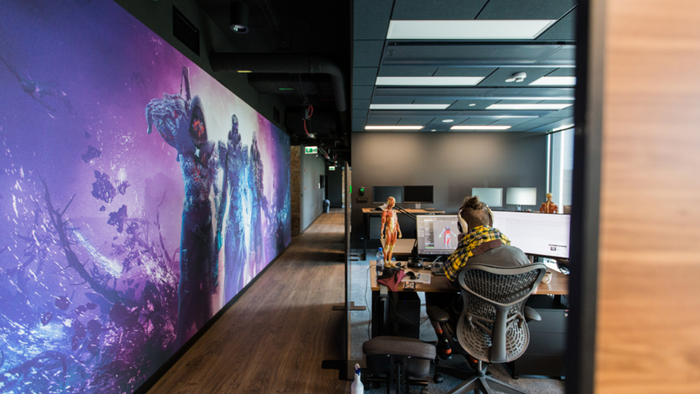
Blizzard office recently, and there's a plaque on the wall with the official
artistic principles of Blizzard: "Bigger is always better. Less if never
more," which evokes the WarCraft look with its much more heroically
exaggerated characters. It does strike me as two different philosophies, at
least to some extent. How much of that do you think about?
Julian Love: Well, obviously, there were two
very largely different groups of artists. Some of the artists from D2
are still working on the game today.
I think what you're seeing there is a
Blizzard philosophy that may have been there but may have not been disseminated
across the entire company, which is, "You find the line by crossing
it."
I think we've gotten really good at that now, allowing ourselves to
push things to a point where they go too far, and then you look at them and you
say, "Oh, okay. Now we know where the line is." But if you're trying
to just edge up to the line, you might never find it.
That's the goal here, to push things as far as
they can possibly go. So you're seeing things that are progressing maybe a
little bit beyond where D2 was.
But definitely, I would say that our
proportional sense for Diablo III is far, far less than let's say what
happens in a game like WoW, where armor doesn't even look like it could
function. We still put a lot of effort in to try and make sure the armor looks
a lot more functional, that it doesn't look like it's just insane and total
high fantasy.
In the case of StarCraft, there are plenty
of RTS games each year. With World of Warcraft, there are a million MMOs
every year. There aren't actually that top-down action RPGs. Torchlight
is coming out, for one, but there are not as many examples. What's it like working
in a genre like that where there aren't a lot of yardsticks?
Kevin Martens: Well, frankly, Diablo II is
still on the PC sales charts every week. Over and over again, you have a big
Christmas rush, and it bumps off, but then it's back on in early January again.
I think Diablo II is the standard for this kind of game, so largely what
we're thinking about is making sure that we do the series justice -- which we
feel that we are -- and making sure we're trying to expand the market.
Personally speaking, I hunger for a game like this, one that's going to last
for a long time -- something we can play for ten years, like Diablo II.
I think there's a massive market for it, but I
also know the games are kind of hard to make and, really, it's hard to beat Diablo
II. So that's the tricky part, and that's one of the reasons that there are
not that many games out there. There's still a definitive one that's on the
charts every week. That's the one that we have to beat. Luckily, we know a lot
about it.
And more broadly than that genre, there is of
course always widely-publicized pessimism about the PC platform, and has been
for a long time. Does that concern you ever, either in a long-term sense for
Blizzard as a company that is so devoted to the PC, or otherwise?
Kevin Martens: It has never affected us yet. The
death knell of PC has risen and fallen over the years, and we keep releasing PC
games, and they keep doing incredibly well. I think that there is a market out
there for PC games. The latest consoles are great; it's easy to get the game
running and all that. They're useful.
But everyone has a PC, and we try to keep
our system requirements down as low as possible. That's one of the ways that we
can make sure to appeal to enough people. Some of the really cutting edge games
that come out for PC require a brand new video card and probably more RAM at
least, if not a new CPU as well. That's really rare with Blizzard games. I
think that's one of the reasons we still keep doing well.
Kevin Martens: If I could add to that -- the best
evidence that the PC market is not actually dying is the 20,000 people that
showed up this year at Blizzcon, and the fact that those tickets sold out in
one minute flat. That doesn't seem to me that it's really good evidence of a
platform with a problem.
|
On the other hand, I will likely love this game and truly appreciate all that polish when it comes out.
Not buying.
I don't understand why people ride the hate train. The game isn't out, and has years to go. All of the environments have not been denoted, and besides the pictures above look fantastic. I've never understood the hatred for popular games. Halo sucks because it's Halo. Diablo sucks cause it's Diablo. etc. etc. etc. In reality these games sell millions and define genres.
Luckily Blizzard doesn't really need to care about the haters. They have Bucket of Money aka WoW, and millions of fans who appreciate their high quality work.
I my vision of industry, such big developers as Blizz must invest money to experimental projects or industry will be only standing on place without progress - Two branches - mainstream Diablo, Starcraft, WoW and experimental, is needed. For hardcore gamers is next same Diablo as 2 relatively boring, first Diablo was also small revolution.