[This week, our partnership with game criticism site Critical Distance brings us picks from Kris Ligman on topics including a discussion on saving the Legend of Zelda series, nostalgic indie game Yume Nikki, and more.]
The time has come, ladies and ladykins, for you to blog for your life! It's RuPaul's This Week in Video Game Criticism!
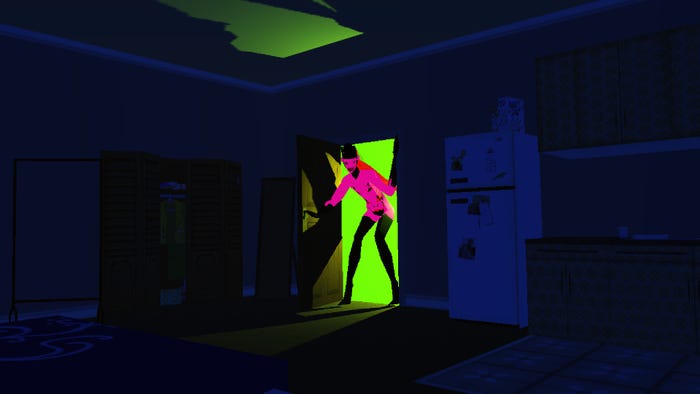
We start off the week with a soft focus lens on the past, when the men were men and the games were ineffable. First, Jack McNamee at The Machination turns the spotlight on indie title Yume Nikki, whose obtuse nature is both nostalgic and a major selling point:
"The moment you fully understand a game is the moment it loses the magic. You should never be able to get your head around an ideal game. Nevertheless, you should explore it, and make discoveries. By experimenting with these discoveries, you can use them to make more discoveries – never finding everything, but slowly building small islands of knowledge."
In a similar vein, Tevin Thompson challenges us to "Save Zelda", saying the franchise's "spirit of wonder, of potential secrets on every screen" has been diminishing with every sequel. Michael Abbott at The Brainy Gamer concurs, saying games as a whole have simultaneously grown easier to beat and harder to control. In doing so, Abbott brings up an argument left unaddressed by either McNamee or Thompson:
"What role do accessibility and complexity play in these numbers? Are we making traditional games easier in hopes of attracting players that will never come? When we make these games more welcoming to newcomers by decreasing difficulty, adding help systems, etc., are we focusing on the wrong things?"
From gameplay to story, several authors this week brought us narratologist realness.
Meanwhile, Robert Walker proves that bigger is not always better with "The World is a Character Too!": "Creating a world that is large is not the same as creating a world that feels large, and yet, one of these takes much more effort on the part of your artists and other talent."
Nightmare Mode's Tom Auxier, looking to harmonize structure and content, says that the boss fight can be saved– by using the device intelligently in the context of your game's story. Using Fable II's final boss as an example, Auxier writes:
"Were he a long, classical boss fight we would have triumphed: we would have won. Winning makes us feel good; it validates our revenge. Instead, Lucien takes one measly button press to go down. He dies before we can even process that we've killed him, before we can savor proving our mastery in the way of the classical boss fight, and that creates a very different reaction in the player. The revenge you pursued, that cost the lives of thousands of people and, more importantly, your beloved dog has consumed you utterly. In that one moment you can see plainly your failures over the past dozen hours of game.
And it's brilliant. It's a very modern boss fight, not challenge of mastery but instead punctuation."
Speaking of narratology and the recent lumps it's taken from bloggers who don't quite believe the Narratology-Ludology War is dead, Tadhg Kelly provides us with useful roundup of the recent discussion and adds his own commentary:
"What Is A Game Mechanic? Nobody knows. Or rather, everybody knows what they mean when they use the term, but nobody agrees."
Speaking of an awesome set of tunes, the International House of Mojo has a six-part retrospective on Grim Fandango, ending with an interview with Tim Schafer. The feature goes into some detail about the design of the game and the trajectory of its designer.
On the subject of design, Philtron Rejmer argues that games don't involve choice at all: "Video games are like a series of multiple choice questions where every choice either lets you go to the next question, or forces you to repeat the current question until you figure out the correct choice. Actual multiple choice tests have more agency than this."
"Transphobia is rampant in games culture: it's dangerous to all transgendered people and all women. it's dangerous to everyone who participates in this culture. [...] to perpetuate incorrect myths about trans people and our identities is grossly irresponsible for a site like kotaku."
"Mass Effect is the first blockbuster franchise in the postmodern era to directly confront a godless, meaningless universe indifferent to humanity. Amid the entertaining game play, the interspecies romance, and entertaining characters, cosmological questions about the value of existence influence every decision."
But we are all fans, or we wouldn't be game bloggers, would we? If you can't love yourself, how in the hell are you gonna love somebody else? That's the argument Rob of Mersey Remakes puts forward when he takes a more positive view of fandom, in particular calling out a rather critical Eurogamer article for its accusations of "fan entitlement":
"This isn't the entitled generation. This is the generation where more people are more supportive of more things and they're more supportive in the most wonderful of ways. There is no X-Factor generation, there's just people and people are, mainly, pretty damn fucking good and do amazing things at the drop of a hat. [...] Being a fan is not just a case of sitting in a chair as the Eurogamer piece would have you believe, it's a case of going out there and earning the money to buy the product, to support the developers, the publishers and whoever else has their skin in the game. It is the decision to choose us, to choose what we make, over something else."
(This week's theme owes itself largely to RuPaul's Drag Race, but also the always-fierce Denis Farr's Pokedrag series. If you aren't reading it already, you should definitely see about fixing that!)
Now, before you sashay away, remember to tweet and email us your hottest blog posts, reviews, critiques, commentaries, podcasts and smackdowns. We want it all, darlin'.