There's no shortage of video game design that relies on destruction -- stomp on a Goomba, blow up a building, shoot an alien, etc.
Battlefield studio DICE has taken the concept of wanton in-game destruction seriously, as it's become a central differentiator for its Battlefield games and its Frostbite game engine.
Karl-Magnus Troedsson, general manager at Electronic Arts-owned DICE told Gamasutra how more powerful game hardware led the studio to a concept of destruction that would fundamentally change how DICE would design games and tech, going forward.
"[The concentration on destruction] definitely came out of discussions [about] how we would differentiate ourselves to others," said Troedsson. "But also there was a lot of discussion at the time, about how we might utilize the [sarcastic] awesome power of the next gen consoles. It was almost like everyone was a bit high on their own Kool-Aid. You know, people are saying 'You can have so much power -- we can do whatever we want!,' But of course we couldn't."
Troedsson admitted that the current generation of consoles did introduce a lot more power, but the question was what to do with that power, and how to push the (very real) limitations of new consoles.
"From the beginning when we started talking about [more extensive destruction], I didn't think that we actually foresaw how much it would change the gameplay," Troedsson said. "I remember the first playtest that we had with it, and it was almost like we opened Pandora's Box; it was like, "Holy crap, what just happened here?" And everyone just came back and said, 'This is so cool.'"
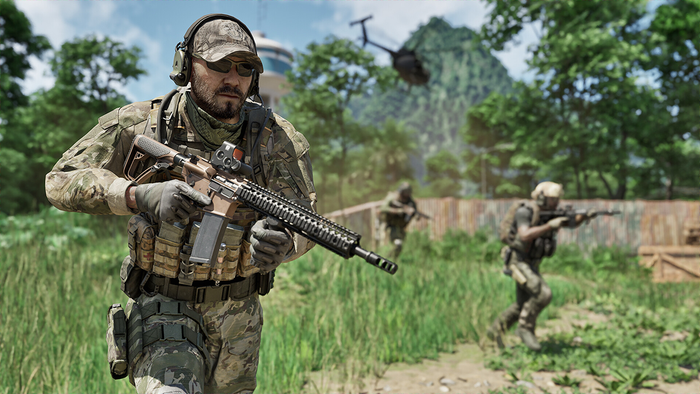
Earlier DICE games, like the Refractor engine-powered Battlefield 2, did feature destruction, but in limited doses. The Frostbite engine debuted in 2008, powering Battlefield: Bad Company, which allowed players to destroy objects such as parts of walls and parts of vehicles. Battlefield 3 (pictured) uses Frostbite 2 and cranks up the use of destructibility in game design.
"We had one demo I remember [of Battlefield: Bad Company]," recalled Troedsson. "It was the first time there was a helicopter chasing a guy into a house. The guy was in a room and I didn't think anyone had seen him. And there was tank just sitting in this square -- the player was running around in the houses around trying to flank the tank to get to an RPG or something, and the tank was just going 'boom boom boom,' shooting holes in the houses all the time. That meant that [the guy on foot] had to move.
"Compared to what we had before that was so different; that's when the light went on and we thought, 'Okay, this is really going to change what we do.' We actually got a bit nervous there, because that was such a huge change; it was like, 'This is going to alter the core recipe of Battlefield.' But then after more and more playtesting we realized that, wow, it was going to change it for the better."
|
Simply wow, bookmarked this article, in one sentence it sums up nicely what's wrong with the industry.
Unless developers start thinking about gameplay, that isn't solely based on the 3 basic principles of destruction, mutilation and murder, games won't emerge in any form.
Interaction with the world in games right now is done with the grenade launcher and social interaction is done with the knife.
It's time for games to grow up, puberty is only entertaining for a certain ammount of time.
DICE is known for Battlefield--its a military shooter--yes there is going to be killing and explosions. You are speaking of versus interaction. Yes this is what happens....
On the opposite side of the spectrum...there is a team of 12(on console) people working together to accomplish a common goal--generally all using headsets--sharing ammo, sharing health, reviving, repairing vehicles, communicating to take down common threats.
I'm not quite sure what you are getting at? If you are looking for games to grow up in an article about war games and destruction, you are going to have a bad time.
Remind me not to play any games designed by Christian.
"Now we can finally make Bomberman!"
+10
And does "destruction" offer greater gameplay and and complexity ~ it can but it is simply one facet of cut jewel.
And let's be honest here, in an industry plagued by a lack of innovation which so much effort going into it looks a lot more like the automobile industry holding back electric cars or other advancement.
But directly does Battlefield 3 offer greater gameplay and complexity and overall experience through "destruction" ~ very very little. Destruction does not change the gameplay in a meaningful way, and it makes little differnce to the individual gameplay and experience.
Destruction is profound in bomberman however, and has amazing impact on the gameplay and complexity. Or, in other contrats try World of tanks, what does destruction do there? It has moderate to strong impact on the gameplay.
See what you think by comparison.
I disagree. I played BF3 for a long time and although I have stopped playing it (I think they took the game and potentially the series in the wrong direction), the destruction can have a pretty profound impact on strategy.
You could think of it in terms of constants and variables. Any cover or wall that can be destroyed is a variable. You cannot rely on it for cover, and you cannot rely on it being there at any given time. A second storey apartment might be an excellent position to cover a capture point, for example, but that only remains true until a few explosions turn the cover into a gaping hole. Suddenly the other team needs to adapt their strategy.
In non-destructive FPS multiplayer games, that same situation never actually changes. Every match, for the entire match, that cover will be there.
This also helps in designing maps I suspect. Normally a designer has to be careful about how much cover they use and where it goes. A map can quickly become unbalanced if one side can more easily access a particularly good cover position than the other side. Due to destruction this impact is mitigated. You can have more varied and less balanced cover positions because the other team has tools to render those positions useless.
Alternatively, I have (and have seen others) use the destructible terrain in order to create new cover positions, or better cover positions. And I have (and have seen other people) use explosives to go through walls and bypass dangerous fields of fire, or access safer/faster routes to cover, or simply to avoid being seen.
All in all this means that the dynamic of the game shifts gradually over the course of a match, as players and teams adapt to a changing environment. Adapting to changing environment. I would say that's a pretty important shift in gameplay; people don't play BF3 the same way they play, say, Call of Duty. There is always an element of unknown in the people you are playing against, but when the map itself takes on an element of unknown, the map becomes a character in itself, and it can turn on you or your entire team if you don't adapt to it.
So yes, the end goal is ultimately the same, and the core gameplay will always be man-shoots-man, but every game has its layers of problem solving, and by allowing the players to interact in a meaningful way with the environment, the problem-solving aspect becomes exponential.
If you added bombs to Pac Man that blew holes in walls, you'd have a very different game. But the more systems you have that can interact with that change, the more exponentially complex the gameplay becomes as a result.
I would say that although bombs in bomberman are obviously a core feature (in that the game would literally be unplayable without them), the impact of destructible environments in BF3 has wider reaching effects simply due to the numerous gameplay systems that interact with it.
That said, I do think that Frostbite 2 and BF3 are a lot of wasted potential buried under the weight of too much oversight and heavy-handed marketing getting its claws into the actual gameplay.
In the moment, right there where a building may fall upon you, or uncover your position, I don't think has much impact on the overall game. for 2 reasons.
1 You can respawn almost instantly nearby.
2 Forceful offensive attrition almost always wins, holding in place does not offer advantage.
This I found to be demonstrated through the consistent play of open server games. So where even snipers that moved to and fro and from cover to cover held a much higher probability of a high score.
Destruction affects the game, certainly. But to what degree? 1%? 5%? Does it ever actually sway a win? I played hundreds of hours, thgouh not on teamspeak teams, it never had a percievably distinct advantage like it has in other games.
In a game like World of tanks an entire match can be decided by being behind destructable (s).
Aestetically speaking does BF3 gain from destructables, I woudl say definitely. It makes the game a little more interesting. But I wouldn't confuse this with advantage. Especially when the momentum of play is such a deciding factor of who wins or loses.
In the instant it doesn't matter for that player, no. But that's very short-sighted; what matters for a player in an instant is a short respawn, but the loss of cover impacts the future of that match a great deal. Cover that has been destroyed doesn't respawn, and that player, along with his teammates, cannot simply return to it. Contrast that with another shooter without destructible cover, and you see scenarios where good cover with good strategic value will be returned to repeatedly.
If an entire building is being used by a squad to hold a point, and suddenly the building is gone, sure those players will respawn but they and their team also no longer have a building from which to defend a point. That has a very real and tangible impact on the progression of a map. In fact I've had plenty of matches where people would destroy a building or cover before the other team even has a chance to reach it, because those buildings have real strategic value that can be removed from play.
The simple removal of a wall can change the dynamic of a map entirely. A wall means that you cannot see or fire at an enemy. Remove it and suddenly many strategies utilizing that wall for a stealthy approach are invalid. How can that not impact the match?
So yes, I'd say that every single match - every one of them - is highly influenced by destructible cover. In fact I've had plenty of Rush matches where if it hadn't been for destructible terrain then my team would have lost. I've had a team beat their head against the enemy defenses to no avail, only to blow a hole in a wall and filter in, forcing the defending team to adjust their tactics. What was working wonderfully for them before suddenly isn't viable, and the attacking team overwhelmed them.
These kinds of events happen on the micro level all the time during a match, directly impacting the results of a fight, and then every single fight that occurs in that same space for the rest of the match. While it's rare for a single destructible to have a definitive impact on a match, I think it's very short-sighted to say that many micro-events happening over the course of a match have no impact on the results. They may not be discernible without being able to analyze every player's actions over the course of a match, but I think it's inarguable that players are constantly forced to adapt to the changing map.
That they withdrew this in BF3 is a different matter...
That they withdrew this in BF3 is a different matter..."
Could not agree more.
I think a big part of the problem is viewing the destruction as purely destructive rather than immerssive or creative, as it actually tends to be in BF.
For anybody who has any experience with battlefield, it's pretty obvious that destructible environments are core gameplay (best example I can think of is on metro rush destroying the wall in front of the escalators and the walls along the left side at the second set of capture points totally changes the map to favor defenders). I'd argue that they actually took BF3 too far away from destructibility as a gameplay mechanic because they made so many things non-destructible.
This is what I mean though, this wall coming down isn't a natural effect of strategic gameplay, it's a predetermined take away. It always comes down, therefore it's loss does not change the game in a meaningful way. It is simply down for all intents and purposes. And advantage goes always to the higher elevation. But forceful momentive teamwork prevails even here, disadvantage is of course always to the subway folks .. but it's a predetermined disadvantage .. every .. single game.
A crows nest on a second story works just the same. it offers a visibility advantage. Some buildings do offer more unpredictability, but not on the most commonly favored maps.
"If an entire building is being used by a squad to hold a point, and suddenly the building is gone, sure those players will respawn but they and their team also no longer have a building from which to defend a point. That has a very real and tangible impact on the progression of a map. In fact I've had plenty of matches where people would destroy a building or cover before the other team even has a chance to reach it, because those buildings have real strategic value that can be removed from play."
I have never seen this, doesn't mean it isn't there. But I have never noticed that missing a building changes the advantage of attrition in a seriously meaningful way. Yes, it changes the direction of the flow of the game, and yes you can lose a temporary situational advantage. But the win always goes to the team with the greatest ability to force attrition.
Most open server games I have played have all been determined by teamspeak/vent/ect. using skilled player stacking. If there is a more acute advantage to knocking over a building I'm not aware.
I will however concede that in organized well trained professional player only games these advantages are probably considerably more significant.
I'm not sure I follow. I am talking about Rush, I think you are not. Anyway, the walls don't always come down, and the disadvantage differs greatly. The disadvantage is always to the attackers in Rush, but it's degree varies HUGELY depending on various destructables. Just like the outdoor environment can sway very much in the attackers favor as you destruct the trees between the points, and the last set of points are pretty even depending on which side of the buildings between the two spawns get blown up.
The feeling described in playtests, where the tank goes BOOM BOOM and the campers have to move -- was amazing. On one hand you knew (sitting in the tank) that you could fish out the camper, and on the other hand -- you know that at some point the wall behind you might be gone. So you had to constantly move and be aware of what's going on around you.
I'd always carry an RPG around just for the case of someone camping in an attic somewhere - just to blow a hole in it.
BF3 has that, but not to a degree of where you're hanging out in a building and all of a sudden the "building is about to collapse" noise is triggered and you have to get out fast. Bring it back DICE.
On one hand, many of the buildings in BF3 are way bigger. Eg. the big apartment buildings in Operation Metro and Seine River are too big to be taken down by RPG's or even tank hits. You can knock out sides of these buildings but can't knock down the whole thing. There was some buildings like BFBC2 like that as well - i.e. the big warehouses.
But there are small little single-family dwellings in both BFBC2 and BF3 and for some reason you could knock down the whole building in BFBC2 (which was tactically needed at times) but in BF3, you just wind up blowing everything away except the frame and the frame still stands.
That said, there ARE some buildings in BF3 that can be blown completely down. I.e. the small gas station buildings on Kharg Island, for eg.
But because there is little rhyme or reason as to what is destructible in BF3, it actually becomes less important in-game. Sure, what can blow up LOOKS cooler - it's just a little less fun.
And so I think that's what DICE should focus most on. I.e. realism of what can be destroyed with what. Eg. in BF3, if I ram a jet into a shipping container, the jet just comes to an abrupt halt as soon as it makes contact, and then it blows up into a bunch of different parts. But the shipping container is fine. It would be cooler if the shipping container tore open. Or guard towers - if a sniper is in the guard tower and you shoot a rocket into it, the windows may break but the gaurd tower doesn't tumble down. But yet some concrete block gas station will crumble with enough hits.
I know I'm asking a lot here, but I think if DICE was serious about it as a gameplay mechanic, they'd take big leaps forward on this & simply make the destruction more intuitive.
Though when dumping it down to just a small amount of elements in games it may even feels worse as without destruction at all. Why can I destroy that pile of polys but not the one right next to it?
Take World in Conflict and bring it up to current levels, that would be truly awesome. It is the only recent game I remember with full scale destructions (and a much underrated pearl of the last decade anyways) which impacted gameplay directly. I know it is different in shooters always, yet just from the general level of environment destruction Battlefield never impressed me much.