| Luis Guimaraes |
|
|
All good and nice, but what's the true input lag for the 9-axis precise sensor?
Even a cabled mouse is unbearable with V-Sync ON, and wireless ones are definitely not suited for gaming. |
||||||
|
|
|||||||
|
|||||||
|
|||||||
|
|||||||
|
|||||||
|
|||||||
|
| J Wolfniggr |
|
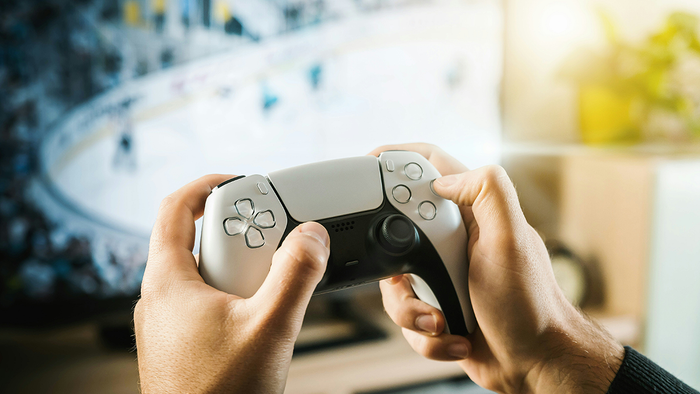
Hardly any lag on controls, sensors or the screen. My problem with their controllers is on the lack of analog buttons. I'm glad to see the analog sticks for their console are now circled instead of octagonal and that they have built in digital buttons, but why digital trigger buttons? Are analog buttons really that much more expensive? I could live with digital face buttons, but at the very least the triggers should have been analog. I guess the U isn't made for the driving game enthusiast.
Maybe if they release a SUPER Pro controller and MEGA Game pad analog buttons can be included...won't hold my breath though. |
|
|
| Merc Hoffner |
|
Precision is vanity, accuracy is sanity! Hah, well in the old days anyway. It's really quite clever - between gravity being used as a discontinuous pitch and roll reference and the magnetometer being used as a continuous yaw reference (and the two corroborating each other), and with the main TV screen acting as a kind of natural psychological fiduciary marker - at least on a statistical basis, absolute reference markers are hardly needed, and dead-reckoning need only persist for a second or two. It's a situation that didn't work with accelerometers and gyroscopes alone, and which doesn't really stick on 'un-tethered' devices like phones, tablets and handhelds. Thus Nintendo figures they don't even need a 'sensor bar' anymore, and with the panorama demo I tried, I'm inclined to agree. It's a little known point, but Playstation Move is in a similarish position - it has absolute references for positioning sure, but has only these 3 sensors and the users' natural tendencies to go on for orientation. And yet it seems to get on OK.
@ Christian I'm sure I read about an earlier program (also DARPA I believe) where they similarly had a real-time computer program that could compensate for a plane with a wing blown off mid-flight and leave a pilot with something like 80% of the original maneuverability. They couldn't use it though! - the program back then operated through the use of neural network self-teaching software to remap the dynamics of the plane as the failure occurs - and because it's a blackbox process (the software it writes is unknown to the developers pending pouring over huge amounts of jumbled self coded code) it could never possibly be validated for dependable use. |
||||||
|
|
|||||||
|
More: Console/PC, Design