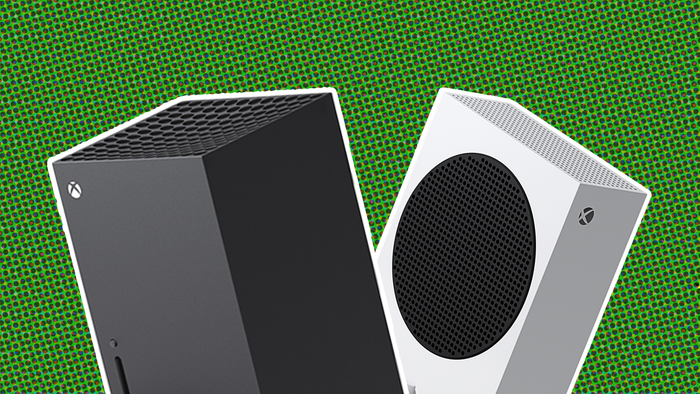
Last week's E3 reveal of the motion-sensing Kinect and new Xbox 360 was a preemptive strike on a potential mid-life crisis for the console. Microsoft wants to expand beyond its core gamer audience and attract a wider demographic by trying to lower the barriers of modern gaming.
Albert Penello, director of platform marketing for Xbox, knows that the road ahead won't be easy, but is confident that once skeptical core gamers get their hands on (off?) the Kinect, they will be convinced.
But attracting current and potential Xbox 360 gamers to the motion control market will be a difficult proposition. The price has to be appealing to the target mass market, the third-party developer support has to be there and market fragmentation between traditional controllers and Kinect must be addressed.
All of these factors are currently big question marks. In this in-depth interview with Gamasutra, Penello makes his case for the Xbox 360 strategy a week after having digested the major L.A. conference.
How do you think Microsoft did at E3 in relation to your competitors. How do you think you stood up against the new offerings everyone else has?
Albert Penello: Oh, we were terrible. [laughs]
[laughs] Yeah, like you're going to say that.
AP: I feel like we had the single biggest piece of news, which was the new console and the fact that it was shipping. [Nintendo] let a lot go about the 3DS before the show, and even though there were rumors about the new [Xbox 360] console, nobody had seen anything before we announced it that day.
I think everybody had some interesting things. We were going to be a tough spot because we were going to be talking about a product [in Kinect] that the core gamer is inherently nervous about. Obviously, when you're building something for a different audience with a new type of content, I think we knew going in that we're not going to get the best reaction from the briefing. But once people play it, they're going to feel better. I wish that all of the people online could actually play it.
I agree that the new console was some pretty big news to come out of E3. But it seems like it was so overshadowed by all the Kinect stuff. It didn't seem like quite the exclamation point that maybe it should have been.
AP: We intentionally wanted to leave it as a surprise moment at the very end. The fact is, we weren't going to spend a ton of time on it in the briefing because it's shipping. That's the big news, that you probably would be able to pick one up in the next three days. … Maybe in retrospect, it might have been good [to spend more time on the announcement], but that's the fun of looking back on these things.
I assume that you've seen some of the rumors about the price, and nothing is official yet, even though it's on Microsoft's online store for $150. Has Microsoft been gauging the reaction to that rumored price point?
AP: The Microsoft store is just a retailer, so don't take that as being anything official, although we had a conversation about that today. We didn't want the discussion at E3 to be about price until you got to see the experiences. There wasn't some sort of a nefarious fear or any kind of weirdness about not talking about price at the show. We'll announce the price when we feel the time is right.
You know what happens. We're three minutes into the conversation and we're talking about price. … We didn't want price to be the primary discussion at the show. Our goal was to prove it to people. … We'll talk about price when the experience is what people want it to be.
Pricing is such an issue though because a lot of people are already under the impression it works and we've known about Project Natal for a year. But there's a conflict because it's aimed at a mass market that wants to buy a console for $200, yet we have a peripheral that could potentially cost more than $100. How do you communicate the value of a $100 or $150 Kinect, or a $400 Kinect-Xbox 360 bundle to the mass market? And these are all speculative prices, of course.
AP: How do I want to put this… I think we did a pretty good job listening to people about the Xbox and features they wanted, and we added a lot of value to the new box and we kept the price the same. We haven't announced our full lineup for the holiday, so I would say let's talk again after we've announced price, and after we've announced our full lineup, and then perhaps it will be more clear.
There's maybe over a dozen announced games so far for Kinect. As far as third-party publisher support goes, are you satisfied with where that is right now for the Kinect?
AP: This industry thrives on being able to take an engine or game and put it on as many platforms as possible. … We don't want shovelware, we don't want ports, we don't want stuff with motion controls tacked onto it. That's not a slam to our competitors. We wanted original games that were really taking advantage of what our technology does.
I know we're going to have less games for [Kinect] than our competitors, but I think each one of those [games] is doing something interesting, and our system works differently and has different advantages than the wand, quite frankly. We're basically asking publishers to go out and make exclusive content for this new technology and this new customer. … To me it's way more important to have a handful of really good game titles that take advantage of the tech than 40 titles of which half of them are controller games with waggle added onto them.
We continue to say that the controller is the best experience for controller games. When people say, 'Why don't you have Halo?' Well, I don't want Halo on Kinect. I want Halo on a controller. Now would it be interesting to see what kind of game they could make using Kinect? Yeah, I would love to see what those guys could do, or what the Call of Duty guys could do. But I don't want to play Call of Duty 4, I want Call of Duty: Black Ops on the controller. So yeah, I'm really, really happy with the stuff that [publishers] are doing. … The most interesting stuff is going to be what comes out six months to a year from now when people come to grips with the technology and really start taking advantage of it.
When you talk about controller games, it brings me to the next point, market fragmentation. Unlike the Wii, the Kinect isn't integral to the Xbox 360 experience. You'll have games that are better with a controller. Is Microsoft worried about the fragmentation that could affect developers as well as the market?
AP: That's a concern that people have expressed. I think what you've seen us do is we're aligning a lot of our efforts around Kinect. We unveiled the new branding, we unveiled the new console, the name, the sensor -- Kinect does not look like it's something that's sort of tacked onto the side of the ecosystem.
I'd say stay tuned. I believe it's our goal to make Kinect a core part of our experience going forward. We're not abandoning the controller stuff at all, I think we're going to continue to want to make those games and support that. But we're trying to avoid exactly what your concern is. We want people to think of Kinect as part of our console offering.
A year or year-and-a-half from now, will today's core Xbox gamer see Kinect as an essential part of the Xbox experience?
AP: I hope so. And we teased some stuff. There's more technology in Kinect. We talk about the motion and full body recognition, but we also showed the UI working, the multi-array mic with echo cancellation that lets you do a lot of voice stuff. Even if Dance Central isn't your style of game, the integration with the system is going to be pretty robust. I think it's going to be a must-have thing, even if there's only a handful of experiences for the core gamers, I think the integration is really going to get better and better over time.
What about head tracking? What about using Kinect along with the controller? What about some tech demos or games that show why the core gamer should be excited?
A space sim or mech sim that uses gestures to control menus or features along with the controller would be a nice demo. Why hasn't MS shown us that the kinect can work along side the controller, rather than one or the other?
Well, I despise being told what I want. Ie, Penello saying they don't want stuff with motion controls tacked onto it. Who would want that? how about everyone who already owns that stuff, and would appreciate new ways to enjoy it?
I want that.
in fact, you could let developers create different control schemes for old games. Here's kameo Control1 where you control the character with your head and arm. Here's Control2, a weird alternative where you control cameo with your feet and your butt.
You could sell these alternate control schemes for existing games on the Live marketplace for a buck. I'd rather buy this than a hat or background theme.
If you're not even going to try and integrate existing genres, what are you left with? If the plan is to wow the current xbox gaming masses by introducing a whole new style of gaming, good luck. Microsoft aimed for the hardcore gamers, and they got em. However, Penello is right, you can't port controller designed games to not controller devices. There's only so many actions per second you can accomplish through arm flailing. Despite what iron man 2 might portray, you cannot navigate menus or control an array of units with the ease of a wrist flick. The kinect has nowhere to go. (...interactive porn maybe ...please?) :P
Kevin, I think the reason they don't discuss joining the two is: processing power tradeoffs.
Here's the logic as I understand it:
1. Some genius decides that if they do software processing on the xbox (instead of inside Kinect), then they can patch it endlessly. Microsoft style!
2. If your game was already using every bit of the xbox processing power to make delicious graphics, you'll have a hard time patching in Kinect processing. Will you reduce the graphics?
3. People could develop new games that have crappier graphics, but leverage kinect with controller: and then hard core gamers will just ridicule them as crippled ugly wastes of time. Because graphics and controllers are already king (to your average unimaginative hardcore gamer).
From a business perspective, no dev wants to gamble on making a game that looks worse AND adds weird control experiments.
4. The Kinect experience is so different that it will probably take some getting used to.
People will learn that hovering over a menu item for "some amount of time" to select it: is the wrong approach. It's too slow, and thus annoying. But some innovator will come up with a better way (one hand points, the other closes)(Or you make clicking sound with your tongue. Or tap your foot).
Since it will probably take a year or two for all this new interfacing "ideology" to be sorted out (along with aforementioned patching), it's probably better if hard core games just stay away for now.
::
I think this is the reasoning behind telling hardcore gamers to ignore Kinect for now. Which is the message I get from "it's casual only!"
(I hope they don't realllly think they're going to turn hardcore gamers into casual gamers. ugh.)
* just wish someone would ask them what their strategy is for that day when soccer moms don't flock to the casual Kinect offerings. What if the casual audience doesn't want to buy HDtvs and high speed internet? What if they stick with Wii?
I hope at that point, Microsoft will head towards some crazy hard core uses full steam (and not just dump the tech altogether).
Let's say this Twinkie represents the hardcore gamer market. To represent the "casual" market (i.e. non-hardcore), it would be a Twinkie... thirty-five feet long, weighing approximately six hundred pounds. ;)
The hardcore gaming market is still important but, if you really want money, you target the 95% (made up number) of non-hardcore gamers.
warren, you make some good points. I didn't even think about it that way. However, I will disagree with your first comment about having alternate control schemes since waggle for "core" games doesn't work well for the Wii, and I cant see it being any better on the 360. Waggle only works well for games that are designed from the ground up for it IMO.
I also want original games so that if I choose to pick up kinect (for super cheap in a bargin bin) then I want to know that the games I get for it are unique and cant be done on the wii or wii hd (ps3/move) since I already have a wii.
Warren: I think processing power is a good point, during the past year there were vaious rumours about Natal and that Microsoft is thinking about shifting the necessary processing ammount from the Natal (now Kinect) device and it's built in CPU to the 360.
But as the price of Kinect seems to be 150 US$, I always assumed, they dropped this plans, otherwise I wouldn't see any reason for such a hefty price, which would clearly hurt sales.
The problem I think (without ever tried Kinect, so it is pure speculation) is, that the system isn't nearly as powerful, as Microsoft says. The Gamasutra analyses pointed out, that the system only detects very clear movements.
Perhaps anybody who tried the Dance title can confirm or deny this, from the videos, I don't had the impression, that the dancer on the screen actually mimics the moves of the player, instead it look to me, like the game played an animation, if the player made the right move.
I always wonder, if Kinect would be able to do, what Microsoft says, why do big Hollywood studios still use expensive motion capturing techniques with wires and all that stuff?
I don't see casual gamers dropping $150 for a Kinect in addition to an Xbox... not when they can get a Wii for $200 (and they probably already have one). That leaves hardcore gamers as the market... but the Kinect's lag means that it won't be used in a hardcore game. Microsoft has aimed clearly for the gap between the two markets. Sad, really.
The idea behind the Kinect is pretty slick. It reminds me a lot of a TrackIR on steroids and has the potential to act as such. The problem with the Kinect is that there is a good chance it's going to end up with a bunch of crappy shovelware games that frankly, I'm not interested in playing. I don't WANT to stand in front of my TV and pretend I'm a contest on Nick Arcade. I DO want to sit comfortably on my couch and play first person shooters and air combat games that utilize head tracking to look around and body tracking to allow me to do things like lean around corners. For that, yes, I would get a Kinect. (Hell, I'd get two and figure out how to hack it so that it works for PC too :D). If the best that comes out for the Kinect is a truckload of Wii style shovelware, then I'm not interested.
The funny thing about core games implementing the Kinect is that shooters are already very conducive to utilizing the hardware because if you watch a gamer playing a game they've gotten sucked into, you'll notice they're already leaning and looking around on their own. Every gamer at some point or another has found themselves physically responding to what is happening in the game. You might lean to the right as you move around a corner, you might find your head craning to look around a bit even though it doesn't actually do anything. These motions are already natural, so I could see hardware that takes advantage of them really having the potential to open up a whole new world of console gaming.
Too bad it's almost guaranteed to never happen anytime soon due to how crapola the industry is. Hooray for TrackIR equipped PCs!
this thing just has absolutely nothing to offer me. it seems to be a step backwards in every way. saying "xbox play" (and fighting with what i am almost positive is the same horrible voice recognition that has always existed) isnt as convenient as a simple remote. Waving my hand and pausing for a moment on what i want, and being very careful not to move so i dont have to start over, is absolutely stupid. just use a remote!
just dont move your arms or talk while doing anything, who knows what will happen.
" I don't see casual gamers dropping $150 for a Kinect in addition to an Xbox"
Why don't you wait for the fimal pricing of Kinect before you start shooting your mouth off?
In addition, even the $150 Kinect holding price still hasn't stopped Kinect from outselling every single Wii game/peripheral on Gamestop in pre-orders alone, even though Kinect is still over 5 months from release.
"... not when they can get a Wii for $200 (and they probably already have one) "
Ummmm...after buying the Wii for $200, you still gotta pay $100 for Wii Fit before you can play the game, no?
Plus if you want to play a Wii game with with say 3 other players, you still have to buy 3 more Wiimotes and Nanchucks, no?
"(and they probably already have one) "
There are over 6 billion humans on the planet. The Wii as only sold 70 million. It hasn't even scratched the surface yet. Plus there are approx 1.4 billion Windows PC users out there. Vastly more casual games are played on Windows PC's (Microsoft owns Windows) by far than on the Wii. Windows owns the casual gaming market, not the Wii.
In the interview Kris Graft mentions a "fragmentation" of the Xbox audience, and seems to suggest that offering a device for a wider audience is a bad idea. Frankly, I'm glad that Microsoft is going that route rather than what Nintendo did, which was to only cater to the casual audience.
I'm glad that I will still have my controller games. I'm glad that I can optionally buy Kinect if I want to have more casual game experiences with my friends and family.
Nice rant, I am sure, you have good arguments, why Kinect will perform well, because everything you said here was, why you think all the people, that brought up arguments against a kincetic breakthrough are wrong .
And some things you said were rather strange, e.g. when you argued, that there were 6 billion people on this world and the Wii sold only 70 million units. You are familiar with the numbers of past console genrations combined sales? Do you have any argument, why this generation should be this different and sell this much more, then previous generations, cause when you compare this generation sales, with the last one, it looks more like the opposite.
What on earth have 1.4 billion Windows PCs to do with this? The casual game market on the PC is not as big as you paint it, most casual games out there don't make money, they are completely for free and the money, that is taken in, comes from advertisings, but apart from a few games, this isn't really much.
I still wonder, what you want to say with the sentence "Microsoft owns Windows", seems completely out of context to me.
On a sidenote, there aren't 1.4 billion Windows PC users out there, it is estimated, that there are 1.4 billion PCs (I could only find this estimated number for PCs, not for the Windows PCs) out there, the assumption, that every PC on earth has it's own personal user is funny, but a bit farstretched. This 1.4 billion Windows PCs include every single PC in every company around the world.
"Do you have any argument, why this generation should be this different and sell this much more, then previous generations, cause when you compare this generation sales, with the last one, it looks more like the opposite."
What are you basing your sales data on?
From my purely anecdotal observations, the Wii has tapped into markets that previous generation have not. Which, IMHO, is why it is selling so much better then the far more powerful "hardcore gaming" consoles.
If the XBox can become the "PC for your TV" (plays games, music, videos on demand, check sports data, etc.), then it might tap into markets beyond the traditional 'game console' as well.
You are right here, the Wii has tapped into new markets (in fact this markets are old video game markets, that had been abandoned by the manufacturers for years), I agree with you, that this leads to better sales for the Wii, which had clearly won this console generation (and a new one isn't in sight).
But the traditional gaming markets didn't grew since last generation, the opposite is true. The hardcore gamer market is smaller, than in the previous generation, the number of installed HD consoles are the proof for that.
So, it is a logic move for Microsoft to break into the markets, Nintendo succesfuly entered in this generation. But in order to break into these markets it would be necessary to sell a lot of 360 Kinect systems to new gamers, cause the old gamers have made a decision to stay in the hardcore gaming market, this was the reason, they bought a HD console in the first place. Obviously Kinect has nothing to offer for this gamers group, otherwise Microsoft had shown at least one hardcore gamer title.
This means, they are aiming solely for the non-hardcore gamer market with Kinect, but this market has already a console, that has an installed user base of 70 million consoles. From what the press says to the consumers after the e3, Kinect has nothing substantially new to offer to the interested non-hardcore gamer, but has a much smaller software library and a higher starting price. And apart from this, Nintendo already sold a lot of consoles in this market, nobody knows how big this "new" market really is, right now, it is roughly as big, as the HD market, do you honestly think, that somebody new can enter this market, after Nintendo dominated it for years alone? I have my doubts, I think, MS and Sony will be in the same situation, Bandai and SNK found themself in, when they released their competitors to the Gameboy in the late 90s.
@Christian: I think we agree on many points, except for the belief that Kinect has nothing substantially new to offer.
I think going from a simple controller to "no" controller at all is a huge leap in most people's minds.
And I do honestly think that somebody can compete against Nintendo and not lose. Apple has become a major player in the handheld game market. Sony's original PlayStation succeeded wildly against the N64, even after Nintendo's domination with the NES and SNES.
It's not the question, that companies had made points against Nintendo in the past. Nintendo had made many mistakes, the N64 was one of them, in the stationary console market, they came back from nowhere, with their idea to disrupt the whole market. But the current situation is different, we are not in a generation shift.
The 360 is nothing new, Kinect is for most customers nothing more, then an Add-On to the existing hardware. Same goes for Sony's Move. Both motion controls are additional peripherals, currently the combined user base of the HD consoles roughly equals the Wii, the combined motion control user base of the HD consoles will be only a fraction of the Wii's install base. This will make it hard for Microsoft and Sony to get 3rd party support. It will be even harder for Microsoft, then for Sony I think, cause they can't even get straight Wii ports with better graphics, something, I am sure, we will see on the PS3.
I really don't see, that "no" controller makes such a difference, cause everything you can do with the "no" controller device are casual titles, that lack any kind of precision (if I believe, what the people that tried Kinect reported after the e3). The system seems to be not powerful enough to make something more complicated.
It seems, that there is a reason, why motion capturing in movies relies on sensors and wires and not on cameras alone.
I don't see Apple as a major player in the handheld market, they have a succesful smart phone on the market and a succesful tablet PC, both seem to have no gaming application, that can be compared to Nintendogs on the DS or Monster Hunter on the PSP. Apple itself isn't selling a handheld, they sell phones, mp3 players and tablet PCs. I know people, who own an iPod and iPhone, many of them never bought a game, many of them never will, I also know people with a PSP and a DS, every one of them bought games for this devices. This is my purely anectodal observation.
A space sim or mech sim that uses gestures to control menus or features along with the controller would be a nice demo. Why hasn't MS shown us that the kinect can work along side the controller, rather than one or the other?
I want that.
in fact, you could let developers create different control schemes for old games. Here's kameo Control1 where you control the character with your head and arm. Here's Control2, a weird alternative where you control cameo with your feet and your butt.
You could sell these alternate control schemes for existing games on the Live marketplace for a buck. I'd rather buy this than a hat or background theme.
(rage)
Here's the logic as I understand it:
1. Some genius decides that if they do software processing on the xbox (instead of inside Kinect), then they can patch it endlessly. Microsoft style!
2. If your game was already using every bit of the xbox processing power to make delicious graphics, you'll have a hard time patching in Kinect processing. Will you reduce the graphics?
3. People could develop new games that have crappier graphics, but leverage kinect with controller: and then hard core gamers will just ridicule them as crippled ugly wastes of time. Because graphics and controllers are already king (to your average unimaginative hardcore gamer).
From a business perspective, no dev wants to gamble on making a game that looks worse AND adds weird control experiments.
4. The Kinect experience is so different that it will probably take some getting used to.
People will learn that hovering over a menu item for "some amount of time" to select it: is the wrong approach. It's too slow, and thus annoying. But some innovator will come up with a better way (one hand points, the other closes)(Or you make clicking sound with your tongue. Or tap your foot).
Since it will probably take a year or two for all this new interfacing "ideology" to be sorted out (along with aforementioned patching), it's probably better if hard core games just stay away for now.
::
I think this is the reasoning behind telling hardcore gamers to ignore Kinect for now. Which is the message I get from "it's casual only!"
(I hope they don't realllly think they're going to turn hardcore gamers into casual gamers. ugh.)
* just wish someone would ask them what their strategy is for that day when soccer moms don't flock to the casual Kinect offerings. What if the casual audience doesn't want to buy HDtvs and high speed internet? What if they stick with Wii?
I hope at that point, Microsoft will head towards some crazy hard core uses full steam (and not just dump the tech altogether).
Let's say this Twinkie represents the hardcore gamer market. To represent the "casual" market (i.e. non-hardcore), it would be a Twinkie... thirty-five feet long, weighing approximately six hundred pounds. ;)
The hardcore gaming market is still important but, if you really want money, you target the 95% (made up number) of non-hardcore gamers.
I also want original games so that if I choose to pick up kinect (for super cheap in a bargin bin) then I want to know that the games I get for it are unique and cant be done on the wii or wii hd (ps3/move) since I already have a wii.
But as the price of Kinect seems to be 150 US$, I always assumed, they dropped this plans, otherwise I wouldn't see any reason for such a hefty price, which would clearly hurt sales.
The problem I think (without ever tried Kinect, so it is pure speculation) is, that the system isn't nearly as powerful, as Microsoft says. The Gamasutra analyses pointed out, that the system only detects very clear movements.
Perhaps anybody who tried the Dance title can confirm or deny this, from the videos, I don't had the impression, that the dancer on the screen actually mimics the moves of the player, instead it look to me, like the game played an animation, if the player made the right move.
I always wonder, if Kinect would be able to do, what Microsoft says, why do big Hollywood studios still use expensive motion capturing techniques with wires and all that stuff?
A lot of people (casual or hardcore, who knows?) are willing to give it a shot.
The funny thing about core games implementing the Kinect is that shooters are already very conducive to utilizing the hardware because if you watch a gamer playing a game they've gotten sucked into, you'll notice they're already leaning and looking around on their own. Every gamer at some point or another has found themselves physically responding to what is happening in the game. You might lean to the right as you move around a corner, you might find your head craning to look around a bit even though it doesn't actually do anything. These motions are already natural, so I could see hardware that takes advantage of them really having the potential to open up a whole new world of console gaming.
Too bad it's almost guaranteed to never happen anytime soon due to how crapola the industry is. Hooray for TrackIR equipped PCs!
just dont move your arms or talk while doing anything, who knows what will happen.
" I don't see casual gamers dropping $150 for a Kinect in addition to an Xbox"
Why don't you wait for the fimal pricing of Kinect before you start shooting your mouth off?
In addition, even the $150 Kinect holding price still hasn't stopped Kinect from outselling every single Wii game/peripheral on Gamestop in pre-orders alone, even though Kinect is still over 5 months from release.
http://www.gamestop.com/browse/search.aspx?N=0&No=0
"... not when they can get a Wii for $200 (and they probably already have one) "
Ummmm...after buying the Wii for $200, you still gotta pay $100 for Wii Fit before you can play the game, no?
Plus if you want to play a Wii game with with say 3 other players, you still have to buy 3 more Wiimotes and Nanchucks, no?
"(and they probably already have one) "
There are over 6 billion humans on the planet. The Wii as only sold 70 million. It hasn't even scratched the surface yet. Plus there are approx 1.4 billion Windows PC users out there. Vastly more casual games are played on Windows PC's (Microsoft owns Windows) by far than on the Wii. Windows owns the casual gaming market, not the Wii.
I'm glad that I will still have my controller games. I'm glad that I can optionally buy Kinect if I want to have more casual game experiences with my friends and family.
Nice rant, I am sure, you have good arguments, why Kinect will perform well, because everything you said here was, why you think all the people, that brought up arguments against a kincetic breakthrough are wrong .
And some things you said were rather strange, e.g. when you argued, that there were 6 billion people on this world and the Wii sold only 70 million units. You are familiar with the numbers of past console genrations combined sales? Do you have any argument, why this generation should be this different and sell this much more, then previous generations, cause when you compare this generation sales, with the last one, it looks more like the opposite.
What on earth have 1.4 billion Windows PCs to do with this? The casual game market on the PC is not as big as you paint it, most casual games out there don't make money, they are completely for free and the money, that is taken in, comes from advertisings, but apart from a few games, this isn't really much.
I still wonder, what you want to say with the sentence "Microsoft owns Windows", seems completely out of context to me.
On a sidenote, there aren't 1.4 billion Windows PC users out there, it is estimated, that there are 1.4 billion PCs (I could only find this estimated number for PCs, not for the Windows PCs) out there, the assumption, that every PC on earth has it's own personal user is funny, but a bit farstretched. This 1.4 billion Windows PCs include every single PC in every company around the world.
What are you basing your sales data on?
From my purely anecdotal observations, the Wii has tapped into markets that previous generation have not. Which, IMHO, is why it is selling so much better then the far more powerful "hardcore gaming" consoles.
If the XBox can become the "PC for your TV" (plays games, music, videos on demand, check sports data, etc.), then it might tap into markets beyond the traditional 'game console' as well.
You are right here, the Wii has tapped into new markets (in fact this markets are old video game markets, that had been abandoned by the manufacturers for years), I agree with you, that this leads to better sales for the Wii, which had clearly won this console generation (and a new one isn't in sight).
But the traditional gaming markets didn't grew since last generation, the opposite is true. The hardcore gamer market is smaller, than in the previous generation, the number of installed HD consoles are the proof for that.
So, it is a logic move for Microsoft to break into the markets, Nintendo succesfuly entered in this generation. But in order to break into these markets it would be necessary to sell a lot of 360 Kinect systems to new gamers, cause the old gamers have made a decision to stay in the hardcore gaming market, this was the reason, they bought a HD console in the first place. Obviously Kinect has nothing to offer for this gamers group, otherwise Microsoft had shown at least one hardcore gamer title.
This means, they are aiming solely for the non-hardcore gamer market with Kinect, but this market has already a console, that has an installed user base of 70 million consoles. From what the press says to the consumers after the e3, Kinect has nothing substantially new to offer to the interested non-hardcore gamer, but has a much smaller software library and a higher starting price. And apart from this, Nintendo already sold a lot of consoles in this market, nobody knows how big this "new" market really is, right now, it is roughly as big, as the HD market, do you honestly think, that somebody new can enter this market, after Nintendo dominated it for years alone? I have my doubts, I think, MS and Sony will be in the same situation, Bandai and SNK found themself in, when they released their competitors to the Gameboy in the late 90s.
I think going from a simple controller to "no" controller at all is a huge leap in most people's minds.
And I do honestly think that somebody can compete against Nintendo and not lose. Apple has become a major player in the handheld game market. Sony's original PlayStation succeeded wildly against the N64, even after Nintendo's domination with the NES and SNES.
It's not the question, that companies had made points against Nintendo in the past. Nintendo had made many mistakes, the N64 was one of them, in the stationary console market, they came back from nowhere, with their idea to disrupt the whole market. But the current situation is different, we are not in a generation shift.
The 360 is nothing new, Kinect is for most customers nothing more, then an Add-On to the existing hardware. Same goes for Sony's Move. Both motion controls are additional peripherals, currently the combined user base of the HD consoles roughly equals the Wii, the combined motion control user base of the HD consoles will be only a fraction of the Wii's install base. This will make it hard for Microsoft and Sony to get 3rd party support. It will be even harder for Microsoft, then for Sony I think, cause they can't even get straight Wii ports with better graphics, something, I am sure, we will see on the PS3.
I really don't see, that "no" controller makes such a difference, cause everything you can do with the "no" controller device are casual titles, that lack any kind of precision (if I believe, what the people that tried Kinect reported after the e3). The system seems to be not powerful enough to make something more complicated.
It seems, that there is a reason, why motion capturing in movies relies on sensors and wires and not on cameras alone.
I don't see Apple as a major player in the handheld market, they have a succesful smart phone on the market and a succesful tablet PC, both seem to have no gaming application, that can be compared to Nintendogs on the DS or Monster Hunter on the PSP. Apple itself isn't selling a handheld, they sell phones, mp3 players and tablet PCs. I know people, who own an iPod and iPhone, many of them never bought a game, many of them never will, I also know people with a PSP and a DS, every one of them bought games for this devices. This is my purely anectodal observation.