Many game developers are starting to find that games with illusory challenges sell better than those with real challenge. They believe that what gamers want most is an experience that conveys the feeling of accomplishing a difficult task, but without the difficulty. Games like this have spawned a new genre of simplified 'parody' games that highlight the techniques used to provide this illusion of accomplishment.
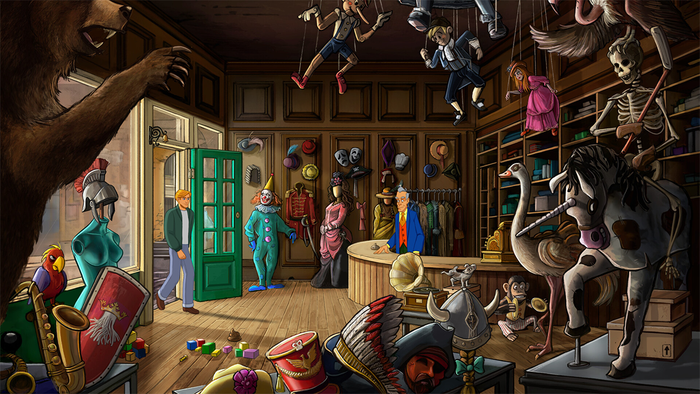
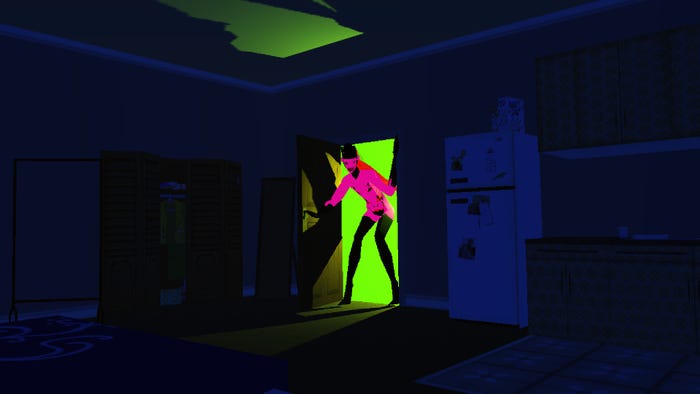
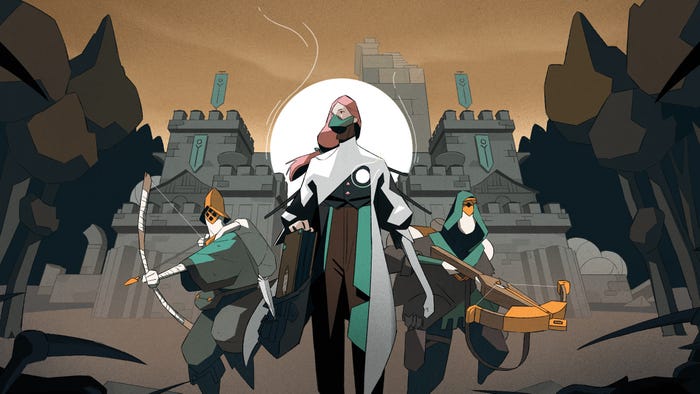
What I find interesting about these parody games is that they are actually fun -- the design techniques are still effective even in a satirical context. Here are some examples of parody games. Click the titles or pictures to try them!

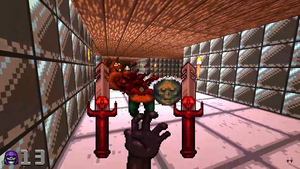
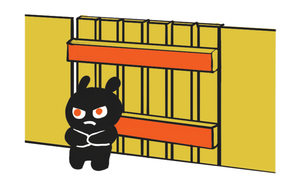
When I finished this game, I felt a real sense of accomplishment, even though it was a ridiculously trivial task. This shows the effectiveness of the standard 'quest' pattern: tell the players exactly what to do, let them do it, and then reward them for doing it. This game uses a funny song as a reward, but there are many other possible rewards. If you finish a quest in an RPG, an NPC thanks you, new story options are unlocked, you gain experience points, and you get new items.
Psychological studies have shown that random reward schedules are usually the most effective, so it's no coincidence that you see them in the most addictive games. For example, every enemy or container in Diablo is like a piñata -- there is a random chance that it will drop something good if you click on it. This combines with the sunk cost fallacy very effectively. Once you've killed three enemies looking for a rare item, you can't stop now... you have to keep going until you get it! Many games use well-designed rewards to convince players that they've accomplished something important, even when they've only completed a trivial task (like burning the rope).

'Achievements' are one of the newest techniques to add gameplay goals and rewards with minimal development effort. The developer can just think of arbitrary goals, and reward the player with an achievement alert whenever he reaches one of these goals. Achievement Unlocked takes this idea to its logical extreme -- there are achievements for everything you do, and your only goal is to get all of them.
Achievement Unlocked is a fun game because it uses achievements for humorous effect, and to guide players gently from trivial tasks to more difficult ones. However, it doesn't actually capture the real purpose of achievements: replay value and platform reinforcement.
Achievements provide 'replay value' because once the player completes the game, missed achievements provide an incentive to come back and go through it again, carefully getting all of the achievements. Developers care about replay value because every hour the player spends playing the game is free advertising to all of the player's friends.
Achievements help reinforce the platform (such as Steam or XBox 360) because players have a platform-specific list of all the achievements they've unlocked, which they can show to all their friends. For gamers who actually care about this list, it's a good enough reason to buy a game on Steam instead of directly from the developer, or buy it on XBox 360 instead of PS3.

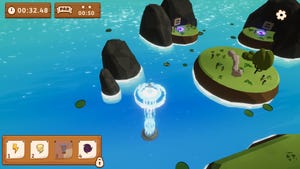
This game is all about upgrading everything with virtual money. You have to upgrade not only your space ship, but the main menu, the preloader, the graphics, and so on. I found this game addictive because it made me feel like I was accomplishing something, even though the 'upgrades' were obviously meaningless. This helps illustrate why games like The Sims and World of Warcraft are so successful. Even with very simple gameplay, it's satisfying and addictive to feel like you're improving yourself and your environment.

Released in 2002, Progress Quest is one of the earlier games of this type. Once you pick a race and class and roll your stats, Progress Quest plays itself without any user intervention. Your character executes monsters, gains xp and gold, and improves his equipment and level. Since it has no graphics, sounds, or controls, Progress Quest did not leave a great first impression for me, but as I left it in the background, I started to appreciate why it's so popular. Whenever I checked it, my character had gone up a few levels, was farther along in the quest, and had better equipment. I was making progress, even if I wasn't doing anything in the real world!
After leaving it going long enough, the sunk cost fallacy started to kick in again. I can't stop now; I've made so much progress already! For Progress Quest it was a minor effect, but this is the same logic that casinos use to keep gamblers hooked, and the same logic that Blizzard uses to keep users subscribed to World of Warcraft. Once we invest enough time or money in something, it can be almost physically painful to stop -- it means we have to admit that it was all for nothing.

I've already mentioned this game, but it is once again relevant. The Linear RPG distills standard JRPG gameplay to its essence. JRPG games hook gamers with a dangerous combination of level grinding and story progression. Stories are effective tools for creating game addiction because it's very uncomfortable to know only half of a story, no matter how silly or nonsensical the story might be. Gamers will go through almost anything to reach the end. By adding repetitive gameplay like level grinding (addictive in its own right due to sunk cost), it's possible to stretch a short story and small game world to last hundreds of hours. The Linear RPG only lasts for a few minutes, but it is much more fun and compelling than it seems like it should be -- showing how powerful this combination can be.
Ethics of addictionUsing tools like unearned rewards, achievements, stretched stories and upgrades, it's possible to create very addictive games that require little skill or effort to play. This ease of entry would allow us to reach a much broader audience, and the addiction would ensure that players tell each other about it. If our craftsmanship is good enough, then we could make a lot of money doing this, and many people do. However, this is not our plan for Overgrowth.
There's a vital question that is rarely asked: does our game make players happy when they play, or just make them sad when they stop? This is a subtle distinction, and irrelevant to sales, but I think it's very important. Medicine and heroin both sell for a high price, but I would sleep better at night selling one than the other.
Can anyone think of a way we can tell the difference between games that are legitimately fun, and games that are just hollow addiction? Follow us here!
    
|
I don't know if the final question is valid as presented: people generally are saddened when they stop doing something that makes them happy. But I have had game sessions uplift my emotional state, so the goal of "getting happy" was achieved during play, and I stopped playing when I was satisfied. Guitar Hero, in particular, has gotten me out of a funk or two, but not many other games have. That's something to think about, I suppose...
Take You Have To Burn The Rope... Would the game still be considered a good game if it wasn't making fun of other games? I highly doubt it. It's very short, and at the heart of it, you don't really do anything. This isn't a stab against the game because it is small, because a game like Elephant Rave is also tiny, but I've certainly played Elephant Rave, despite being short, for a whole lot longer than YHTBTR. I've also shown it to more people, because I feel it's a genuinely entertaining game.
Achievement Unlocked starts off funny, but then just ends up showing why achievements in games are pointless, when you start having to type things like jmbt02 or whatever to get one of them. That's not fun gameplay. That's designer cleverness, and should never be touted as something worthwhile.
Upgrade Complete was, to me, probably the weakest of the three, as far as satire goes, but the most fun as far as being a game goes. I actually didn't care about the whole "haha you're upgrading EVERYTHING" concept, as there was enough there for me to replay the game and just try different ship building strategies.
Essentially, all I'm saying is that I didn't feel any sense of achievement in any of the games, and that's not why I was playing them. If you remove the satirical elements from YHTBTR and Achievement Unlocked, there would be no reason to play them at all, because they're not exactly fun.
Also, another element I find addictive is the one of exploration. It's addicting to run through and explore every inch of a game's environment. This works well when accomplishing certain tasks grants the player the opportunity to explore sections of the game that were previously unavailable. New equipment, opponents, and NPCs also provide elements of exploration.
Yeah "they" believe. Even many times the players feel insulted by the "oh, you're doing a good job", "you're making very good progress" :/
Also, there' something to bear in mind, I think: bad games, no matter how many achievement points you might get off them, tend not to be played. Fallout 3 is an example, for me, of a game that I simply do not find that fun to play, and yet the game is packed full of kind of tactics you've ellucidated upon here. (And by the way, I'm not saying Fallout 3 is bad; it's just that I don't enjoy it.)
Accomplishment is partially a reason gamers play games, but I don't think it's enough in itself. So in answer to your question, "does our game make players happy when they play, or just make them sad when they stop?", maybe it should be doing both.
Many of the same mechanics you bring up here can be powerful tools that add depth and richness to games. For anyone who has played Geometry Wars, getting some of the achievements such as "Pacifist" (don't fire and survive for a certain amount of time) added variety to the game and encouraged the player to think and learn to play the game in a different way. Well-designed achievements can do a variety of things, including encourage the player to play the game in different ways or even learn how to play the game better. In TF2, many of the achievements are given when players learn advanced techniques, such as "Backstab an engineer and immediately sap his gear." Good achievements should encourage players to learn and become better, not simply do arbitrary activities. Your point is fully taken, though, that many developers focus solely on progress-related achievements, collection and arbitrary behavior.
Upgrades are equally interesting. In Upgrade Complete, you could dump money into just about any ship part you wanted and come out ok. Increasing your firepower guaranteed that you would increase your effectiveness. If there was some sort of underlying puzzle where you had to determine the best ways to upgrade and play with different weapon arrays, it could actually be a rewarding game. As it stands, upgrading is arbitrary as long as you don't make completely bonehead decisions.
You bring up the "sunk cost fallacy" to explain the mentality behind what is generally considered "grinding." The time you have already invested in something justifies further time you spend doing it some more, regardless of how repetitive and mundane it is. Plants Vs Zombies has a good solution to this. I found myself desiring to buy many things from the shop in order to be better at the marathon-style survival mode. In order to get money, I played many of the incredibly fun puzzle modes and mini games until I had enough money. Even though I was technically "grinding" for money, I was enjoying myself because the activities I had to do this allowed me to continue to learn, experiment and play with the game in an enjoyable manner. Puzzle Quest was one huge story + grind. I found that game to be incredibly rewarding until about halfway through, when I began to develop a single "always win" strategy. As soon as I stopped learning, I stopped having fun.
So to sum up, when things like achievements, grinding (progress/upgrades/sunk cost fallacy) and uninspired story contribute to continued arbitrary, mundane gameplay then the developer has made some huge mistakes. However, when well-designed these things can be great vehicles to deliver solid, enjoyable continued gameplay, and can encourage the player to learn and experiment with your game in ways they hadn't originally imagined.
in Eve online your skills increase even if you are not playing. You don't really make money though (I had a freind who played). in a way its the same idea as what your talking about.
and as far as self regulation goes...
"I underestimated the ability for the banks to regulate themselves"- alan greenspan.
the only diffrence the game industry has is 'honor' or the personal goals of designers and developers. things like that tend to fade fast especialy if money is involved.
(only 300 xp till im a level 2 'panda man puma burgler')
Somehow these reward mechanisms trigger the dopamine response of mastery, without requiring any sort of skill. I have to think it's a shallow period we are going through, and that more people will develop nuanced tastes in gaming, as the core crowd has. I don't believe the audience is stupid, and these types of games are very unobtrusive and easy to play with little time commitment. We see this phenomenon at a time of unprecedented growth of gaming into new markets and audiences, so I believe it will shake itself out as the audience matures.
Then again, maybe not.... gotta go check my farm. See ya!
The answer to this question is right in the metaphor yourself provided. What's the difference between a medicine and heroine? The first cures you, the second hurts you. Effectively, the first makes you better, the second makes you worse.
Just use the same principle with games. Legitimate fun is the type of fun that gives back to you more than it takes. It isn't just a way to waste time and energy. It is useful or meaningful in some genuinely good way, it makes you a better person. Hollow addiction takes from you more than it gives back. It makes you worse, in the least because it wastes your time and prevents you from doing something useful and meaningful.
It might be difficult to judge threshold cases. But I'd suggest that like with many fuzzy thresholds between good and bad, the best approach is to walk well clear of them, to be certain of being on the good side.