|
I had a dream last night that was strikingly similar to Left 4 Dead. Essentially it was a first person nightmare. At one point, an ally I was forced to abandon approached me and started asking me why- why I had let him get turned into a zombie. When I woke up I began to think how this would work in the actual video game.
Imagine while playing Left 4 Dead you are faced with a horde of zombies so intense you had to leave one of your allies behind. This happened a while ago and your ally will re-spawn and rejoin the group, but instead, imagine this scenario: you casually approaching the re-spawn closet. You're about to release your trapped teammate from the closet so that they can once again assist you on your journey.
But instead of your able bodied ally walking out, they stumble out and fall to the floor, horribly wounded. Having apparently escaped the horde, they look up at you with glassy eyes and ask- "Why did you leave?". They cry out and hold their vicious gaping injuries. They start to beg you "shoot me". They beg for the mercy you wouldn't give them before.
Has a work of fiction ever shown you what survivors guilt is like? And I don't mean to sympathize with a character, I mean have you ever walked out of a theatre thinking "I could have done something". Or put down a book and thought "That should of been me." This is something no movie, book, play, story or any other media has ever done to me. Perhaps I've felt bad for someone or sympathized with a character- but it would be nothing compared to suddenly see a teammate (even an AI one) before me, dying, asking why I had just let her suffering happen, knowing that that their death was my fault.
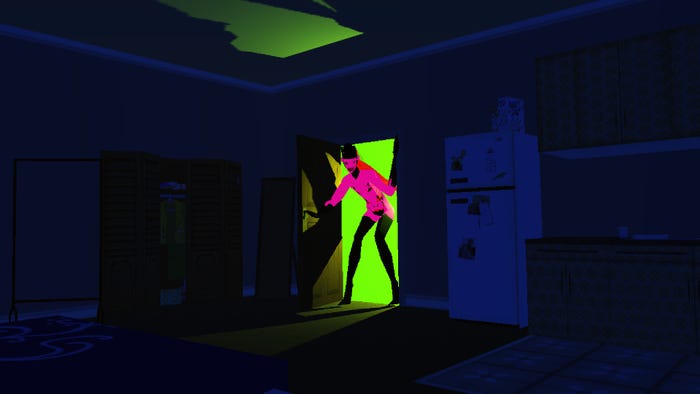
The new heavy rain game apparently has a scene where, while playing as a undercover female character you're forced to strip for a local crime boss. I've seen this female character and despite the dire situation, I don't think it would be all that bad to see her naked. Apparently however, men who have played this segment of the game described it as being awkward, not sexy at all. (http://www.popmatters.com/pm/post/112658-the-gleam-of-electric-sex-what-video-games-might-or-might-not-teach-/) They didn't like stripping for the fat greasy mafioso. I believe this is because of role placement- games have a way of forcing a player into the shoes of somebody else.
Games have a significant advantage over other media. Movies, while being one of the most popular methods of conveying an emotional story these days, can only allow you to look into a persons life. Video Games allow you to BE a person and experience their life.
Consider this example as well: In the original Kingdom Hearts while in the first world, your island home, you are able to fight against your allies as an optional tutorial. Most of these fights are rather simple but when fighting the main character's best friend Riku there is an extremely steep difficulty curve.
Even if you were to get good enough to beat him, he keeps track of your wins and losses. It was nearly impossible to have more wins than he did. Veterans to the game have a difficult time beating him so why present this challenge to a beginner? Because they weren't meant to win. The player is meant to start viewing Riku as a rival, someone they would have to work to beat.
The player unknowingly began to sympathize with Sora (the game's playable main character) who also saw Riku as a rival. By the time you were forced to leave the the island you left it with a feeling of regret- most players had to leave without ever evening the score. They were left with a desire just like Sora's- to go out and find Riku once again.
Story telling is an age old form of displacement- a linguistic ability to speak of things and events that are not present. For as long as civilization has existed, stories have been used as a way to bare warning, to inspire bravery, or to give hope. What place could our newly born method of media play in our quest for expression? In what other ways can video games help us tell stories?
One can only imagine the possibilities when an artist would be able to allow a someone to not only see through their eyes but to also act as they act. By establishing boundaries and enabling abilities, video games can reach over barriers and touch people in a way no other media can.
So let's explore this idea. We've all found games to be a more stimulating than other mediums and I think we've finally figured out why. Games allow us to assume emotional and physical roles that would otherwise be unavailable to us. In what other ways have we seen this? More importantly, what other ways can we use this? Could a game inspire compassion as well a competition? Could it create hope as well as hostility? Let's step back and look at games as more than just a recreation and hear what other stories they could tell.
|
Risk has temporary alliances and betrayals. Imagine a Left 4 Dead, with one person always chosen at random to be infected with a slow acting virus. The players could either choose to cooperate and try to slow the virus further, or they could get further away from him in order to save themselves. At what point would a player choose to get away from the infected player? (see prisoner's dilemma)
On a game I'm making, there's a part where you traverse a desert, by foot. The game is played with statistics determining the outcome of problems. In this part of the game however, no stats are used, and the player doesn't know. The game tests the player's bravery, by asking if the player would like to continue further into the sand. The player character will eventually be down on his knees, crawling in the sand, and the player has the option to go back, or press forward. So either the player wills himself to press forward, or he'll go back, try again at a later time. He might even be frustrated on his fifth try that his stats are not really helping, and then brave the desert. I'm sure it will piss off some players, and that's actually what I want.
The companion cube's camaraderie is forever tossed into the disposal in Portal, but in this case it's harder to feel for the cube because the game planned on it.
Valkyria Chronicles has any NPCs under your command permanently die. Although rare, it does happen on occasion. It's too bad the player is allowed to load a save game.
Demon's Souls has the game auto-save if you lose your stuff. TRUE despair.
World of Warcraft saw a bug where a disease killed any players in proximity of other players. Your friends now carry a deadly disease! I would have loved to be there.
Resident Evil 5 had a moment at the end where you must save the other player from falling to death.
Splinter Cell's multiplayer had player spies choking out mercenary enemies. In this instance, the spies can taunt the mercenary who's soon to get his neck snapped. And they usually did.
In all cases of "feeling", the outcome must always be permanent!! The best way is to have the player make a deliberate, permanent choice...and for the game to not have saves. Well, maybe instead of the no saves idea, you could just go with alternate endings. Most shooter games have no need for communication, which is dissapointing. These "team" deathmatches are more geared towards killing the enemy rather than preventing the deaths of your teammates.
I use this example everytime something like this comes up: I still remember it well. I was playing Indigo Prophecy (Fahrenheit in EU). There's a point in the game where the user plays as Lucas. Lucas is going through the park and sees a kid fall in the frozen pond. As a user you can decide either (1) Save the kid and risk being seen by the police (you're on the run) or (2) Walk away to protect your own life leaving the kid to die. I wanted to save the kid so I booked it to the pond, jumped into it, and dragged the kid out to dry land. However after I had gotten the kid to shore a crowd gathered around the kid crying out for someone to save the kid. I went to the edge of the level boundary figuring that when time expired (time was counting down until police recognized me) the police would revive the kid. Unfortunately when time expired the police arrested me in a cutscene as "the end of my story" appeared. I quickly reloaded my save file and tried everything to save the kid thinking I must have gone to the wrong place or may be missing a clue. Eventually after five or six tries I gave up and upon reloading my save I selected "No, I do not want to save the kid." As Lucas' depression visually decreased, so did mine, for I really did want to save the kid but no matter what I tried I couldn't. Later after completing the game, while perusing through the strategy guide I noticed that all I had to do was walk up to the kid's body and motion the right analog stick down to begin giving him CPR.
But I agree with that there are stories to be told with videogames as a form, and that videogames have unexplored ways to tell them and some advantages to do so.